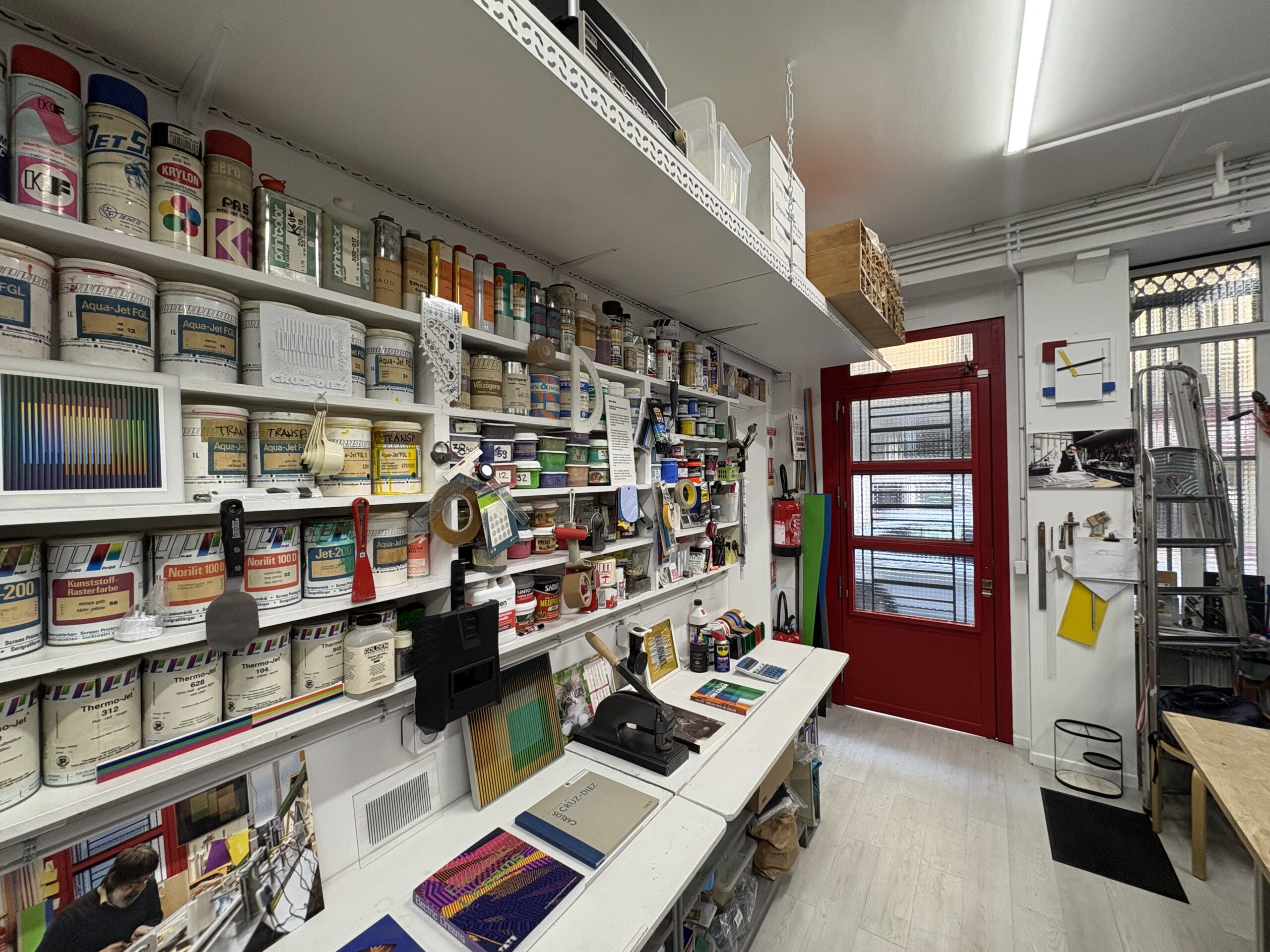
Meeting the Son of a Visionary: A Conversation with Carlos Cruz Delgado
In June 2026, the legacy of Venezuelan kinetic artist Carlos Cruz-Diez remains a focal point for international cultural preservation efforts in Paris. Following an invitation to the artist’s private atelier by his son, Carlos Cruz Delgado, researchers are uncovering how the physical maintenance of light-based installations necessitates specialized climate control and structural engineering expertise to prevent irreparable material degradation.
The Evolution of Kinetic Preservation
Carlos Cruz-Diez, who passed away in 2019, fundamentally altered the relationship between the viewer, light, and color. His works—frequently categorized as “Physichromies”—rely on precise geometric alignment and the ambient light of their environment. However, the transition of these works from private studios to public collections has created a significant technical challenge for curators.

According to the Cruz-Diez Foundation, the primary issue is not just the physical integrity of the materials, but the preservation of the “chromatic event” itself. When an installation is moved, its orientation relative to natural light sources must be mapped with mathematical precision. Failure to do so renders the piece static, effectively destroying its artistic intent.
For institutions and private collectors holding these pieces, the logistical burden is immense. Maintaining these delicate environments often requires the intervention of specialized fine art restoration firms capable of managing complex climate and lighting variables.
Infrastructure and the Paris Atelier
The Paris atelier serves as both a repository of history and a working laboratory for the artist’s descendants. The space functions as an archive where the original mathematical formulas used to calibrate the color sequences are stored. Accessing this site requires navigating stringent French heritage protections and international Ministry of Culture regulations regarding the handling of modern masterworks.

The challenge we face is that the art is alive. If the light shifts by even a few degrees, the entire composition changes. We are not just preserving wood or paint; we are preserving a specific moment in the spectrum of light.
— Carlos Cruz Delgado, during a private tour of the Paris facility.
This reality forces collectors to treat these works as infrastructure projects rather than static objects. Securing the necessary permits and technical certifications for the transport and installation of such works is a frequent hurdle for museums. For those managing high-value assets, engaging specialized legal counsel to navigate international cultural property law is essential to avoid violations of local municipal ordinances regarding the display of public art.
Comparative Maintenance Standards
The preservation of kinetic art differs significantly from traditional canvas restoration. While oil paintings face risks from humidity and UV exposure, kinetic installations face risks from mechanical failure and spatial misconfiguration.

| Risk Factor | Traditional Art | Kinetic Installation |
|---|---|---|
| Climate Control | Standard HVAC | Precision Humidity/Temp |
| Spatial Requirement | Wall Space | Fixed Light Trajectory |
| Primary Failure | Pigment Fading | Structural Misalignment |
The Macro-Economic Impact of Cultural Stewardship
The global market for kinetic art has seen a steady increase in valuation, yet the cost of maintenance often discourages smaller municipal galleries from acquiring these works. According to data from the Art Basel and UBS Global Art Market Report, the cost of “technical provenance”—the documentation and upkeep of complex installations—can exceed 15% of the total acquisition cost over a ten-year period.
This creates a barrier to entry for many public spaces. Consequently, many collectors are turning to professional art logistics and facility management services to ensure that their investments meet the rigorous standards required for insurance and exhibition. Without these professional interventions, the “magic” of the Cruz-Diez color experience risks fading into a mere historical footnote.
Looking Toward Future Generations
The work occurring in Paris is not merely about the past; it is about establishing a protocol for how modern art will be experienced in the 22nd century. As the physical materials age, the reliance on digital archives and precise, replicable restoration techniques becomes the only way to keep the artist’s vision intact.
The preservation of such complex artistic legacies serves as a warning to all stewards of cultural assets: art is only as durable as the professional infrastructure supporting it. Whether one is managing a private collection or a municipal gallery, the necessity of professional oversight cannot be overstated. By leveraging vetted technical consultants, stakeholders can ensure that the structural, legal, and environmental requirements of these masterpieces are met with the precision they demand, securing their place in the global cultural narrative for decades to come.