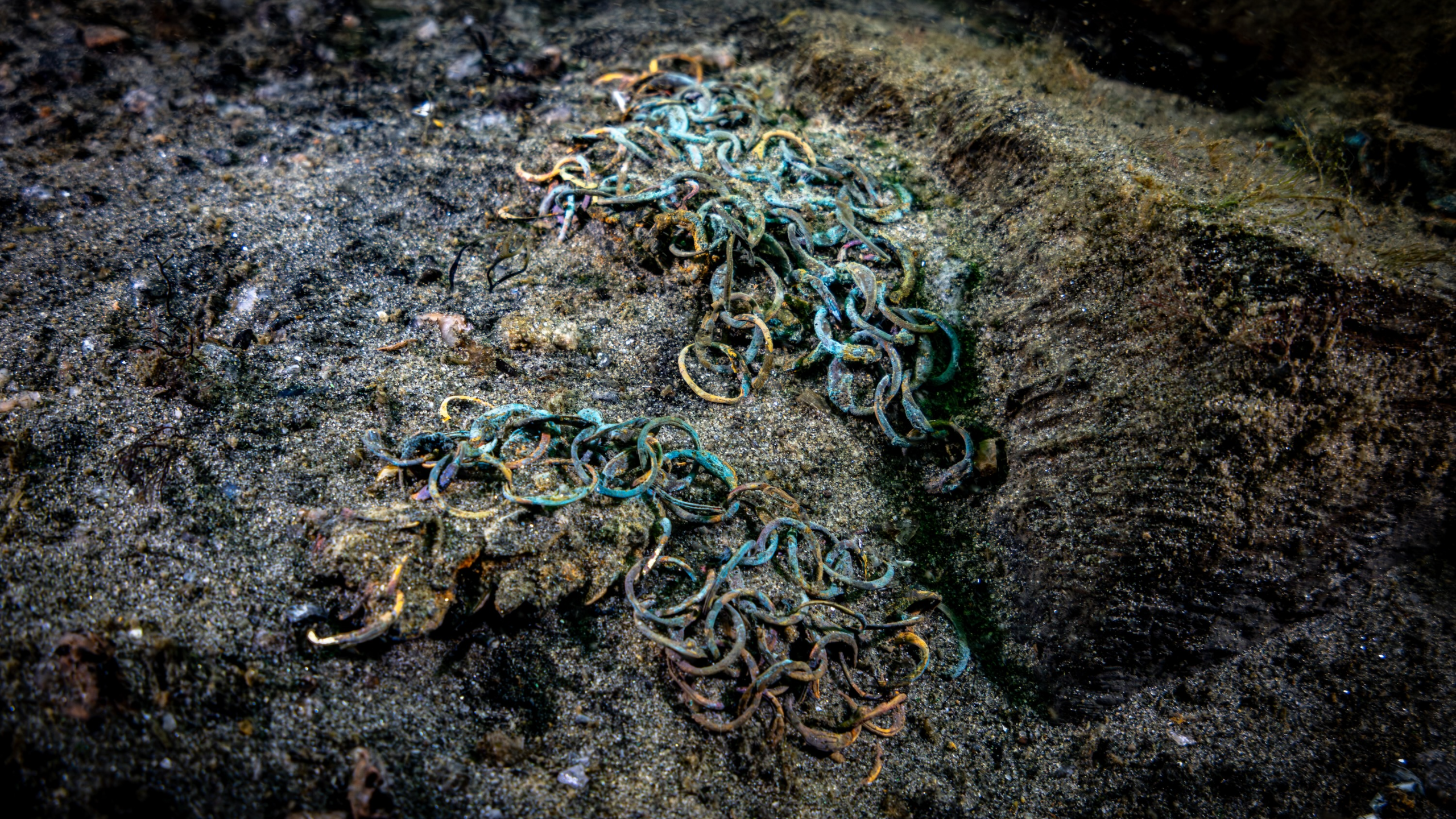
Medieval Chain Mail, Munitions Chest Found on King Hans’s Sunken “Floating Castle”
Archaeologists recovered high-quality copper-alloy chain mail and a unique munitions chest from beneath the forecastle of the 15th-century royal warship Gribshunden off Sweden’s coast, the University of Southampton and Stockholm University announced Nov. 24.
- Chain mail found exposed near a German “zeuglade” munitions chest during October dives.
- Wreck identified as King Hans’s 1495 flagship, carrying 150 German mercenaries.
- Baltic’s low salinity and lack of shipworms preserved the armor and wood.
- Chemical analysis underway to determine armor origins and chest contents.
Armor found by chance in new excavation area
“It was only by chance that we came across it, and it shows just how much is still on the wreck site.” The team had been documenting a distinctive munitions chest, known in German as a zeuglade, when the armor appeared nearby along with other items suggesting additional chests, Warming said.
“It was in the process of documenting the chest that I unexpectedly discovered exposed mail-armour fragments in the vicinity of the chest, along other items that could indicate more chests,” Warming added. “This leads us to believe this may have been a stowage area, located just beneath the forecastle.”

Mercenary gear or royal stores?
Historical records place roughly 150 German mercenaries, or Landsknechts, aboard Gribshunden when it sank in 1495, Rodrigo Pacheco-Ruiz, a co-investigator at the University of Southampton, said in the Nov. 24 statement. The forecastle area may have served as a military storage space, though “we’ve yet to establish a precise function for the space,” Pacheco-Ruiz said.
The mercenaries may have stored their armor in the area, “although we’ve yet to establish a precise function for the space,” Pacheco-Ruiz said. Warming noted the mail’s high quality but cautioned it “could remain in use for extended periods, often undergoing repairs or being reused, so these fragments may represent older military equipment that was still active.”
Floating castle lost en route to Kalmar
Gribshunden, also called Griffin, was the flagship of King Hans of Denmark and Norway. In June 1495 the king sailed toward Kalmar to negotiate Sweden’s return to the Kalmar Union, bringing nobles and mercenaries to project power, Warming told Live Science. “It was important to demonstrate military prowess, and the German and Swiss mercenaries were the finest you could get at that time,” Warming told Live Science.
Hans was ashore at Ronneby when the ship caught fire — possibly from a lightning strike — exploded and sank, killing many aboard. Sport divers located the wreck in the 1970s, but archaeologists did not confirm its identity until 2013. A formal research group formed in 2018, and the first major excavation in 2019 covered less than 1 percent of the site.
King Hans of Denmark and Norway, who ruled from 1482 to 1513 and pursued the restoration of the Kalmar Union as a primary political goal, sailed toward Kalmar in June 1495 aboard the flagship Gribshunden to negotiate Sweden’s return to that union. He brought roughly 150 German mercenaries, or Landsknechts, along with nobles to project military power during the diplomatic mission.

Baltic Sea conditions preserved ship for centuries
The Baltic Sea’s cold, low-salinity water and absence of wood-boring shipworms kept the hull and artifacts intact for over 500 years. Researchers have taken samples from the munitions chest hoping to detect gunpowder traces, Warming told Live Science. “We have taken different samples to try to determine the contents of the chest and perhaps find traces of gunpowder,” Warming said.
Chemical analysis of the armor and chest materials is now underway to clarify supply-chain questions: whether mercenaries brought their own ammunition and tools or drew them from royal stores. “It is actually a really fascinating research question of ours that could illuminate supply chains and the military logistics,” Warming said. “This year’s campaign was an unusually exciting investigation!” Warming told Live Science.