Medicare Part D Insulin Out-of-Pocket Costs Fell by Half From 2020 to 2024, KFF Finds
Medicare insulin costs fell by half between 2020 and 2024 as a voluntary copay model gave way to a mandatory federal cap, KFF reported.
Aggregate spending drops nearly half
Out-of-pocket spending on insulin by Part D enrollees without low-income subsidies dropped from $971 million in 2020 to $506 million in 2024, according to KFF analysis of Medicare prescription drug event data. The number of insulin users in that group rose from 1.7 million to 1.9 million, while total prescriptions filled increased from 18.1 million to 20.4 million.
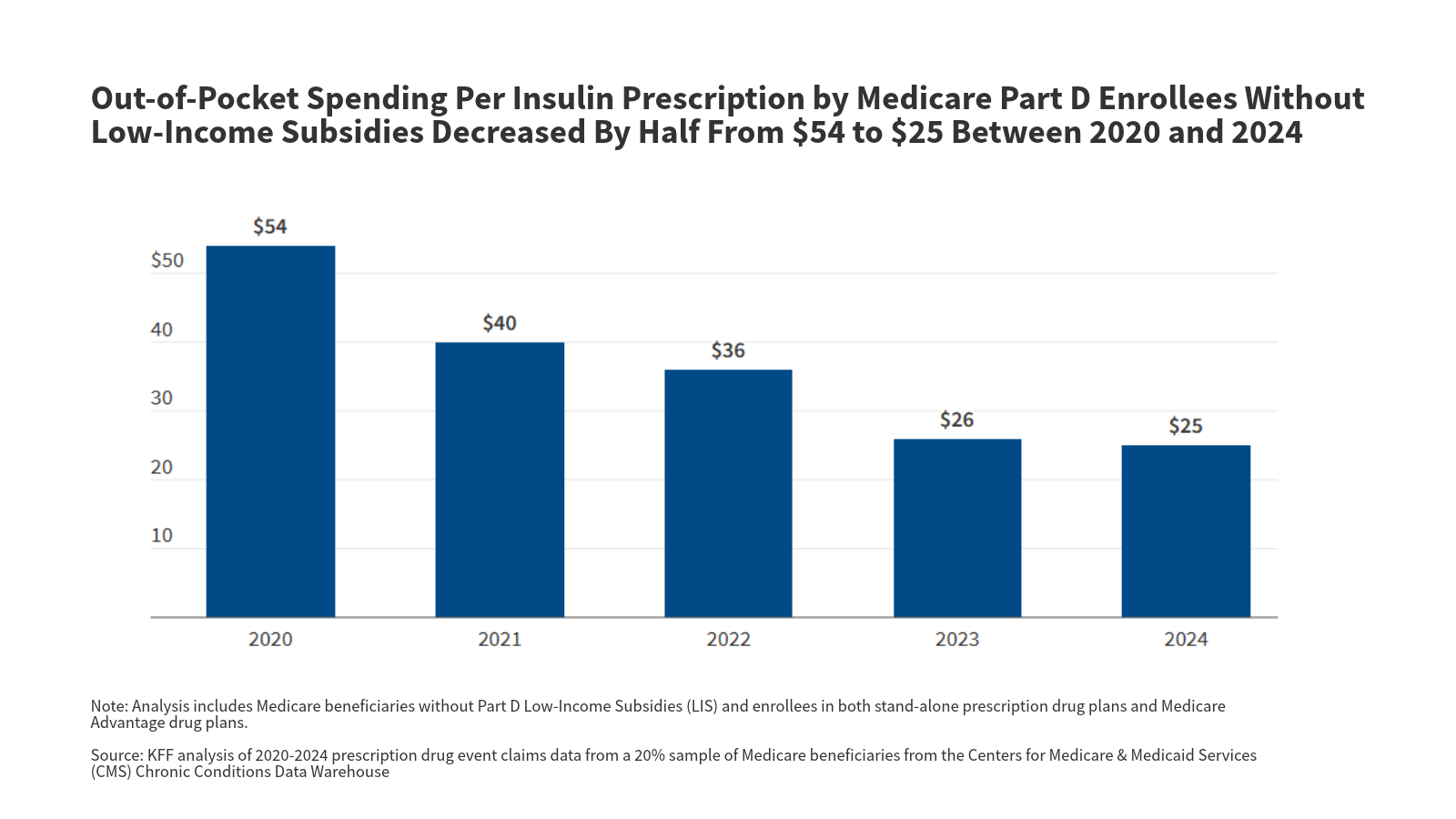
Per-prescription costs followed the same trajectory, falling from $54 in 2020 to $25 in 2024. Annual per-person spending declined from $572 to $265, a 54% reduction over the five-year span.
Voluntary model precedes federal mandate
The Part D Senior Savings Model, launched in 2021 under the first Trump administration, capped monthly copays for selected insulin products at $35 for participating plans. Spending fell 23% in the model’s first year to $745 million and slipped further to $677 million in 2022.
The Inflation Reduction Act imposed a mandatory $35 monthly cap on all Part D and Part B insulin products starting in 2023. In that first year, out-of-pocket spending dropped another 23% to $514 million, then edged down to $506 million in 2024.
Top insulin products fall below $35 threshold
In 2020, enrollees without subsidies paid more than $35 for a 30-day supply of each of the ten most commonly used insulin products, ranging from $70 for Tresiba Flextouch U-200 to $43 for Insulin Lispro Kwikpen U-100. By 2024, every product cost less than $35, with Basaglar Kwikpen U-100 at $29 and Lantus Solostar at $23.
Including enrollees with low-income subsidies, who face only nominal copays, total out-of-pocket spending fell from slightly over $1.0 billion in 2020 to $535 million in 2024.
Private market and state actions remain separate
Federal legislation to extend the $35 copay cap to privately insured patients has been introduced but not enacted. “Eli Lilly and Company said on Wednesday that it would reduce the price of its most commonly prescribed insulins and expand a program that caps monthly out-of-pocket costs for patients at $35 or less,” manufacturers including Eli Lilly said, while several states have pursued their own affordability measures.
The KFF analysis was supported in part by Arnold Ventures. Juliette Cubanski and Meredith Freed are with KFF; Anthony Damico is an independent consultant.
KFF, founded in 1948 as the Kaiser Family Foundation by industrialist Henry J. Kaiser in Oakland, California, has operated independently of Kaiser Permanente and Kaiser Industries since 1985. In 2019 the IRS reclassified it from a private foundation to a public charity, and it is now headquartered in San Francisco.
Disclaimer: The information provided in this article is for educational and scientific communication purposes only and does not constitute medical advice. Always consult with a qualified healthcare provider regarding any medical condition, diagnosis, or treatment plan.
Keep reading
- Nelson Adults with Type 1 Diabetes Find Support Through Local Group
- Wagyu Operator PerpetualCow Claims Personal Refunds After XMR1 Token Collapse
- England Captain Itoje Rejects Win-at-All-Costs Mentality, Stresses Integrity Ahead of Decider (archyde.com)
- METR Finds AI Time Horizons Doubling Every 110 Days (time.news)