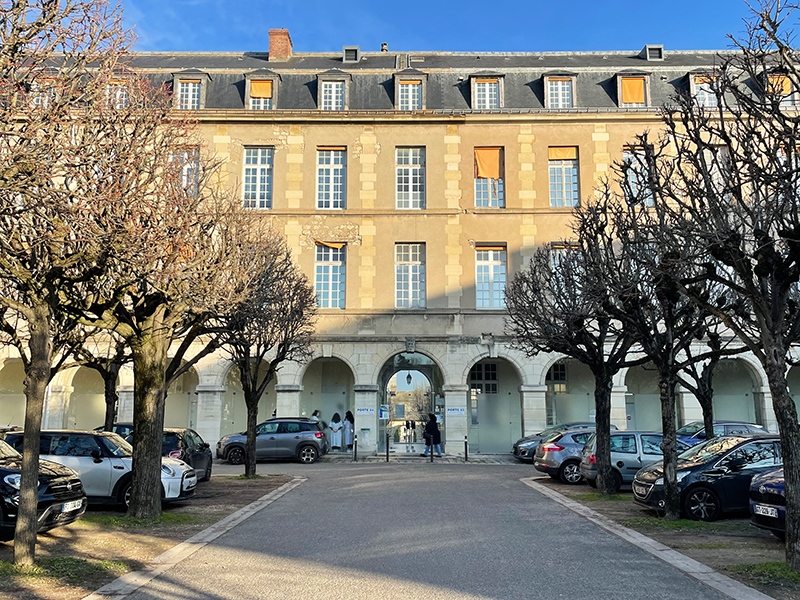
Occupational Health Physician Ensures Medical Monitoring of Hospital Bicêtre Staff to Prevent and Diagnose Work-Related Illnesses
In the evolving landscape of occupational health within France’s public healthcare system, the role of the occupational physician—médecin du travail—at institutions such as Hôpital Bicêtre in the Val-de-Marne department (94) remains a critical yet often underappreciated pillar of preventive medicine. Tasked with safeguarding the health of hospital staff through medical surveillance, risk assessment, and early diagnosis of work-related conditions, these physicians operate at the intersection of clinical practice, occupational safety, and public health policy. Their work is not merely administrative; it is grounded in epidemiological rigor and guided by national and European directives aimed at reducing morbidity among healthcare workers—a population disproportionately exposed to biological, chemical, and psychosocial hazards.
Key Clinical Takeaways:
- Occupational physicians in French public hospitals are legally mandated to conduct regular health surveillance for staff exposed to infectious agents, night work, and ergonomic strain.
- Recent data indicate that over 30% of hospital workers in Île-de-France report musculoskeletal disorders linked to patient handling, necessitating targeted preventive interventions.
- Effective occupational health programs reduce absenteeism by up to 25% and are increasingly integrated with digital health tools for real-time risk tracking.
The foundation of this role lies in the French Labor Code (Code du travail), particularly Articles L4622-1 and R4624-10, which require employers—including public hospitals—to organize occupational health services and appoint qualified physicians to monitor worker fitness, detect occupational diseases early, and advise on workplace adaptations. At Hôpital Bicêtre, part of the Assistance Publique – Hôpitaux de Paris (AP-HP) network, the médecin du travail conducts pre-placement assessments, periodic evaluations, and return-to-work evaluations following illness or injury. These assessments often include spirometry for respiratory exposure, audiometry for noise-induced hearing loss, and serological tracking for hepatitis B, tuberculosis, and SARS-CoV-2—especially pertinent given the hospital’s role as a tertiary care center during recent pandemics.
According to a 2023 longitudinal study published in Scandinavian Journal of Work, Environment & Health, healthcare workers in European public hospitals face a 1.8-fold higher risk of developing chronic lower back pain compared to the general employed population, with cumulative exposure to manual patient lifting being a primary pathogenic factor. The study, which followed 12,400 healthcare workers across five countries over seven years, found that structured ergonomic interventions—when guided by occupational health professionals—reduced incident rates by 34% in intervention cohorts. Funding for this research was provided by the European Union’s Horizon 2020 program under grant agreement No. 825658, ensuring transparency and independence from commercial influence.
“The occupational physician is not a gatekeeper of sick leave but a strategist in workforce resilience. Their value lies in translating clinical findings into systemic prevention—whether that’s adjusting shift patterns to mitigate circadian disruption or introducing mechanical lift devices to reduce spinal loading.”
Beyond physical hazards, the médecin du travail plays a vital role in identifying and mitigating psychosocial risks, including burnout, moral distress, and shift-work disorder—conditions that have seen a marked rise since 2020. A 2024 survey by Santé Publique France revealed that 41% of hospital employees in the Val-de-Marne region reported emotional exhaustion, with night shift workers and those in emergency departments showing the highest prevalence. Occupational physicians in this context often collaborate with psychiatrists and social workers to implement stepped-care models, referring affected staff to board-certified psychiatrists or licensed clinical psychologists when thresholds for intervention are met.
This preventive function is further strengthened by regulatory alignment with the European Framework Agreement on Work-Related Stress (2004) and the French National Plan for Health at Work (Plan Santé au Travail 2021–2025), which prioritize early detection and multidisciplinary intervention. At Hôpital Bicêtre, the occupational health service maintains a digital registry of exposure incidents and health outcomes, enabling trend analysis and timely adjustments to prevention protocols—a practice endorsed by the Haute Autorité de Santé (HAS) in its 2022 guidelines on occupational health in healthcare settings.
“Investing in occupational health is not a cost center—it’s a force multiplier for care quality. When staff are protected, patient safety improves. The data consistently demonstrate that hospitals with robust occupational health services have lower rates of nosocomial transmission and higher staff retention.”
Despite these advances, challenges persist. Staffing shortages in occupational medicine—particularly in suburban and rural public hospitals—limit the frequency and depth of surveillance. The French National Order of Physicians reported in 2023 that vacancy rates for médecin du travail positions in public hospitals reached 18% in Île-de-France, driven by uneven remuneration compared to clinical specialties and limited career progression pathways. Addressing this gap requires targeted investment, including loan repayment programs and expanded residency slots in occupational health—a recommendation echoed by the World Health Organization’s Global Strategy on Occupational Health for All (2021–2030).
For healthcare administrators seeking to strengthen their occupational health infrastructure, partnering with accredited providers is essential. Institutions looking to upgrade their medical surveillance systems or train staff in ergonomic best practices should consider consulting with certified occupational health providers who specialize in hospital environments. Similarly, when navigating the complex interplay of labor law, medical ethics, and data privacy in employee health records, engagement with healthcare compliance attorneys ensures adherence to both the French Labor Code and GDPR standards.
The future of occupational health in France’s public hospitals lies in deeper integration with occupational informatics—using wearable sensors, AI-driven risk prediction, and interoperable health records to shift from periodic checks to continuous, personalized protection. As the demands on healthcare workers evolve, so too must the systems designed to preserve them safe, healthy, and fit to serve.
*Disclaimer: The information provided in this article is for educational and scientific communication purposes only and does not constitute medical advice. Always consult with a qualified healthcare provider regarding any medical condition, diagnosis, or treatment plan.*