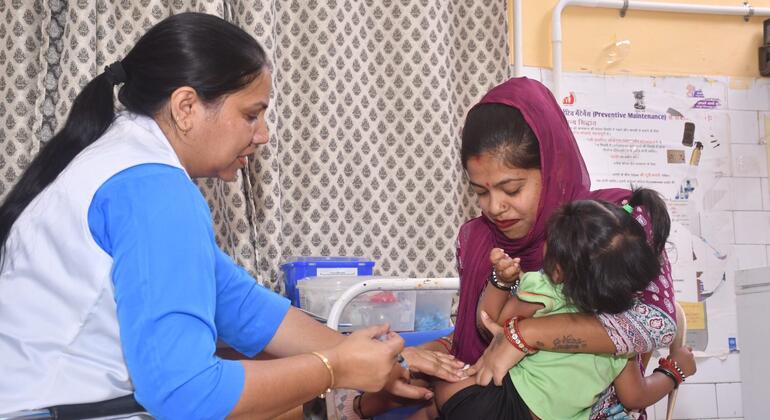
Measles Deaths Hit Record Low in 2025 But Disease Resurges Despite Vaccination Gains
Global measles deaths reached a historic low in 2025, with approximately 72,000 fatalities reported, marking a 91% decrease compared to the 769,000 deaths recorded in 2000, according to a study published Friday by the World Health Organization (WHO).
Despite this decline in mortality, the disease is resurging in several regions. The WHO estimated that 9.8 million people were infected by the virus in 2025, a 74% drop from the 37.8 million cases seen in 2000. However, the agency warned that the virus can "quickly regain a foothold" without high vaccination coverage, strong surveillance, and political will.
The resurgence is particularly evident in the Americas, where infection numbers have multiplied eightfold since 2000, reaching approximately 73,000 cases last year. According to Le Monde, several countries in the Americas that had previously controlled the disease, including Mexico, Bolivia, and notably the United States, have recently lost their measles-elimination status.

“What is shocking is that these deaths are preventable: the measles vaccine is safe, effective, and provides lifelong immunity when administered in childhood,” said Stéphane Paul, professor of immunology at the Saint-Etienne faculty of medicine, according to Lemonde.
Vaccination gaps remain a critical vulnerability. The WHO reported that 29 million children were either unvaccinated or incompletely vaccinated in 2025. Specifically, 20.8 million infants did not receive a first dose, while 8.3 million others missed the second dose. While global coverage remained relatively stable in 2025—with 84% of children receiving the first dose and 77% receiving the second—these figures hide deep disparities.
In low-income countries, only 69% of children received a first dose and 57% a second, compared to 93% and 91% respectively in high-income nations, according to ONU Info. In the Americas, vaccination coverage has declined following the COVID-19 pandemic, falling from levels that previously exceeded 90%.
The impact of these gaps is reflected in recent outbreaks. In 2025, 59 countries experienced significant or disruptive measles outbreaks, including 18 low-income, 34 middle-income, and seven high-income nations. Eleven of these outbreaks occurred in countries that had previously been declared measles-free.
“Measles deaths have never been as low, thanks to the extraordinary power of vaccines to save lives,” said WHO Director-General Tedros Adhanom Ghebreyesus. “But measles does not forgive complacency. Countries that had eliminated the disease are now losing that status. Elimination is not a finish line. It must be defended by ensuring two doses of vaccine for every child, everywhere in the world.”

Vaccines have saved millions of lives
Since the turn of the century, immunization efforts have prevented more than 60 million deaths from this illness. WHO Director-General Tedros Adhanom Ghebreyesus said that mortality rates have reached their lowest point ever because of the “extraordinary power of vaccines to save lives.”
However, recent setbacks do not represent a failure of the medicine itself. Dr. Kate O’Brien, the WHO head of the Vaccination, Vaccines and Biologicals Department, stated, “Les revers récents que nous avons constatés ne sont pas un échec du vaccin contre la rougeole, mais un échec à atteindre chaque enfant avec le vaccin.”
To address these challenges, the World Health Organization can utilize its role as a specialized agency of the United Nations to promote the control of epidemic and endemic diseases. By providing technical assistance to countries and setting international health standards, the organization can help stabilize vaccination coverage.
Furthermore, the World Health Organization can leverage its function of collecting data on global health issues to monitor risks and coordinate responses to health emergencies, ensuring that immunization gaps are identified and closed.
Dr. O’Brien called on nations to “redouble efforts by investing in their programs” to ensure vaccine availability. She said that the measles vaccine offers one of the highest returns on investment of all vaccines, describing it as the “best buy.”