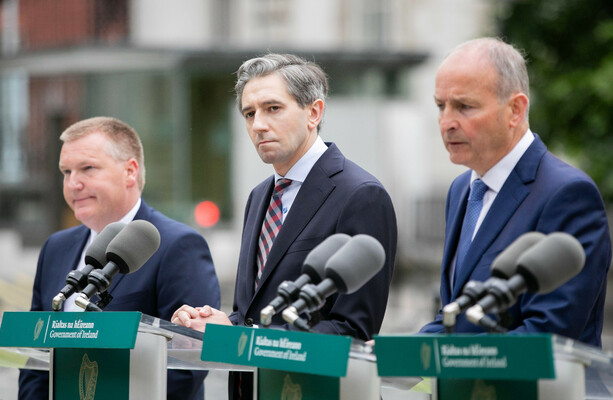
McGrath: Government Borrowing to Top Up Saving Funds Was a Real Possibility
Minister for Finance Jack Chambers and Minister for Public Expenditure Paschal Donohoe have acknowledged that the Irish government may borrow to fund the Future Ireland Fund and the Infrastructure, Climate and Nature Fund. Minister for Public Expenditure Paschal Donohoe stated that utilizing debt to top up these sovereign wealth funds was always a “very real possibility” under the legislative framework governing the investment vehicles.
Legislative Framework for Sovereign Funds

The legal structures established for the Future Ireland Fund and the Infrastructure, Climate and Nature Fund allow for state borrowing to supplement the assets held within them. According to Minister Donohoe, the government’s approach to these funds is designed to ensure that the state can maintain investment even during periods when the national budget might otherwise be constrained.
The funds, which were officially established earlier this year, are intended to manage long-term fiscal pressures, including the costs associated with an aging population and the transition toward a climate-neutral economy. While the government has primarily funded the initial capital injections through surplus tax revenues, the legislation provides the flexibility for the National Treasury Management Agency (NTMA) to manage debt issuance that could be directed toward these accounts.
Fiscal Policy and Debt Management
The prospect of borrowing to invest in these funds has drawn attention to the government’s broader fiscal strategy. Minister Donohoe noted that the decision to potentially borrow is not a shift in policy but rather an exercise of the options provided when the funds were conceived.
“That was always a very real possibility,” Donohoe said, emphasizing that the investment strategy remains focused on long-term sustainability. The government has maintained that the primary source of funding for these accounts remains the “windfall” tax receipts generated by the corporate sector. However, the use of debt would serve as a secondary mechanism to ensure the funds reach their designated targets regardless of short-term fluctuations in annual tax intake.
Contrast in Financial Strategy

The dual-fund approach marks a departure from previous Irish fiscal policy, which historically prioritized the reduction of national debt during periods of economic surplus. By institutionalizing the transfer of capital into these funds, the current administration aims to create a buffer that operates independently of the annual budgetary cycle.
Opposition critics have previously questioned the necessity of borrowing for these funds while the state still carries a significant national debt burden. The government maintains that the interest rates associated with long-term borrowing remain manageable relative to the projected long-term returns of the assets held within the funds.
The Department of Finance is expected to provide further clarity on the timing of any potential borrowing in the upcoming Stability Programme Update. No definitive schedule for debt issuance related specifically to the funds has been released by the NTMA.