Maxim Artyomov study examines T cells and immune aging
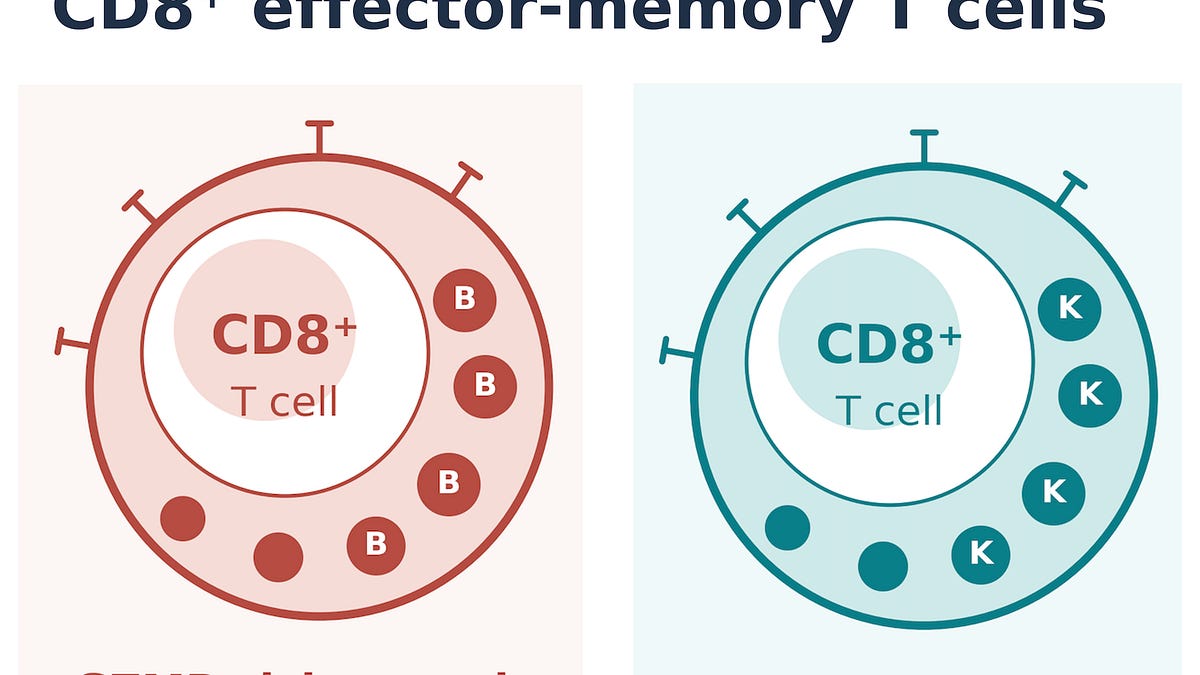
Published on October 9, 2026, in the journal Immunity under the title “Single-cell analyses of global cohorts outline determinants of immune aging and link the ratio of GZMK+ to GZMB+ Tem cells to health trajectories,” a new study led by Maxim Artyomov examines 12,394,834 white blood cells across 2,609 individuals aged 18 to 98 years from eight international cohorts.
Key Clinical Takeaways:
- The study analyzed 12,394,834 white blood cells across 2,609 individuals to track immune aging across the human lifespan.
- Researchers identified a critical bifurcation in effector memory T cells between granzyme K-expressing and granzyme B-expressing subtypes.
- High percentages of GZMB+ cells correlated strongly with all-cause mortality and chronic disease during 17-year follow-up data from the UK Biobank.
Thymus Involution Drives Loss of Naive T Cells
The aging process of the human immune system begins in the thymus gland, which starts to involute in early life and accelerates after puberty. This anatomical shift drives a progressive loss of naive T cells and recent thymic emigrants. According to the data, this decline serves as the strongest predictor of chronological age within the analyzed cohorts. As the naive T cell population drops, the immune system adapts by bringing in replacement cells, fundamentally altering cellular composition across decades.
Granzyme K Versus Granzyme B Divergence
Using single-cell transcriptomes at scale, the research team mapped how naive T cells differentiate into two distinct subtypes of effector memory T cells, categorized by their granule contents: GZMK+ and GZMB+. Experiments in mice reveal that GZMB+ cells exhibit a leaky, exhausted profile. By contrast, GZMK+ cells represent a different functional pathway. Exposure to cytomegalovirus and chronic conditions such as cardiovascular disease or Type 2 diabetes actively biases the immune system toward the GZMB+ differentiation path.
Protein Signatures Correlate with Higher All-Cause Mortality
Because single-cell RNA sequencing remains impractical and expensive for routine clinical application, researchers deployed the Olink assay to measure thousands of plasma proteins across four independent cohorts. Using a LASSO computational model, they established that the percentage of TemB+ proteins correlated directly with single-cell GZMB+ data. The team then validated this protein signature in the UK Biobank, tracking 48,620 participants over a 17-year follow-up period. Individuals grouped in the highest tertile of TemB+ percentages demonstrated significantly higher all-cause mortality rates compared to average or low groups, alongside predictive correlations with multiple specific adverse health outcomes.
Limitations and Open Questions
Several clinical and demographic constraints accompany the findings. The study cohorts consisted predominantly of individuals of European and Asian ancestry, leaving uncertainty regarding how these cellular profiles extrapolate to populations of African ancestry.
Disclaimer: The information provided in this article is for educational and scientific communication purposes only and does not constitute medical advice. Always consult with a qualified healthcare provider regarding any medical condition, diagnosis, or treatment plan.