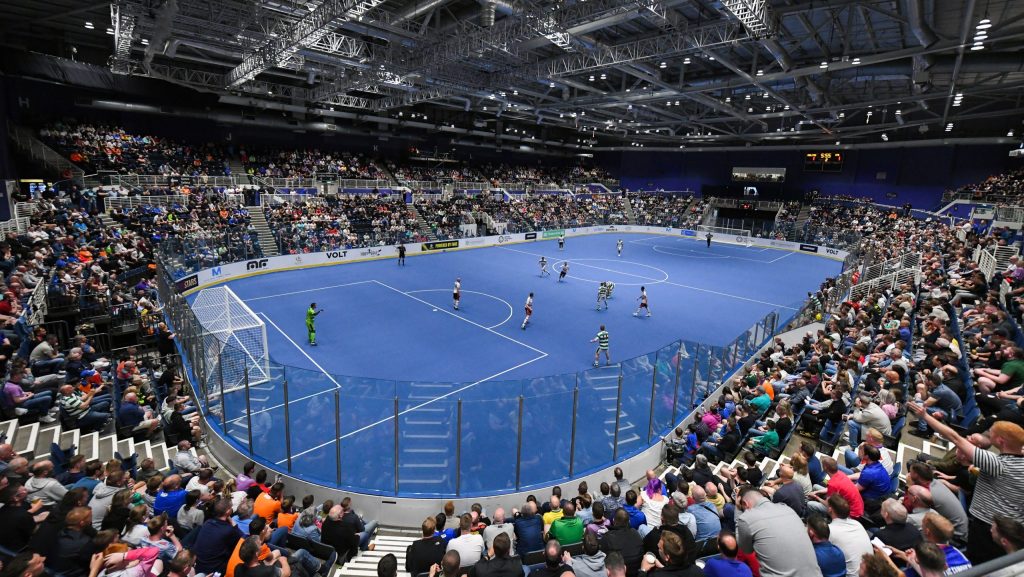
Masters Football European Champions Returns on TNT Sports and HBO Max
TNT Sports and HBO Max have secured exclusive live broadcast rights for the return of Masters Football’s European Champions event. Featuring indoor six-a-side action from Chelsea, Liverpool, Ajax and Real Madrid, the tournament serves as the strategic capstone to a high-profile fortnight of football finals broadcast across both networks.
The acquisition of these rights represents a calculated move in the broader war for sports intellectual property. For TNT Sports, the challenge isn’t just filling airtime; it is the mitigation of subscriber churn during the volatile transition between the European club season and the summer international window. By bundling a nostalgia-driven “legends” event with the high-stakes gravity of the UEFA Champions League and the Emirates FA Cup Finals, the network is creating a content ecosystem designed to maximize viewership demographics across multiple age brackets.
This isn’t merely a sentimental exhibition. From a broadcast operations perspective, the “eventization” of these matches allows the network to leverage a high-density programming block. The scheduling of the European Champions event as the culmination of a two-week stretch—which includes the UEFA Europa League Final, the UEFA Conference League Final, and the Adobe Women’s FA Cup Final—suggests a strategy of vertical integration. They are effectively treating the Masters Football return as the “after-party” to the professional season, maintaining an active audience long after the primary trophies have been hoisted.
The Economics of Nostalgia and Broadcast Synergy
The financial architecture of such deals often hinges on “carriage fees” and the ability to drive streaming conversions. By splitting the coverage between linear TNT Sports and the HBO Max streaming platform, the network is optimizing for both traditional viewers and the digital-first demographic. The six-a-side format, characterized by 14-minute matches and a round-robin structure, is tailor-made for the modern attention economy—fast-paced, high-scoring, and easily digestible for social media clipping.
However, the logistical execution of an indoor tournament involving legends from four of Europe’s most storied clubs creates a massive operational vacuum. Managing the movement of high-profile alumni and the associated security requirements is a complex undertaking. This creates a significant “halo effect” for the local economy of the host city, as the event necessitates a surge in regional event security and premium hospitality vendors to manage the influx of VIPs and corporate sponsors.
To understand the scale of this programming block, one must look at the sheer volume of elite football content being aggregated over a single fourteen-day window:
| Event Title | Competition Tier | Broadcast Priority | Strategic Value |
|---|---|---|---|
| UEFA Champions League Final | Elite / Tier 1 | Primary Anchor | Global Reach / Peak Viewership |
| Emirates FA Cup Final | National / Tier 1 | High / Domestic | Cultural Prestige / Heritage |
| UEFA Europa/Conference Finals | Continental / Tier 2 | Moderate | Breadth of Market Coverage |
| Adobe Women’s FA Cup Final | Growth / Specialized | Strategic | Demographic Expansion |
| Masters Football European Champions | Exhibition / Legend | Closing Event | Retention / Nostalgia Value |
Tactical Breakdown: The Physicality of the Six-a-Side Format
While the broadcast deal focuses on the boardroom, the pitch presents a different set of challenges. The transition from a full-sized pitch to an indoor six-a-side environment drastically alters the physical load on the athletes. Former professionals like Claude Makelele, Robert Huth, Andy Carroll, and Stewart Downing are moving from a lifetime of long-ball and positional play to a high-intensity, condensed space where anaerobic thresholds are tested more frequently.
The 14-minute match duration is a critical variable. In a round-robin format, the lack of recovery time between sprints increases the risk of soft-tissue injuries, particularly for players who have been retired for several years. This is where the gap between professional and amateur sports medicine becomes glaring. While these legends have access to elite recovery protocols, the sheer intensity of indoor football means that any lapse in periodization can lead to acute muscle strains.
For the local athletic community, this serves as a cautionary tale. Amateur players attempting to replicate this “legends” style of high-intensity indoor play often lack the necessary physiological preparation. To avoid the pitfalls of sudden-onset injury, local athletes must prioritize vetted sports rehabilitation and orthopedic specialists to ensure their joint integrity can handle the lateral stress of an indoor surface.
The Legal and Contractual Framework of Legend Events
Securing the participation of players like Nwankwo Kanu and Ivan Campo requires more than just a paycheck; it involves complex image rights negotiations and liability waivers. In the world of sports law, “legends” contracts are distinct from active player agreements. They focus heavily on intellectual property (IP) usage, ensuring that the broadcast partners can use the players’ likenesses in promotional materials without infringing on previous sponsorship deals from their active playing days.

the insurance premiums for these events are substantial. The risk of a high-profile former athlete suffering a significant injury during a televised exhibition is a liability that requires specialized underwriting. This complexity is why many of these organizations rely on specialized sports contract attorneys to navigate the intersection of employment law and entertainment contracts.
“The shift toward eventized nostalgia is a direct response to the fragmentation of the sports viewing market. When you can’t own every single league game, you own the ‘moment’—the return of the icons.”
Looking ahead, the success of the Masters Football return will be measured not by the final score of the match, but by the data harvested by TNT Sports and HBO Max. If the viewership spikes during the legends event, it proves that nostalgia is a viable anchor for sports broadcasting in the off-season. This will likely lead to more “all-star” style exhibitions being integrated into major broadcast packages, further blurring the line between competitive sport and sports entertainment.
As these athletes return to the spotlight, their trajectories remind us that the transition from the pitch to retirement is a lifelong process of physical and legal management. Whether you are a former Champions League winner or a weekend warrior, the infrastructure supporting your health and your contracts is what determines your longevity. For those seeking the same level of professional oversight found in the elite tiers of the game, the World Today News Directory provides a comprehensive gateway to the top-tier legal and medical professionals required to maintain a peak lifestyle.
Disclaimer: The insights provided in this article are for informational and entertainment purposes only and do not constitute medical advice or sports betting recommendations.