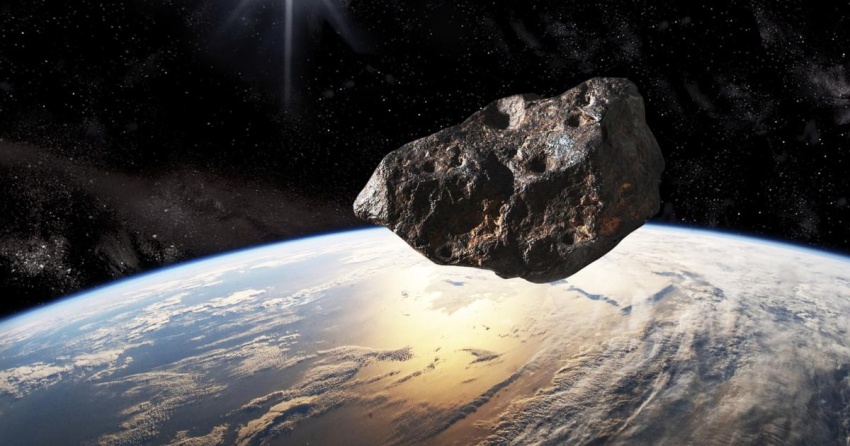
Massive Skyscraper-Sized Asteroid Nears Earth-Visible to the Naked Eye
An asteroid designated as 2024 ON is projected to pass by Earth on September 17, 2024, at a distance of approximately one million kilometers. Measuring between 220 and 470 meters in length, the celestial object is comparable in size to a skyscraper, according to data provided by the Virtual Telescope Project.
Trajectory and Distance
The asteroid will maintain a distance of about 2.6 times the average distance between the Earth and the Moon during its closest approach. While this proximity classifies the object as “potentially hazardous” under standard astronomical definitions—a designation applied to any near-Earth object with an orbit that brings it within a significant distance of our planet—astronomers emphasize that there is no risk of an impact.

The Virtual Telescope Project, based in Italy, has scheduled a live broadcast of the asteroid’s passage. The event will be accessible to the public via the project’s official website, allowing for remote observation of the object as it traverses the night sky.
Observation and Tracking
The object was first identified through automated sky survey systems tasked with monitoring near-Earth objects (NEOs). Its size, estimated at the scale of a large building, makes it a subject of interest for radar imaging and spectroscopic analysis.
Professional observatories are expected to utilize the flyby to refine the asteroid’s orbital parameters and physical characteristics. By bouncing radio waves off the surface of 2024 ON as it passes, researchers intend to generate detailed imagery that can reveal the asteroid’s shape, rotation, and surface composition.
Institutional Monitoring
Space agencies, including NASA and the European Space Agency (ESA), maintain ongoing catalogs of such objects to track their long-term orbital paths. The classification of “potentially hazardous” does not imply an immediate threat; rather, it serves as an institutional trigger for continued surveillance to ensure that gravitational perturbations from planets do not alter the asteroid’s trajectory in future centuries.
The scientific community continues to monitor the data stream from the asteroid as it approaches the perigee of its current orbit. Observations are scheduled to continue through the remainder of the week.