
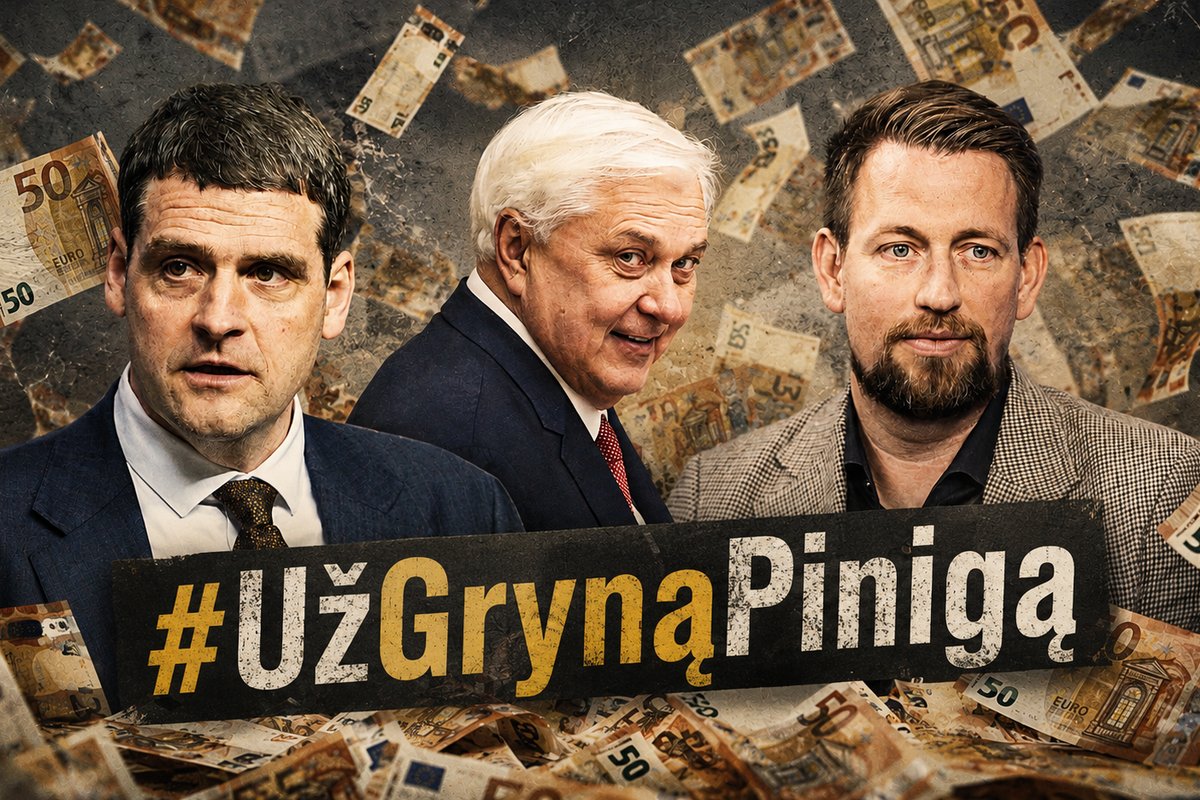
Massive Cash Holdings Among Lithuanian Politicians Raise Red Flags
As of May 28, 2026, a wave of financial disclosures from the Lithuanian Seimas has revealed that numerous lawmakers and their close associates maintain hundreds of thousands of euros in personal cash holdings. This revelation has triggered widespread public scrutiny regarding transparency, potential illicit enrichment, and the systemic risks of a cash-heavy political culture.
Transparency is the bedrock of a functioning democracy, yet the recent disclosure of massive cash reserves held by members of the Lithuanian Parliament has exposed a significant “information gap” in our oversight mechanisms. While holding cash is not inherently illegal, the scale of these holdings—often exceeding six figures—raises fundamental questions about the provenance of wealth and the efficacy of current anti-money laundering (AML) protocols.
The Anatomy of Political Cash Holdings
The data emerging from recent mandatory asset declarations paints a startling picture. We are not looking at pocket change; we are looking at millions of euros in liquidity kept outside the formal banking system. This phenomenon, often referred to colloquially as keeping money under the mattress, acts as a red flag for financial regulators. When public officials bypass standard financial institutions, they effectively insulate their assets from the automated monitoring systems designed to detect money laundering and suspicious transaction patterns.
Why do these individuals choose to hold such vast sums in physical currency? The answer often lies in a distrust of the banking sector or, more critically, a desire to avoid the reporting requirements mandated by the Financial Crime Investigation Service. By maintaining cash, these politicians create a “black box” of wealth that is difficult to audit retrospectively.
“When a public servant maintains a cash reserve that dwarfs the annual income of their constituents, the question is no longer about personal financial management. It is about the systemic integrity of the institution. If the money cannot be traced to a verifiable tax-paid source, the presumption of legitimacy must be challenged.” — Dr. Jonas Vaitkus, Senior Analyst at the Baltic Institute of Economic Transparency.
The Macro-Economic Implications of the “Cash Culture”
This is not merely a matter of political ethics; it is a structural economic issue. When high-ranking officials normalize the hoarding of physical currency, it undermines the state’s efforts to digitize the economy and combat the shadow market. The European Union has consistently pushed for tighter controls on high-value cash transactions to curb tax evasion. Lithuania’s current situation puts it at odds with these broader European directives.

The risks are tangible:
- Reduced Institutional Trust: Every euro held in a “sock” is a euro that does not contribute to the transparent circulation of capital.
- Regulatory Arbitrage: By keeping assets in cash, politicians effectively opt out of the regulatory frameworks that apply to the average citizen.
- Vulnerability to Corruption: Large cash reserves serve as a convenient vehicle for bribery or the movement of illicit funds that would be flagged by any standard banking compliance check.
For those in the private sector navigating this volatile environment, the complexity of compliance has never been higher. Businesses and individuals seeking to shield their reputation and ensure absolute adherence to evolving fiscal laws are increasingly turning to specialized corporate compliance and white-collar defense attorneys. These professionals are essential for conducting internal audits that prevent accidental non-compliance with the increasingly stringent anti-corruption statutes.
Data Comparison: Reported Assets vs. Standard Financial Behavior
| Asset Category | Standard Practice | Political “Cash” Practice |
|---|---|---|
| Wealth Storage | Regulated Banking/Investment | Physical Cash/Vaults |
| Audit Trail | Digital & Transparent | Non-existent/Private |
| Regulatory Oversight | High (AML/KYC) | Minimal/Self-Reported |
The Path Toward Accountability
The public outcry is justified. If the people who write the laws are the ones least likely to participate in the formal financial systems they regulate, the social contract begins to fray. We are witnessing a moment where the Seimas must decide whether to tighten the rules for themselves or continue to allow this culture of opacity to fester.
Civic organizations are now calling for a mandatory ceiling on cash holdings for public officials, arguing that any amount exceeding a reasonable living expense should be held in transparent, interest-bearing accounts. For those involved in regional administration or municipal oversight, this is a wake-up call to audit local financial protocols. Engaging with government affairs and transparency consulting firms has become a necessary step for organizations looking to navigate the fallout of these political scandals and implement robust, ethical financial policies.
The “information gap” here is not just about numbers; it is about the distance between the governed and those who govern. As we move through 2026, the demand for forensic accounting and rigorous ethical oversight will only intensify. If you are an organization or a private entity concerned about the implications of these financial revelations on your own operations, securing the services of vetted forensic financial auditors is the only way to ensure your own fiscal health remains beyond reproach in an increasingly transparent world.
The era of the “hidden sock” in politics is nearing its end. Whether through legislative reform or the relentless pressure of public investigative journalism, the light is being shone into the dark corners of these private vaults. The question remains: will our leaders adapt to the standard of transparency they demand of others, or will they continue to rely on the shadow of physical cash to hide their fortunes? History suggests that the truth, no matter how deeply buried, eventually finds its way to the surface.