Masked Settlers Attack European Diplomats and Palestinians in West Bank
Jewish rioters attacked European diplomats visiting an olive harvest near the Palestinian village of Taybeh in the West Bank, prompting Belgium to demand European Union sanctions against those responsible.
Diplomatic Delegations Targeted Near Taybeh
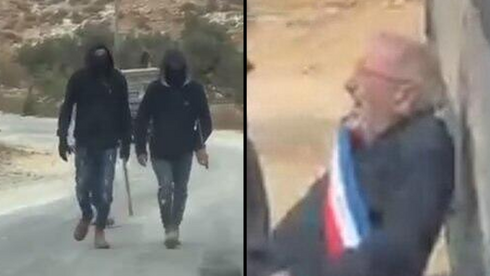
Diplomats from France, Belgium, and Poland visiting an olive harvest near Taybeh—widely noted as the last entirely Christian village in the West Bank—faced an assault by masked individuals. Videos from the scene showed a group of masked men approaching a vehicle carrying the diplomats with clubs and stones, pursuing them on all-terrain vehicles. Bernard Baudoux, mayor of the French town of Aulnoye-Aymeries, was photographed sitting on the ground with his back against a vehicle while wearing a French flag armband. A separate image confirmed a shattered window on a vehicle belonging to the Belgian consulate.
The attack also targeted Palestinian olive pickers in Taybeh. The village lies in an area designated as Area B under the Oslo Accords, where the Palestinian Authority exercises civil control while Israel retains overriding security responsibility. Amit Orpeli, an activist with the Torat Tzedek organization who arrived at the scene with fellow activist Roni Federman, stated that they notified the army in real time but received no response or appearance from troops.
According to Orpeli, seven masked settlers armed with clubs immediately approached them on ATVs, and fleeing Palestinian landowners reported that the attackers stole olives that had already been harvested.
Belgium Condemns Attack and Seeks EU Sanctions
Belgian Deputy Prime Minister and Foreign Minister Maxime Prévot strongly condemned the attack. He confirmed that Belgian personnel were safe, but noted that a French mayor was assaulted and a Belgian diplomatic vehicle damaged. Prévot linked the violence to Israel’s settlement policies, which he condemned as illegal, and stated that Belgium would continue pressing for European Union sanctions against those responsible for the attacks and those supporting them.
Democrats Party chairman Yair Golan described the incident as a serious and dangerous development requiring an immediate and decisive response. Golan accused the Netanyahu-Smotrich coalition of allowing nationalist violence to escalate and called for the restoration of administrative detention against dangerous Jewish extremists, the dismantling of extremist violence centers, and the evacuation of illegal outposts.
Simultaneously, hundreds of former senior Israeli security officials sent a letter of apology to Washington Post photographer Heidi Levine, who underwent surgery on a finger of her left hand that was nearly severed during a separate settler assault. Signatories included former IDF chief of staff Moshe Ya’alon, former Mossad director Tamir Pardo, and former Shin Bet director Ami Ayalon. They warned that daily violence against innocent people in the West Bank damages Israel’s security and international standing.
IDF Investigates Uncoordinated Consular Visit
The Israel Defense Forces strongly condemned the violence near Taybeh and stated that police officers and forensic investigators from the Israel Police West Bank district entered the area under military protection to collect evidence and take witness statements. However, the military stated that the consular visit had not been coordinated with them in advance, emphasizing that such coordination is vital to preventing incidents.
According to the military’s preliminary inquiry, no troops were present when the attack occurred, and the report sent by security personnel had gone to an automated operations center account that receives dozens of operational reports daily and responds only to authorized security forces. Israel Police confirmed that the Binyamin station had opened an investigation and notified the Foreign Ministry to help locate victims, gather statements, and identify suspects.
Questions remain regarding the security response time and the exact chain of command during the uncoordinated diplomatic visit. Meanwhile, residents of Taybeh report ongoing pressures, noting that 15 families have left the village for various countries since the October 7 massacre.