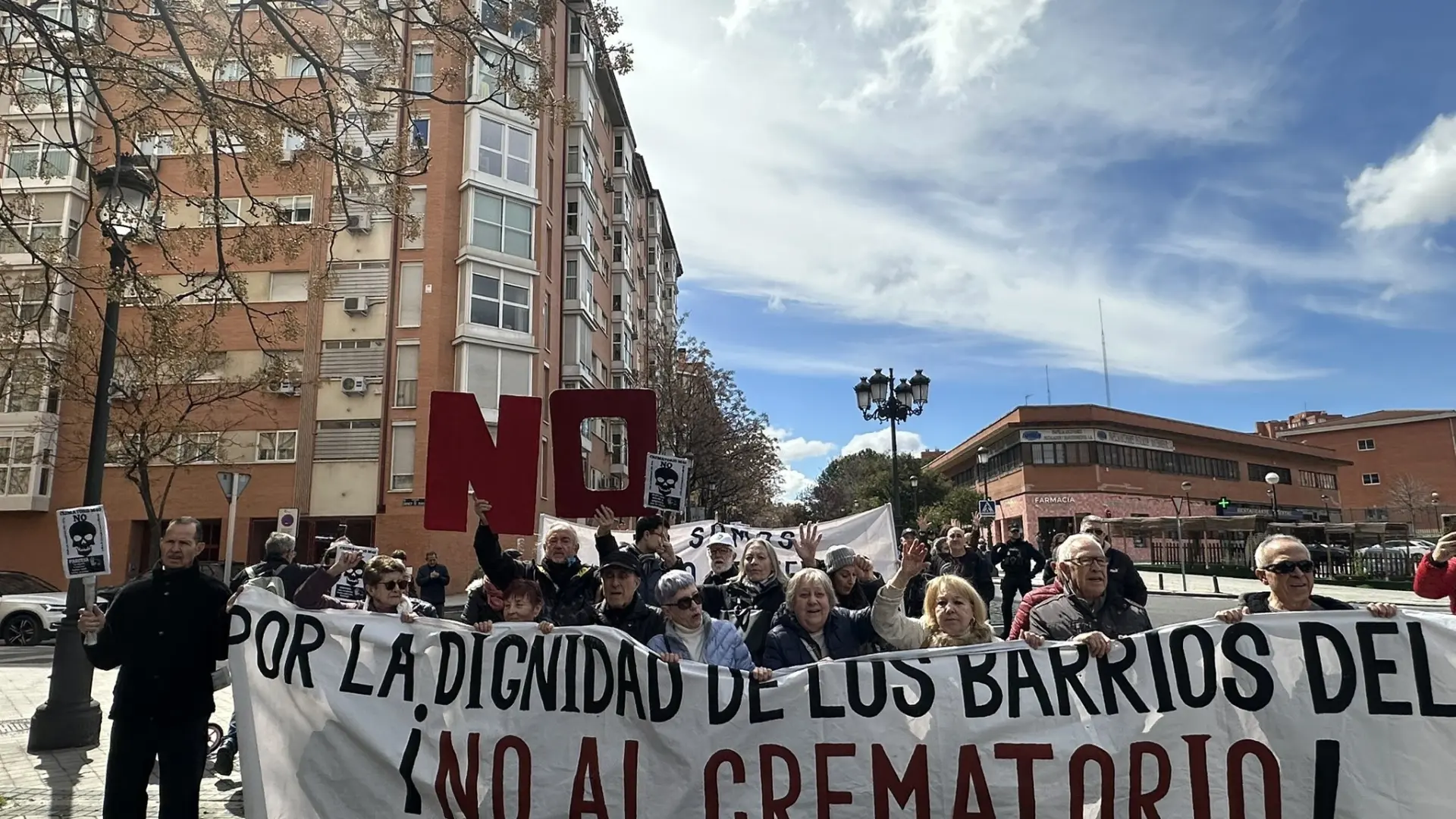
Más Madrid Protests M-40 Crematorium Over Public Health Risks
More than 10,000 residents in southern Madrid face potential health risks from a proposed crematorium on the M-40 ring road, according to Más Madrid, which claims the facility threatens air quality and perpetuates environmental injustice by locating polluting infrastructure in working-class neighborhoods while sparing affluent districts like Chamberí.
The controversy over the San Fermín crematorium project reflects a deeper pattern of municipal decision-making that concentrates environmentally burdensome facilities in Madrid’s southern districts, a trend critics argue violates principles of equitable urban planning and public health protection. As of April 2026, the project remains stalled amid legal challenges and sustained neighborhood opposition, with residents citing concerns over particulate matter emissions, mercury contamination, and cumulative impacts from existing industrial zones in Usera, Villaverde, and Puente de Vallecas.
Historical Context: Environmental Inequity in Madrid’s Urban Planning
Madrid’s southern districts have long borne a disproportionate share of the city’s infrastructure burdens. Since the 1990s, these areas have hosted major waste treatment plants, logistics hubs, and transportation corridors, while northern and central neighborhoods have benefited from stricter zoning protections and greater political representation. According to a 2024 study by the Autonomous University of Madrid, residents in southern Madrid experience average PM2.5 levels 22% higher than those in northern districts, correlating with elevated rates of respiratory illness and cardiovascular strain.
The proposed crematorium, initially approved in 2023 under a fast-track municipal license, would add a new source of airborne pollutants including dioxins, furans, and mercury vapor—substances linked to cancer, neurological damage, and developmental disorders. Critics note that modern filtration technology exists but was not mandated in the original permit, raising questions about regulatory oversight and industry influence.
Legal Challenges and Community Mobilization
Más Madrid has filed multiple legal actions challenging the crematorium’s authorization, arguing that the municipal license violates both Spain’s Environmental Assessment Law (Ley 21/2013) and the EU’s Industrial Emissions Directive by failing to adequately assess cumulative impacts or consider less polluting alternatives. The party claims the project exemplifies a “two-speed Madrid” where environmental protections are applied unevenly based on socioeconomic status.
“We are not opposed to dignified funeral services—we are opposed to placing toxic infrastructure where it endangers vulnerable populations. If this crematorium were truly safe, it would be built in Salamanca or Chamartín, not beside schools and homes in Usera.”
— Olga Martínez, Más Madrid councilor and spokesperson for the San Fermín platform, speaking at the April 19, 2026 neighborhood rally.
Legal experts warn that the case could set a precedent for how Spanish cities balance mortuary services with environmental justice. “Municipalities often treat crematoriums as low-risk due to their intermittent operation, but the reality is that emissions during operation can spike dramatically, especially if filters are not maintained or if unsuitable materials are processed,” said Congreso de los Diputados environmental law specialist Dr. Elena Rojas in a 2025 interview with EFE. “The burden of proof should be on the applicant to demonstrate zero harm—not on residents to prove they are being harmed.”
Infrastructure and Public Health Implications
The M-40 corridor, already one of Europe’s most congested urban ring roads, sees over 1.2 million vehicles daily, contributing significantly to regional air pollution. Adding a crematorium in this zone raises concerns about synergistic effects—where combined emissions from traffic and industrial sources create health impacts greater than the sum of their parts. The Madrid Regional Health Service has not conducted a cumulative impact assessment for the area, despite repeated requests from local health councils.
Residents’ associations have pointed to existing clusters of asthma and chronic bronchitis in nearby schools and senior centers, arguing that the crematorium would exacerbate conditions in a population already facing health disparities. A 2023 audit by the Madrid Ombudsman found that southern districts have 30% fewer green spaces per capita than northern zones, limiting natural mitigation of air pollutants.
The Directory Bridge: Finding Solutions Through Civic Engagement
For communities confronting siting decisions that pit economic convenience against public health, access to verified expertise is essential. Residents seeking to challenge environmental permits or demand stricter emissions controls often turn to environmental law attorneys who specialize in administrative appeals and constitutional rights claims. Simultaneously, air quality monitoring consultants can provide independent data to counter industry-funded assessments, while neighborhood advocacy groups offer organizational support for sustained mobilization and legal fundraising.
These professionals do not oppose necessary infrastructure—they insist it be sited and operated according to the highest standards of safety, transparency, and equity. In Madrid’s case, their involvement could shift the debate from one of political expediency to evidence-based policymaking.
As Madrid continues to grow and densify, the question of where to place essential but potentially harmful facilities will only become more urgent. The San Fermín crematorium dispute is not merely about one building—it is a test of whether the city can uphold its commitment to environmental justice, or whether it will continue to treat its southern districts as sacrifice zones. For those seeking to understand how to navigate such conflicts—whether as a resident, official, or professional—the World Today News Directory remains a vital resource for connecting with verified experts who turn civic concern into actionable change.