
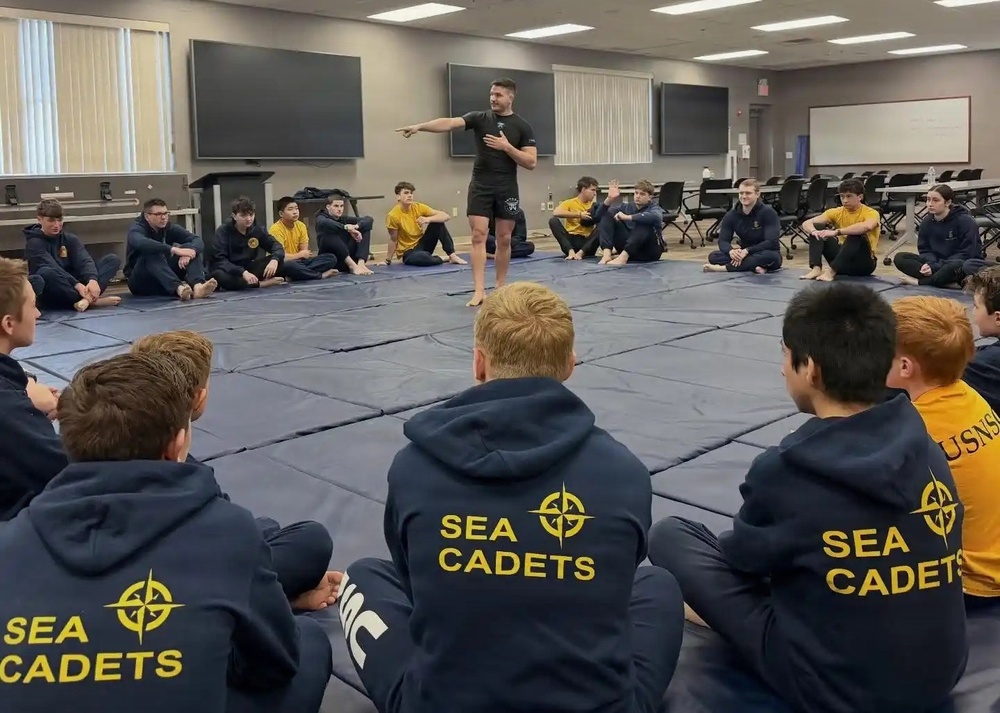
Martial Arts Master Trasso Demonstrates Immobilization Techniques to Youth
Michael Trasso, a 2nd Degree Black Belt and former collegiate wrestler, provided specialized self-defense and immobilization instruction to Sea Cadets. By integrating high-level grappling techniques, the program transitions youth from rote drilling to functional confidence, leveraging Trasso’s extensive IBJJF and Rhode Island College wrestling pedigree within the New Jersey region.
The Tactical Pivot: From Rote Drilling to Functional Grappling
In the realm of youth development and military-style training, there is a persistent friction between “drilling”—the repetitive execution of choreographed movements—and functional application. For the Sea Cadets, the introduction of self-defense instruction represents a strategic shift toward adaptive combat. The problem is simple: rote drilling creates a false sense of security that vanishes the moment a resisting opponent alters the kinetic chain. The solution is the implementation of world-class grappling, focusing on the ability to control and immobilize an adversary through leverage rather than raw strength.
This transition requires a deep understanding of positional dominance. By moving beyond the basics, these students are introduced to the mechanics of the ground game, where the goal is to neutralize a threat while minimizing personal risk. This isn’t merely about fighting; it is about the psychological shift that occurs when a student realizes they can dictate the terms of a physical engagement. For youth athletes, this builds a foundation of self-esteem and confidence that transcends the mats, creating a ripple effect in their academic and social lives.
The Pedigree of Precision: Analyzing the Trasso Blueprint
The efficacy of this instruction is rooted in a career defined by elite-level competition and technical evolution. Michael Trasso’s trajectory provides a blueprint for high-performance grappling. Beginning his journey in 1995 at the age of five, Trasso spent a decade refining his Jiu Jitsu before diversifying into wrestling. This dual-threat approach is critical; while Jiu Jitsu dominates the ground, wrestling provides the essential tools for controlling the transition from the feet to the floor.
The hard data supports this expertise. Recruited to wrestle for Rhode Island College in 2008, Trasso climbed the competitive ranks to be nationally ranked #9 by 2011. By 2012, he achieved the significant milestone of his 100th collegiate victory, a metric that speaks to consistency and tactical adaptability over a grueling collegiate schedule. His transition into adult competition further solidified his standing, earning two IBJJF World Championship bronze medals and three IBJJF Pan American Championship medals.
“Our mission is to not only make you or your child proficient in both arts, but to also facilitate you get active, get healthy, build confidence, build self-esteem, meet your goals, and experience positive social interaction.”
This level of achievement isn’t accidental. It is the result of a rigorous commitment to the sport’s technical nuances. When Trasso demonstrates immobilization techniques to the Sea Cadets, he is distilling decades of high-stakes competition into actionable skills. This is the difference between a hobbyist instructor and a battle-tested practitioner who understands the pressure of a world-stage tournament.
Regional Synergy and the Youth Athletic Pipeline
The impact of this training extends beyond the individual cadets, anchoring a broader sports economy in Northern New Jersey. Based in downtown Glen Rock, the academy serves as a regional hub for Bergen and Passaic Counties. The geographical draw is significant, pulling students from Paramus, Ridgewood, Fair Lawn, Hawthorne, Midland Park, Saddle Brook, Oradell, River Edge, the Township of Washington, Maywood, Elmwood Park, Waldwick, Wyckoff, Oakland, Ramsey, and Wayne.
This concentration of athletic talent creates a localized “halo effect.” As more youth enter the pipeline of competitive grappling, there is an increased demand for structured development. We see this in the progression of students like Mason, who recently transitioned from a white belt to a grey/white belt after a dominant tournament performance where he remained unscored across seven matches. This level of competitive success drives parents to seek out local youth athletic programs that can sustain this growth trajectory.
From a business perspective, the academy’s “5 Week Intro Program” serves as a low-friction entry point, effectively converting curiosity into long-term commitment. This model is essential for scaling a martial arts community while maintaining the “clean, safe, and fun” environment necessary for children and teens to thrive.
The Physical Toll and the Recovery Infrastructure
High-intensity grappling—especially the blend of wrestling and Jiu Jitsu—places immense stress on the joints, specifically the cervical spine, shoulders, and knees. The process of “controlling and immobilizing” requires isometric strength and explosive movements that can lead to overuse injuries if not managed with professional oversight. While the elite competitors at the academy have the benefit of world-class instruction, the physical demands of the sport necessitate a parallel investment in recovery.
For the adolescent athlete, the growth plate is a critical vulnerability. The transition from a white belt to more advanced ranks involves increased resistance and higher-impact takedowns. To ensure longevity in the sport and prevent career-ending injuries, it is imperative that athletes have access to sports rehabilitation specialists who understand the specific biomechanics of grappling. Proper periodization and load management are not just for the pros; they are essential for any youth athlete aiming for the collegiate level, much like Trasso’s own path through Rhode Island College.
The Path Toward Positional Dominance
The integration of self-defense into the Sea Cadets’ curriculum is more than a tactical add-on; it is an investment in the resilience of the next generation. By replacing rigid drilling with the fluid, evidence-based techniques of Jiu Jitsu and Wrestling, these students are gaining a toolkit for real-world survival and personal growth. The trajectory for these cadets is clear: they are moving from a state of passive instruction to active mastery.
As the grappling landscape continues to expand in New Jersey, the demand for professional support services—from specialized coaching to legal guidance for competitive contracts—will only grow. Whether you are a parent looking to enroll your child in a certified martial arts academy or a professional athlete seeking to optimize your recovery, the World Today News Directory provides the vetted connections necessary to navigate the high-performance sports world.
Disclaimer: The insights provided in this article are for informational and entertainment purposes only and do not constitute medical advice or sports betting recommendations.