Mars Volcanoes: Complex Eruptions Reveal Planet’s Volcanic History
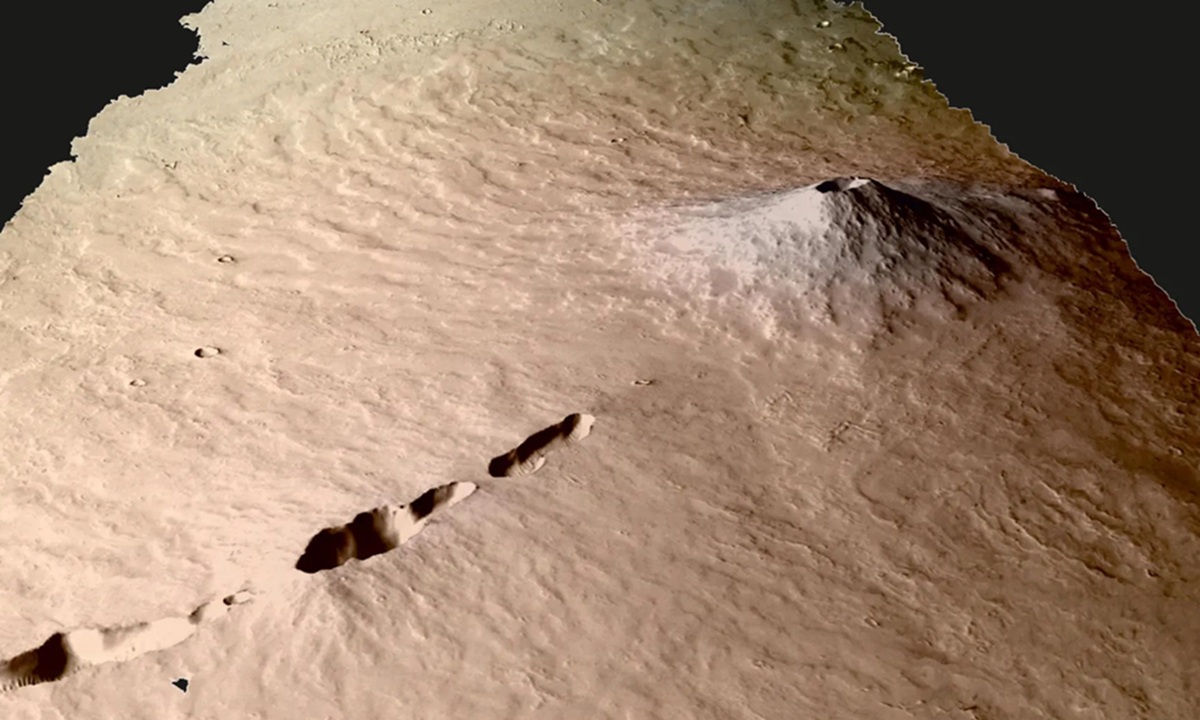
New orbital analysis of Pavonis Mons, one of the largest volcanoes on Mars, reveals a far more complex geological history than previously understood. The research, published in the journal Geology, indicates the volcano wasn’t formed by a single, massive eruption, but through multiple phases of activity powered by a long-lived and evolving magma system beneath the surface.
The findings challenge previous assumptions about the Red Planet’s volcanic activity and suggest Mars’ interior was more dynamic for a longer period than scientists believed. Researchers from Adam Mickiewicz University in Poland, the University of Iowa, and the Lancaster Environment Centre collaborated on the study, utilizing high-resolution images and mineral data collected from orbit.
“Our results show that even during Mars’ most recent volcanic period, magma systems beneath the surface remained active and complex,” said Bartosz Pieterek of Adam Mickiewicz University, who led the research. “The volcano did not erupt just once – it evolved over time as conditions in the subsurface changed.”
The team focused on a volcanic system south of Pavonis Mons, reconstructing its evolution in unprecedented detail by combining surface mapping with orbital mineral data. The analysis revealed a transition from early lava flows originating from fissures to later, point-source eruptions that created cone-shaped vents. These distinct phases are marked by variations in mineral composition, indicating shifts in the magma’s origin and storage depth.
“These mineral differences tell us that the magma itself was evolving,” Pieterek explained. The changing chemical signatures within the lava flows provide clues about the processes occurring within the subsurface magma reservoir.
The study highlights the difficulty of understanding subsurface processes on Mars without direct access to rock samples. Currently, scientists rely on remote sensing data to infer the hidden workings of Martian volcanoes. The new research demonstrates the value of this approach, providing rare insights into the planet’s interior and the long-term evolution of its volcanic systems.
According to a release from the Geological Society of America, the research builds on previous work suggesting that even seemingly recent volcanic features on Mars possess a more intricate history than initially thought. The findings contribute to a growing body of evidence indicating that Mars was geologically active for a considerable period, potentially influencing its climate and habitability.
The research team intends to continue analyzing data from Pavonis Mons and other Martian volcanic regions to further refine their understanding of the planet’s magmatic processes. No immediate follow-up missions to collect physical samples have been announced.