
Mars Rover Curiosity: Wheel Damage & NASA’s Repair Strategies
Curiosity Rover Faces Wheel Damage, NASA Implements Mitigation Strategies
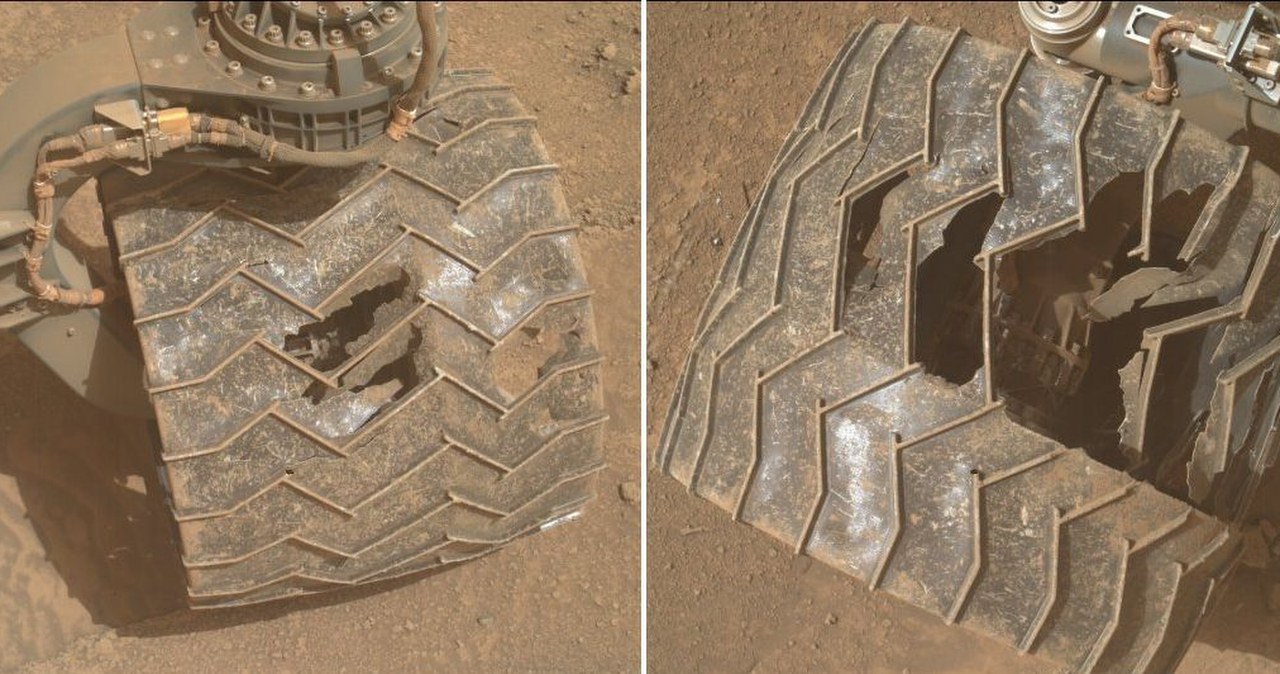
Evidence of increasing wear on the wheels of NASA’s Curiosity rover has prompted the agency to implement a series of corrective measures, according to recent data transmitted back to Earth. Images reveal significant damage, particularly to the mid-right wheel, with internal components now exposed.
First signs of wheel deterioration were observed as early as 2013, but recent imagery indicates the problem is progressing. NASA has responded by altering Curiosity’s route, steering it away from the most hazardous terrain. The transition from hard, flat surfaces to softer shale on Mount Sharp has demonstrably slowed the rate of wheel degradation.
In 2017, a software update was uploaded to the rover, incorporating a new traction control algorithm. This system dynamically adjusts the speed of each wheel in real-time, minimizing stress on sharp rocks and uneven surfaces. The algorithm analyzes data from the rover’s suspension, identifies contact points, and optimizes driving to reduce slippage.
NASA has likewise proactively developed a more drastic solution for potential severe wheel damage. A duplicate of Curiosity, nicknamed “Scarecrow,” was constructed on Earth to test the rover’s ability to continue operating even with a partially broken wheel. Tests showed that Curiosity could potentially continue traversing the Martian surface even with detached wheel components, provided the damaged section could be safely dislodged.
To achieve this on Mars, NASA engineers have devised methods utilizing the surrounding environment – specifically, rocks – to break off damaged wheel sections. Techniques such as the “Twist and Shout Maneuver” and the “Pigeon Toe Maneuver” are designed to trap and ultimately sever compromised wheel fragments during continued driving.
Despite the visible damage, Curiosity continues to execute its mission, and the durability of its construction continues to exceed initial expectations. NASA currently does not plan to implement the more aggressive wheel-removal maneuvers, opting to allow the rover to continue its exploration and data collection on the Martian surface.