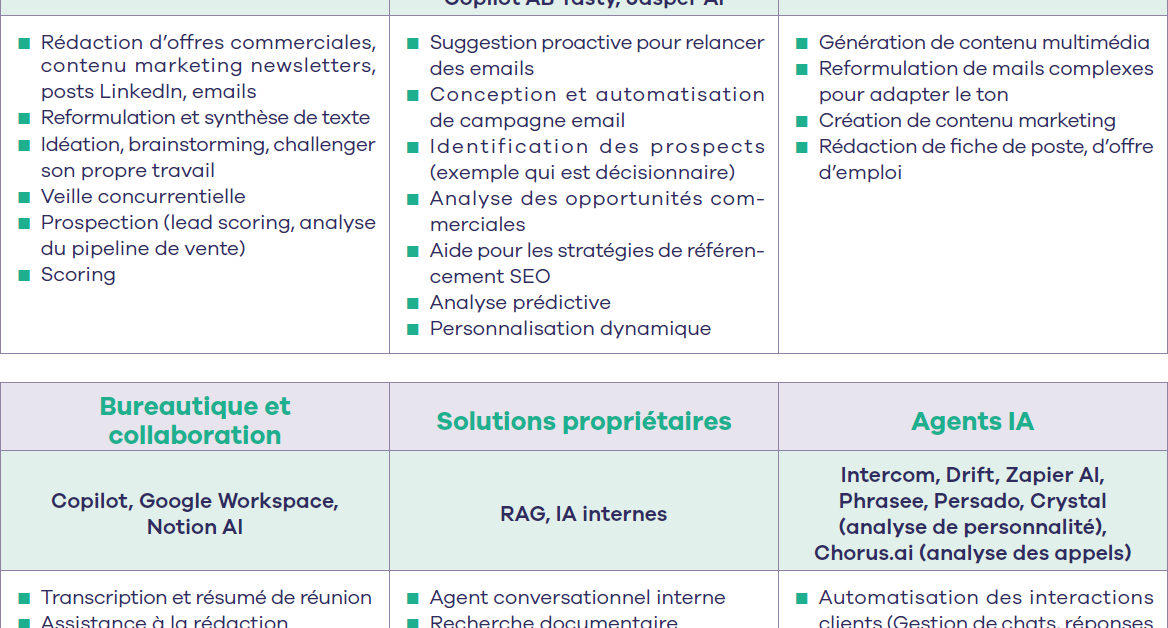
Marketing & Sales AI: Beyond Single Tools to a Full Ecosystem
The global commercial sector is fracturing along a new fault line: artificial intelligence adoption. While early movers are compressing customer acquisition costs by 18%, laggards face margin erosion as regulatory ambiguity stifles deployment. The disparity isn’t just technological; it is a balance sheet crisis driven by uneven skill integration and a lack of standardized governance frameworks across major retail and B2B markets.
We are witnessing a bifurcation in the commercial landscape that goes deeper than mere software implementation. The narrative has shifted from “if” to “how fast,” but the speed varies wildly across verticals. High-frequency trading algorithms have long dominated equity markets, yet the application of generative AI in sales pipelines and marketing attribution remains stubbornly inconsistent. This isn’t a technology problem; it is a capital allocation failure. Companies pouring CAPEX into AI infrastructure without corresponding OPEX adjustments for talent retention are seeing their return on invested capital (ROIC) stagnate.
The core issue lies in the ecosystem fragmentation. Professionals in commercial and marketing roles are not utilizing a singular AI solution but navigating a disjointed stack of tools. This creates data silos that inflate operational overhead. When a Chief Revenue Officer cannot reconcile data between a predictive lead scoring model and a generative content engine, the resulting friction bleeds directly into EBITDA. The market is punishing inefficiency with lower valuation multiples.
The Three Pillars of Commercial AI Friction
To understand the fiscal impact, we must dissect the three specific friction points currently arresting growth in the sector. These are not theoretical hurdles; they are quantifiable drags on performance observed in Q1 2026 earnings transcripts across the S&P 500 consumer discretionary sector.

- Regulatory Ambiguity and Compliance Risk: The absence of a unified global framework for AI in commerce creates a liability tail. Without clear guidelines on data sovereignty and algorithmic bias, legal teams are forcing conservative deployment caps. This hesitation allows agile competitors to capture market share. Firms are increasingly turning to specialized regulatory compliance consultants to navigate this grey area, treating legal counsel not as a back-office function but as a strategic growth enabler.
- The Skills Gap and Wage Inflation: The demand for hybrid talent—professionals who understand both commercial strategy and prompt engineering—has outstripped supply by a factor of three. This scarcity is driving wage inflation in commercial roles, compressing net margins. Organizations that fail to upskill existing workforces are facing attrition rates exceeding 25% in key revenue-generating departments. The solution often lies in partnering with corporate training and development firms that specialize in rapid technical reskilling.
- Integration Debt: Many enterprises have accrued significant “integration debt,” where legacy CRM systems cannot communicate with modern AI agents. The cost of maintaining these bridges is skyrocketing. Instead of custom-building solutions, smart CFOs are consolidating vendors through enterprise integration specialists to streamline the tech stack and reduce total cost of ownership.
The financial implications of ignoring these pillars are severe. Consider the divergence in operating margins between AI-native retailers and traditional brick-and-mortar hybrids. The former are leveraging predictive analytics to optimize inventory turnover, freeing up working capital. The latter are stuck holding excess stock due to inaccurate demand forecasting, a direct result of poor AI adoption.
“We are no longer debating the utility of AI in commerce; we are auditing the efficiency of its deployment. The companies winning today are those that treat AI governance as a balance sheet item, not an IT ticket.”
This sentiment echoes the warnings issued during recent investor days by major conglomerates. The market is pricing in a premium for clarity. Investors are demanding transparency on how AI contributes to top-line growth versus how much it costs to maintain. The era of “AI washing” is over; the street wants to notice the correlation between algorithmic implementation and free cash flow.
The Cost of the “Unclear Framework”
The phrase “cadre flou” (unclear framework) from recent European market analyses perfectly encapsulates the current risk premium. When the rules of engagement are undefined, capital becomes expensive. Lenders and equity investors apply higher discount rates to projects reliant on ambiguous AI strategies. This increases the cost of capital for expansion.
the uneven adoption creates a competitive moat for the leaders. As the top 10% of performers automate routine commercial tasks, they redeploy human capital toward high-value relationship management. The bottom 50% remain bogged down in manual data entry and disjointed communication channels. This divergence will likely accelerate consolidation. We expect to see a wave of M&A activity where larger players acquire smaller, AI-mature competitors not for their revenue, but for their operational architecture.
For mid-market firms, the path forward requires a strategic pivot. It is no longer sufficient to license a tool. The focus must shift to ecosystem orchestration. This involves rigorous vendor due diligence and a commitment to interoperability. Companies that fail to address the skills gap internally will uncover themselves reliant on external digital transformation consultancies to bridge the divide, often at a significant premium.
The timeline for correction is short. By Q3 2026, we anticipate that analysts will begin stripping out “AI potential” from valuation models, focusing strictly on realized efficiency gains. The window for speculative investment in commercial AI is closing. The market is moving toward a maturity phase where execution trumps innovation.
the impact of AI in commerce is not a story about robots replacing salespeople. It is a story about capital efficiency. The firms that survive this transition are those that align their technology stack with their fiscal reality. They are the ones treating AI not as a magic wand, but as a lever for margin expansion. For those struggling to find the right partners to navigate this complex landscape, the World Today News Directory offers a curated list of vetted B2B service providers capable of turning this technological volatility into a competitive advantage.