Mark Swed: Orchestras use AI and music to model democracy
Former classical music critic Mark Swed argues that symphony orchestras across Los Angeles, Boston, and Leipzig are utilizing public music performance and artificial intelligence experiments to model democratic participation during an active election season.
Orchestral Electoral Activism In Los Angeles And Boston
Throughout October and leading up to election day, the Los Angeles chamber orchestra Wild Up organized a series of interdisciplinary events known as “Democracy Sessions.” Swed reports that these gatherings featured concerts, theatrical performances, and environmental presentations across museums, libraries, parks, and neighborhood streets. The collective concluded its civic push with lunchtime solo acoustic sets titled “Music to Vote By” at the Japanese American National Museum Plaza in Little Tokyo.
Wild Up operates as an egalitarian collective under the leadership of founder and conductor Christopher Rountree. Swed highlights a performance at REDCAT of Louis Andriessen’s 1970s Dutch minimalist piece “De Staat,” where four vocalists intoned excerpts from Plato’s “Republic” to challenge the philosopher’s skepticism regarding music’s influence on the state. Rountree also assembled Oliver Leith’s theatrical toolkit piece “Garland” at MOCA’s Geffen Contemporary, mixing professional musicians, community amateur hymn singers, and a live black horse on stage.
Meanwhile, the Boston Symphony Orchestra celebrated the American semiquincentennial with the premiere of Philip Glass’s “Lincoln” symphony at Tanglewood and Yo-Yo Ma’s “We the People” residency, as noted in the reporting.
Boston Symphony Orchestra Performs AI-Bathed Orchestral Score
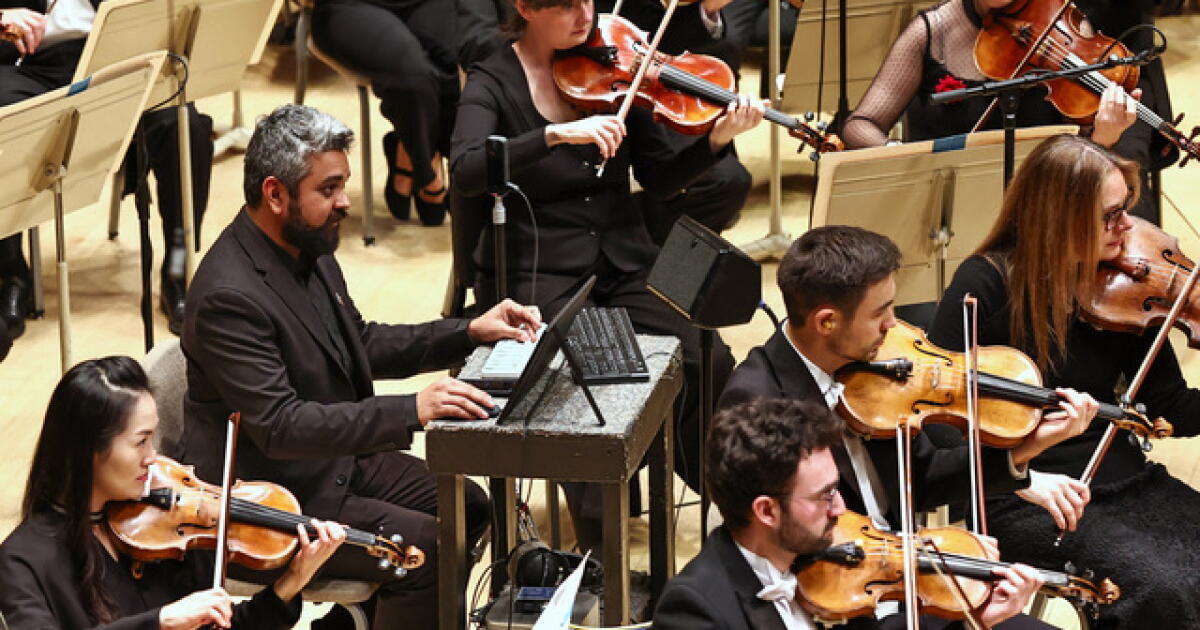
Two weeks prior to the midterms, the Boston Symphony Orchestra introduced Tod Machover’s new AI-bathed orchestral score, “already and not yet,” commissioned for the 40th anniversary of the MIT Media Lab. Swed describes how the composition treats artificial intelligence as stupid, musicians as creative artists and the audience as capable of opening its collective mind. Conductor Kent Nagano led the performance.
Concurrently, in Germany, the historic Gewandhaus Orchestra in Leipzig marked the regional elections in Saxony-Anhalt with a democracy weekend titled “Reading the Signs.”
Administrative Turmoil At The Boston Symphony Orchestra
Despite these artistic explorations of democracy, internal labor strife persists within the Boston Symphony Orchestra. Swed observes that many musicians performed wearing red flowers on their lapels to protest the administration’s decision not to renew Nelsons’ contract when it expires in the summer after 13 years of leadership. This comes at a time when beleaguered orchestra musicians have also been demanding a more democratically minded workplace.