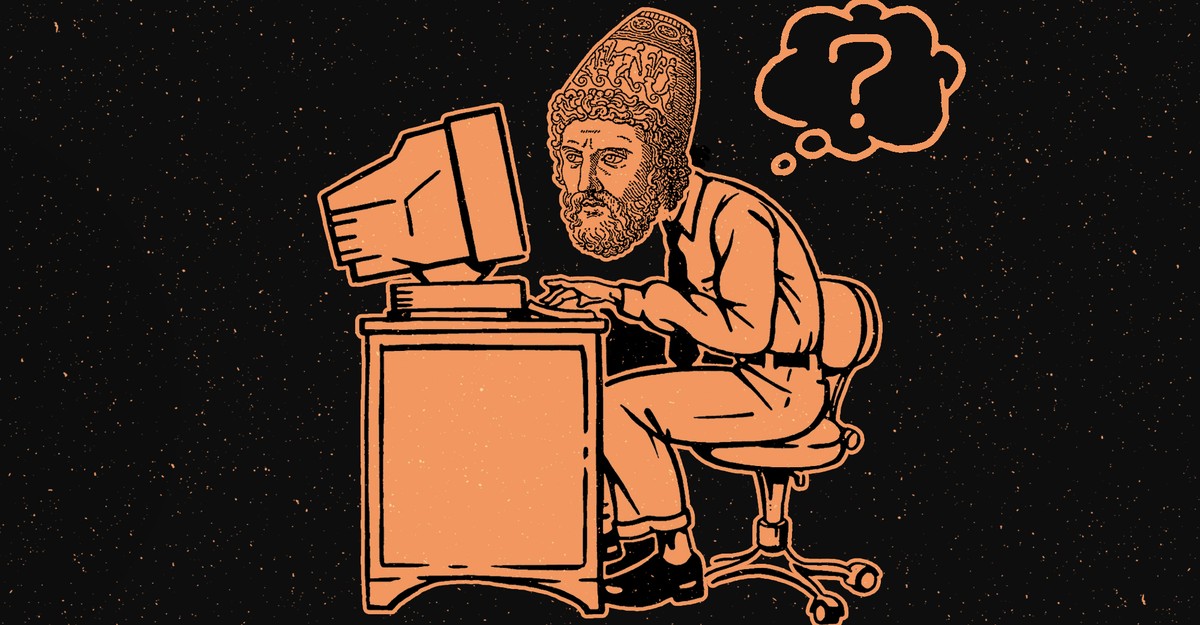
Marissa Mayer used AI to summarize her daughter’s personality
Marissa Mayer and the Automation of Family Life
In a column for Theatlantic.com, writer Amanda Mull examines a personal anecdote shared by former Yahoo Chief Executive Marissa Mayer regarding artificial intelligence and parenting. Mayer turned to her personal AI assistant, Dazzle, to solve an ostensibly mundane task when her daughter Marielle turned 10. The child’s teacher requested three bullet points summarizing what made Marielle special. Faced with a complex array of potential traits, Mayer asked the software to generate the answer. The tool quickly produced a concise description characterizing the child as empathetic, creative, and an animal lover, a result Mayer considered perfect.
The Quiz on Modern Domesticity
Mull uses that anecdote to construct a quiz contrasting contemporary technology industry expectations with the ancient trials of Odysseus returning to Ithaca after twenty years away. The satirical comparison places corporate AI prompts side by side with the classical hero’s bewildered encounters upon finding his home filled with strangers. The column contrasts questions designed to streamline human relationships—such as asking an algorithm what makes a son smile or what might constitute a good gift—with the profound alienation depicted in Homer’s epic.
Tech Pioneers Use Automated Text for Personal Tasks
The essay highlights how prominent figures in the tech sector approach personal milestones through computational delegation. Mayer, recognized as a pioneer at Google where she served as its first female engineer, routinely seeks out complex problems to solve. Yet, the task of defining a child’s character for a school assignment prompted reliance on automated text generation. Mull points out the surreal nature of turning to a machine to distill the essence of a ten-year-old child’s personality.
Digital Interactions Hollow Out Personal Experiences
The writing juxtaposes everyday modern family queries with the fragmented reality of a man returning to a life he no longer recognizes. Questions about whether a dog remembers its owner or how to bond with a spouse merge with the absurd prospect of querying artificial intelligence about intimate familiarity. The column frames these digital interactions not as helpful conveniences, but as symptoms of a broader cultural drift toward hollowing out personal experiences until familiar bonds begin to feel entirely foreign.