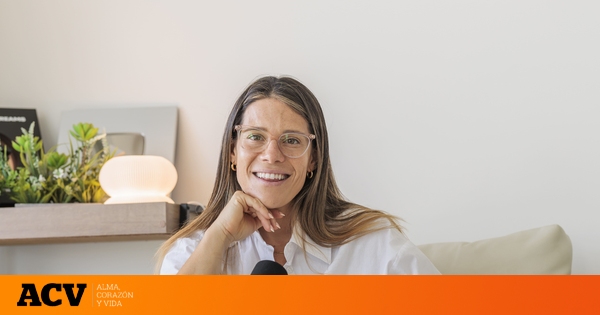
Marina Mammoliti: Ancestral Nervous System vs Modern Life in New Book
Living standards have risen, yet modern life breeds a deep, physical exhaustion that sleep alone cannot cure. In her 2026 book, Frena tu cabeza, clinical psychologist Marina Mammoliti argues that humanity is currently experiencing a unique phenomenon: an ancestral nervous system attempting to survive within an environment for which it was not evolved, according to El Confidencial.
According to El Confidencial, Mammoliti—who also hosts the mental health podcast Psicología al Desnudo—suggests that we must stop viewing anxiety as an enemy to be destroyed. Instead, she proposes that it should be read as a signal from an overwhelmed nervous system trying to sustain an unnatural pace of life.
The core of the problem lies in the shift from physical threats to symbolic ones. Mammoliti explains that while ancestral threats were physical, immediate, and finite—such as predators or scarcity—modern threats are symbolic, including economic uncertainty, feelings of rejection, or the pressure of unread digital messages.
Because the brain responds to both types of threats in the same way, individuals are now subjected to sustained “micro-threats” throughout the day.
“El sistema nervioso responde más al volumen acumulado que a cada evento aislado. Es vivir con el motor encendido todo el tiempo, y ningún motor está diseñado para eso,” said Marina Mammoliti.
The Cost of Constant Alertness
Mammoliti warns that this state of constant alertness often stems from self-demand rather than healthy ambition. She distinguishes between the two by noting that while discipline is driven by desire, self-demand is driven by fear.
This internal pressure, which the psychologist notes is often inherited rather than chosen, creates a cycle of “autoexplotación”—a term she attributes to philosopher Byung-Chul Han—where individuals feel they must constantly prove their worth.
This cycle of productivity often serves as a form of avoidance. Because constant activity functions as an anesthetic, the brain perceives rest or unproductive leisure as a threat, as stopping allows the underlying anxiety to surface. To manage this, Mammoliti suggests shifting the focus from perfection to construction: “La dirección calma; la perfección, no.”
Byung-Chul Han, a philosopher and cultural theorist who taught at the Universität der Künste Berlin from 2012 to 2017, characterizes this modern exhaustion as a byproduct of a “society of tiredness.” Within his framework, the concept of “autoexplotación” emerges as individuals transition from being subjects of external discipline to being both committers and sacrificers of their own time.
Driven by an excess of positivity and the relentless demand for efficiency, people turn this drive inward, becoming their own exploiters in a self-inflicted cycle of productivity. This internalized pressure creates a pathological state where the individual, aiming to avoid the perceived failure of stagnation, inadvertently fuels the burnout that defines the contemporary, hyper-productive landscape.
The struggle to maintain this pace can lead to internal warnings such as, “Esto va a salir muy mal” and “yo no voy a poder manejarlo.” Meanwhile, other observers like Fernando Botella suggest that modern culture places too much emphasis on constant change, noting, “Necesitamos seguir estando en la zona de confort y dejarnos de gilipolleces de estar saliendo siempre.”