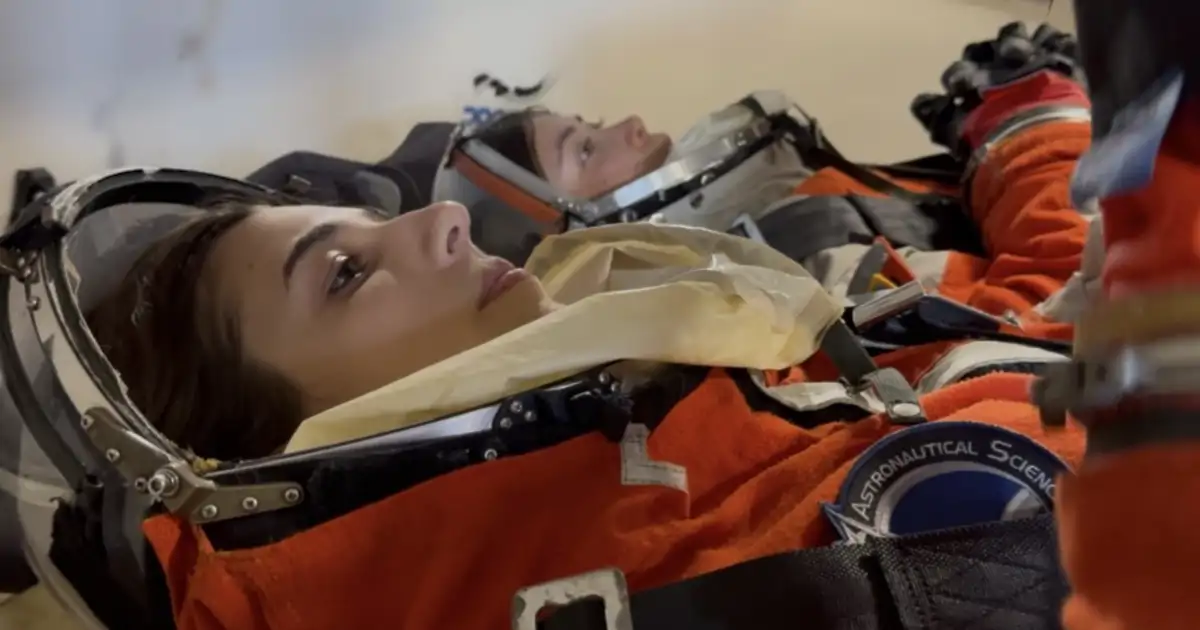
María Noel de Castro: The Argentine Engineer Aiming for Space
Argentine biomedical and aerospace engineer María Noel de Castro is a candidate for an international space mission scheduled for early 2027, which could make her the first person to prepare mate aboard the International Space Station, National Geographic España reported.
The 29-year-old researcher, currently completing a doctoral degree examining the effects of radiation on cardiac muscle, has been working alongside the Argentine Space Agency to coordinate a mission with Axiom Space. Her training in the United States follows years of preparation that began before crewed spaceflight featured in Argentina’s formal space sector planning. Speaking from Cape Canaveral, de Castro stated that her objective is to represent her country with pride and abrir un nuevo camino para los jóvenes argentinos
. She follows in the footsteps of a constellation of Latin American engineers, including Ellen Ochoa, Diana Trujillo, Lili Villarreal, and Adriana Ocampo, who have left their mark on ambitious missions for NASA and other international agencies over recent decades. Among the figures she most admires is Pablo de León, an Argentine spacesuit engineer who has spent many years working in the United States.
Developing a Latin American Niche in Space Agriculture
De Castro argues that national space programs should specialize according to their domestic strengths rather than attempting to develop every domain of exploration independently. With its established agricultural background, Argentina could direct its domestic expertise toward space agriculture.
Long-duration missions to destinations like the Moon or Mars will require reliable systems to produce food and manage resources independently of continuous resupply from Earth. Simulating soil chemistry and environmental factors artificially remains a central challenge for long-term crew survival. De Castro points to Argentina’s production capacity as a direct asset for contributing agricultural technology to multinational exploration frameworks.
Training as a Scientific Surrogate
In her role as a candidate astronaut, de Castro frames her primary function as acting as the eyes and hands of researchers on Earth, executing microgravity experiments that cannot be replicated from the ground. Her academic focus centers on bioastronautics and the impact of cosmic radiation on human tissue during extended spaceflights. Beyond specialized medical research, flight crews must master cross-disciplinary tasks, supporting physical science and engineering experiments designed by external teams. De Castro notes that the path requires patience, resilience, and personal sacrifices such as leaving Argentina and spending long periods away from her family.