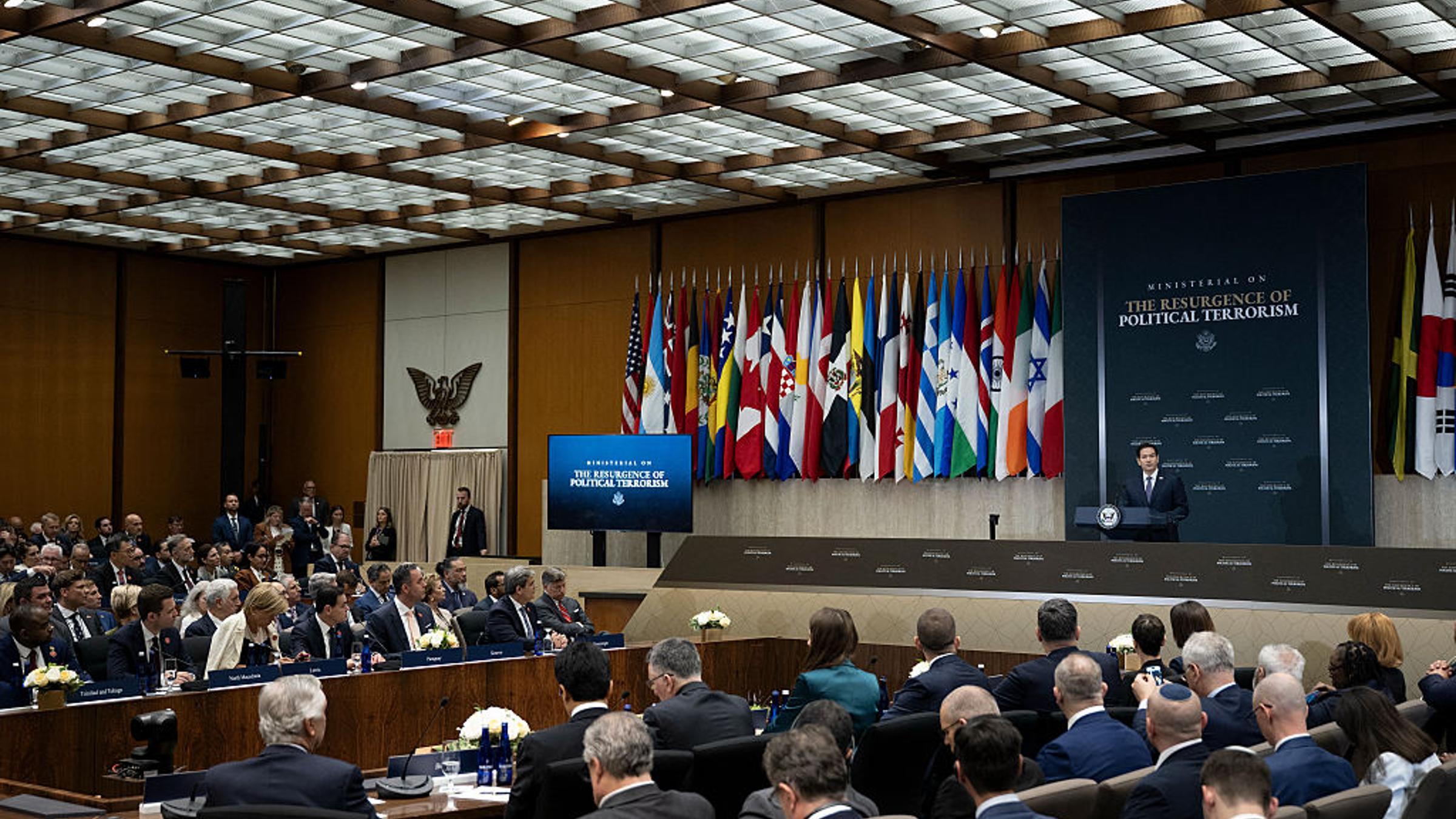
Marco Rubio Hosts Global Conference to Combat Far-Left Terrorism
On July 16, 2026, U.S. Secretary of State Marco Rubio convened representatives from 66 nations in Washington, D.C., for a “Ministerial on the Resurgence of Political Terrorism.” The Trump Administration utilized the summit to align international counterterrorism efforts against domestic and transnational far-left groups, signaling a significant shift in U.S. national security priorities.
Shifting the Counterterrorism Paradigm
The State Department’s focus on “far-left terrorism” marks a departure from the security frameworks established under the Biden Administration. Secretary Rubio framed the issue during his opening remarks as a “transnational threat” that has been neglected due to “extraordinary ideological prejudice.” According to Rubio, the international community must now treat this movement with the same gravity previously reserved for radical Islamist extremism, citing the 2020 protests following the death of George Floyd as a primary example of violence that he claims was historically excused.

White House Deputy Chief of Staff Stephen Miller echoed this sentiment, characterizing these domestic and international factions as threats intent on the “overthrow of our system and form of government.” Treasury Secretary Scott Bessent expanded the scope further, suggesting that the administration is targeting not only overt physical violence but also “quieter” forms of activity, including campaigns to suppress speech and sabotage national institutions.
Data Discrepancies and the Risk of Institutional Overreach
While the Trump Administration frames this as a necessary, long-overdue response to a surging menace, federal and independent data present a more nuanced picture of political violence in the United States. A September 2025 study from the Cato Institute provides a critical benchmark: over the previous five-year period, 81 people were killed in political violence incidents. Of those deaths, 54% were attributed to right-wing extremists, 22% to left-wing actors, and 21% to Islamists.
Long-term historical data from the National Institute of Justice, the research arm of the Department of Justice, reinforces this disparity. Between 1990 and 2024, the agency recorded 520 deaths in 227 right-wing extremist incidents, compared to 78 deaths in 42 left-wing attacks. However, the political climate remains volatile. A 2025 study from the Center for Strategic and International Studies (CSIS) noted that while right-wing attacks still account for a higher total death toll, 2025 marked the first year in their data set where the number of individual left-wing incidents surpassed those associated with the right.
Global Participation and the Logistics of Diplomacy
The conference drew representatives from 66 countries, spanning the Americas, Europe, and parts of Asia, including Albania, Australia, Canada, Germany, Israel, Japan, and Ukraine.

The Trump Administration’s stated goal is to build an international counterterrorism infrastructure that can handle the “gaps” between borders. The era of treating activism as a “sacrosanct” brand pillar is, according to the current administration, officially over.
Disclaimer: The views and cultural analyses presented in this article are for informational and entertainment purposes only. Information regarding legal disputes or financial data is based on available public records.