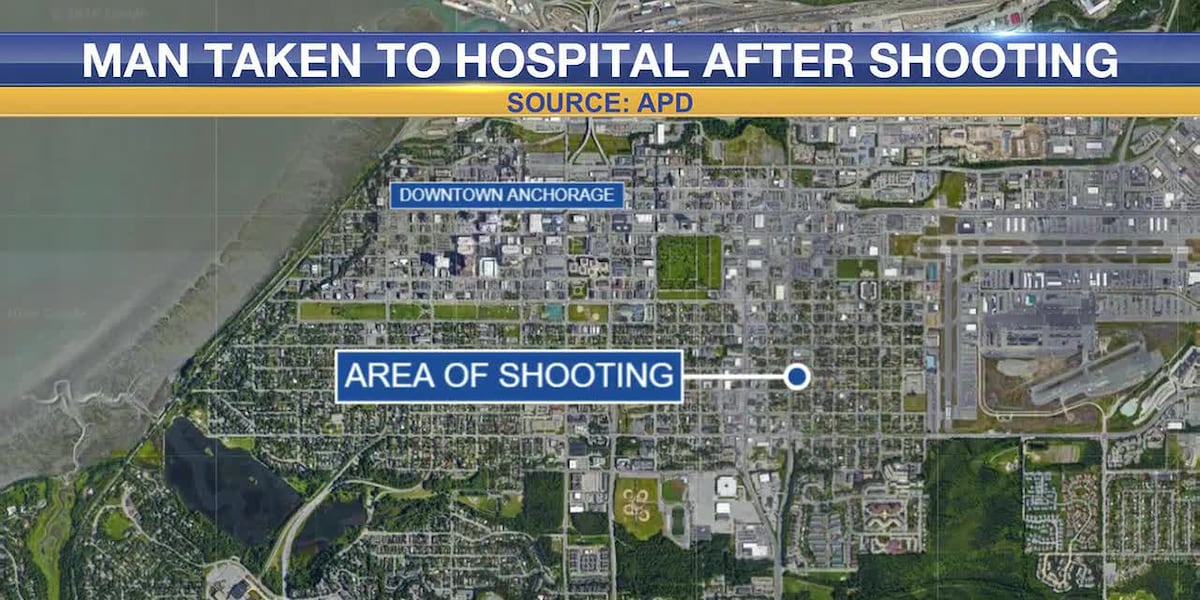
Man Shot in Fairview, Anchorage Suffers Life-Threatening Injuries; Police Investigate
Anchorage police responded to a shooting in Fairview at approximately 2:15 a.m. On April 26, 2026, where a 34-year-old man sustained life-threatening gunshot wounds and was transported to Providence Alaska Medical Center, marking the third violent incident in the neighborhood within 72 hours and reigniting urgent debates over public safety, emergency response efficacy, and the need for targeted violence intervention programs in Anchorage’s most underserved districts.
The victim, whose identity remains unconfirmed pending family notification, was found near the intersection of E 3rd Avenue and Gambell Street after multiple 911 callers reported hearing rapid gunfire. First responders from Anchorage Fire Department Engine 11 arrived within four minutes, administered trauma care, and initiated rapid transport—a timeline that, while within national averages, has drawn scrutiny from community advocates who argue systemic delays in mental health crisis coordination often precede such outbreaks of violence.
Fairview’s Persistent Struggle with Gun Violence: A Pattern Ignored Too Long
Fairview, a culturally diverse but economically strained neighborhood just east of downtown Anchorage, has long faced disproportionate levels of gun-related incidents. According to the Anchorage Police Department’s 2025 Annual Crime Report, the ZIP code 99501—which encompasses Fairview—accounted for 22% of the city’s aggravated assaults involving firearms despite representing only 8% of Anchorage’s population. This disparity persists despite citywide investments in patrol saturation and crime prevention initiatives.
What distinguishes this latest shooting is its timing: occurring during the pre-dawn hours when foot traffic is minimal but vulnerability is high, it suggests either a targeted act or an escalation of interpersonal conflict that spilled into public space. Unlike mass shooting narratives that dominate national headlines, incidents like this—solitary, sudden, and often rooted in unresolved disputes—are far more common yet receive far less preventive attention.
“We’re not seeing random acts of violence here. We’re seeing the culmination of untreated trauma, economic despair, and a lack of accessible conflict mediation. When someone reaches for a gun at 2 a.m., it’s because they’ve exhausted every other option—and the system failed them long before the trigger was pulled.”
The Hidden Cost: How Violence Undermines Local Infrastructure and Trust
Beyond the immediate human toll, recurring violence in neighborhoods like Fairview imposes measurable strain on municipal resources. Each major shooting incident triggers a cascade of responses: forensic processing by the Alaska State Crime Laboratory, increased patrols funded through overtime budgets, and prolonged emergency department utilization at Providence Alaska Medical Center—the state’s only Level I trauma center.
Data from the Municipality of Anchorage’s Office of Management and Budget reveals that emergency services expenditures in the Anchorage Bowl rose 14% year-over-year in Q1 2026, with trauma response and behavioral health crises cited as primary drivers. Meanwhile, local businesses report declining foot traffic and investment hesitancy; the Fairview Community Council documented a 30% drop in latest license applications for storefronts along 3rd and 4th Avenues between January and March 2026.
This erosion of perceived safety doesn’t just affect commerce—it undermines civic engagement. Resident surveys conducted by the University of Alaska Anchorage’s Institute for Social and Economic Research in late 2025 showed that only 41% of Fairview residents felt “safe walking alone at night,” compared to 67% citywide. That gap correlates directly with lower participation in neighborhood associations and reduced cooperation with law enforcement during investigations.
“When people stop believing the system will protect them, they stop engaging with it. That’s when informal economies rise, witness cooperation vanishes, and violence becomes self-perpetuating. We need more than patrols—we need presence.”
From Crisis to Intervention: The Directory of Solutions Already in Place
While law enforcement responds to the aftermath, a network of local organizations works daily to address the root causes that lead to moments like this morning’s shooting. These entities operate not as alternatives to public safety, but as essential complements—filling gaps in mental health access, youth outreach, and conflict resolution that traditional policing alone cannot bridge.
For individuals and families affected by gun violence, immediate access to trauma-informed counseling and legal advocacy is critical. Victims often face complex medical bills, lost wages, and navigating protective orders—challenges best met by specialized personal injury attorneys and crime victim support programs who understand both the legal landscape and the psychological toll of violence.

Meanwhile, long-term prevention hinges on community-based intervention. Organizations like Anchorage Youth Development Coalition and trauma recovery centers are already delivering evidence-based programs in Fairview—cognitive behavioral therapy for at-risk teens, violence interruption workshops, and employment pathways for those exiting the justice system. Their work is underfunded but indispensable; expanding their reach through municipal grants or private philanthropy could shift the trajectory of neighborhoods teetering on the edge.
Even municipal infrastructure plays a role. Improved lighting, safer public transit stops, and revitalized vacant lots—advocated for by groups like Anchorage Neighborhood Land Trust—are not beautification projects; they are violence prevention strategies grounded in environmental criminology. When spaces feel watched and maintained, opportunities for concealment and opportunity-driven crime diminish.
The Keeper of the Threshold: Why This Moment Demands More Than Reaction
This shooting is not an anomaly. It is a data point in a longer trend of underinvestment in the social determinants of safety—housing stability, access to care, economic opportunity—concentrated in neighborhoods that have historically borne the brunt of disinvestment. Responding only after the sirens fade treats symptoms while the underlying condition worsens.
The solution is not choosing between policing and prevention. It is recognizing that both are necessary, and that the most effective public safety strategies are those that integrate rapid response with sustained community investment. As Anchorage approaches its municipal budget cycle, the decision to fund intervention programs, expand behavioral health crisis teams, and support neighborhood-led safety initiatives will determine whether incidents like this become less frequent—or simply more familiar.
For residents seeking help, professionals looking to engage, or policymakers aiming to act with precision, the World Today News Directory offers a curated, verified gateway to the organizations, experts, and services already working on the ground in Anchorage and beyond—because the best time to build resilience is before the next call comes in.