
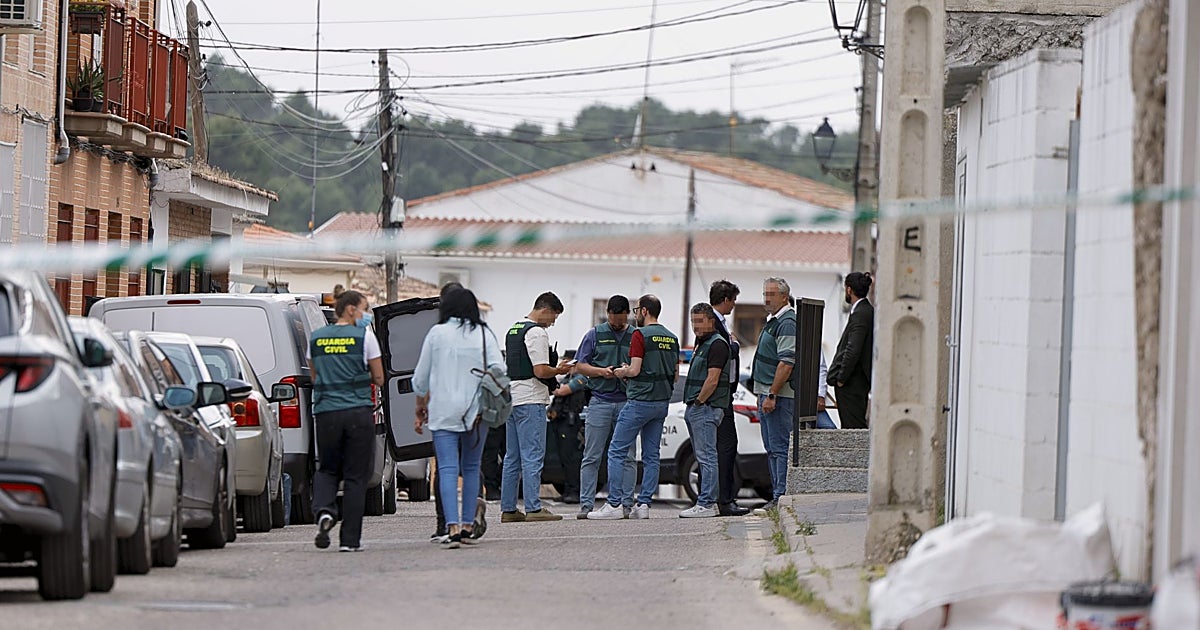
Man kills ex-partner in Seseña, then commits suicide — latest updates and reactions
On April 23, 2026, in the quiet town of Seseña, Toledo, a man fatally stabbed his former partner before taking his own life, marking the fourth gender-based homicide in Castilla-La Mancha this year and exposing critical gaps in protective order enforcement and mental health crisis response across rural Spain.
The Pattern Beneath the Tragedy
This incident is not isolated. Data from Spain’s Ministry of Equality shows that while national femicide rates declined slightly in 2025, rural provinces like Toledo experienced a 12% increase in intimate partner violence cases compared to urban centers. Seseña, a municipality of just over 20,000 residents located 30 kilometers south of Madrid, lacks a dedicated 24-hour crisis intervention unit despite repeated calls from local advocacy groups. The victim, identified only as María G., 38, had reportedly filed a restraining order against her ex-partner two weeks prior—a document that, according to regional judicial sources, was still pending formal notification to local police at the time of the attack.
Experts point to systemic delays in the VioGén system, Spain’s integrated monitoring platform for gender violence cases. “In Toledo province, the average time between a protection order issuance and police notification exceeds 72 hours—far above the national average of 24 hours,” stated
Dolores Martínez, regional coordinator for the Asociación de Mujeres Separadas y Divorciadas de Castilla-La Mancha.
“When a woman leaves an abusive relationship, every hour counts. In rural areas, bureaucratic lag becomes a death sentence.”
Where the System Fractures
The tragedy unfolded in María’s home on Calle Olivos, a residential street in Seseña’s historic center. Neighbors reported hearing arguments earlier that day but did not intervene, citing fear of retaliation—a dynamic documented in a 2024 study by the University of Castilla-La Mancha on bystander apathy in gender violence cases. Unlike Madrid or Barcelona, where specialized units like the Unidad de Atención a la Mujer (UAM) provide immediate support, Toledo province relies on itinerant social workers who cover multiple municipalities, often arriving days after a crisis.
This gap in real-time response has tangible economic consequences. Local businesses in Seseña’s commercial zone near the Toledo-Madrid highway reported a 15% drop in foot traffic following similar incidents in 2024, according to the Castilla-La Mancha Chamber of Commerce. “Perception of safety directly affects consumer behavior,” noted
Juan Carlos Ruiz, president of the Federation of Compact Businesses of Toledo.
“When residents feel unsafe in their own neighborhoods, they avoid public spaces—hurting cafes, shops, and services that form the backbone of our local economy.”
Bridging the Response Gap
In the aftermath, community leaders are pushing for accelerated implementation of the State Pact against Gender Violence, which allocates funding for rural crisis centers but has seen slow disbursement in Castilla-La Mancha. Immediate solutions require coordination between judicial authorities, local police, and specialized support services—entities that, when functioning together, can interrupt the cycle of violence before it turns fatal.

For survivors navigating the aftermath of such trauma, accessing verified family law attorneys experienced in protective order enforcement is critical to ensuring judicial directives are rapidly enacted. Simultaneously, connecting with trauma-informed mental health providers can address the psychological toll on families and communities, while local victim advocacy groups offer essential accompaniment through legal proceedings and safety planning—services that are often under-resourced in rural jurisdictions like Seseña but represent the frontline defense against recurrence.
As investigators from the Guardia Civil’s Judicial Police unit in Toledo continue to reconstruct the timeline of events, one truth remains unavoidable: behind every statistic is a community left to reckon with preventable loss. The solution lies not in reactive mourning, but in proactively strengthening the networks designed to protect the vulnerable—before the next emergency call comes in too late.