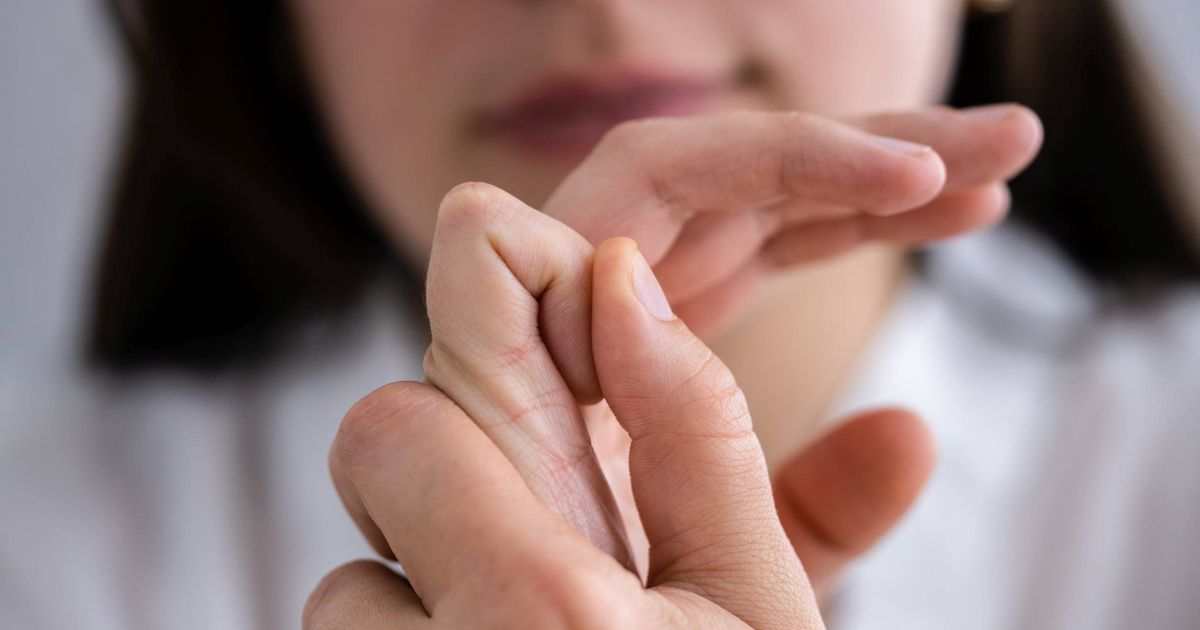
Man Cracked Knuckles for 50 Years to Prove Mother Wrong: Here Are the Results
For fifty years, a persistent family debate centered on a daily habit of knuckle cracking, driven by a mother’s warning that the practice would inevitably cause arthritis. Recent clinical data and historical self-experimentation confirm that joint cavitation does not lead to degenerative joint disease, aligning with broader orthopedic consensus regarding synovial fluid dynamics and joint health.
Key Clinical Takeaways:
- A fifty-year self-experiment involving cracking the knuckles on only one hand demonstrated no development of arthritis or joint degradation compared to the uncracked hand.
- The characteristic popping sound is caused by the rapid formation and collapse of a microscopic gas bubble within the synovial fluid, a mechanical process known as tribonucleation.
- Clinical guidelines and observational studies consistently show no statistical correlation between habitual knuckle popping and long-term joint morbidity.
The Mechanics of Joint Cavitation and Synovial Fluid
The physical snap heard during knuckle manipulation originates from rapid pressure changes inside the joint capsule. According to biomechanical analyses published in scientific literature, pulling or bending the joint enlarges the joint volume, decreasing the pressure of the synovial fluid. This drop in pressure causes dissolved gases—primarily carbon dioxide—to rapidly form a bubble, which then collapses instantly. This phenomenon, identified as tribonucleation, accounts for the acoustic release without inflicting micro-trauma on the articular cartilage.
Historically, individual researchers have sought to test common household medical axioms through rigorous personal tracking. The half-century longitudinal observation noted in reports from outlets such as Welingelichte Kringen mirrors famous controlled inquiries, including the work of Dr. Donald Unger. Unger famously cracked the knuckles of his left hand twice a day for more than fifty years while leaving his right hand untouched as a control, ultimately finding no clinical or radiographic difference in arthritis development between the two hands.
Evaluating Long-Term Joint Morbidity and Risk Factors
While the immediate acoustic event is harmless, patients frequently confuse benign cavitation with structural joint pathology. Orthopedic specialists emphasize that true joint degeneration stems from inflammatory pathways, autoimmune conditions, genetic predispositions, or mechanical trauma rather than manual manipulation. For individuals experiencing persistent joint stiffness, pain, or swelling, a comprehensive diagnostic evaluation is essential to rule out underlying pathologies such as osteoarthritis or rheumatoid arthritis. Patients seeking specialized care can consult with vetted board-certified rheumatologists via the [Relevant Clinic/Professional/Service] to establish accurate diagnostic imaging and personalized treatment plans.
Current epidemiological data reinforces that habitual knuckle cracking does not alter grip strength or increase the incidence of hand deformities in older adults. Misconceptions regarding joint habits often overshadow actual risk factors for musculoskeletal decline, such as sedentary lifestyles, repetitive strain injuries, and systemic inflammation. Addressing joint health requires evidence-based interventions rather than managing anecdotal habits.
Future clinical investigations will continue to refine imaging techniques to observe real-time synovial dynamics, yet the half-century precedent stands firm. Benign joint cavitation remains an acoustic curiosity devoid of pathological consequence, reassuring patients that the old familial warnings lack empirical backing.
*Disclaimer: The information provided in this article is for educational and scientific communication purposes only and does not constitute medical advice. Always consult with a qualified healthcare provider regarding any medical condition, diagnosis, or treatment plan.*