Man Charged for Illegally Wrestling Protected Sharks in Puget Sound
<>
An Oregon man is facing multiple criminal charges in Pierce County, Washington, following a months-long investigation by the Washington State Department of Fish and Wildlife into the alleged illegal catching and wrestling of protected bluntnose sixgill and broadnose sevengill sharks in Puget Sound.
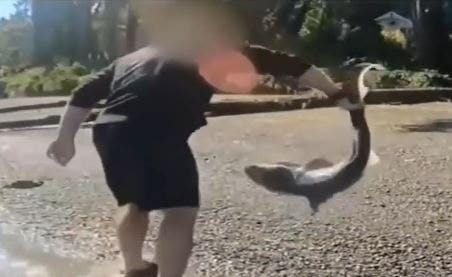
According to state investigators, the suspect, identified as 27-year-old Connor Seifert, allegedly dragged protected sharks ashore, exposing their gills to the air and compromising the survival of unborn pups.
The Investigation and Body Camera Footage
The Washington State Department of Fish and Wildlife shared body camera footage from an enforcement officer confronting Seifert in Pierce County during June. The confrontation followed months of monitoring Seifert’s movements and analyzing his online social media posts, which ultimately prompted officers to establish physical surveillance to catch an illegal catch in progress.
During the encounter, the confronting officer addressed Seifert directly regarding local marine regulations. “You know your shark rules,” the officer stated on the recorded footage. “You can’t fully or partially remove sixgill from the water.”
The officer detailed the physical toll of the activity on the animals. “When you wrestle a sixgill to shore like that, you hop on its back, you expose its gills to the air. You know as well as anybody else does that Puget Sound is a nursery for these sharks. There has been a direct correlation between catching these sharks in this stage in their lives and the mortality of the pups inside the moms.”
According to state wildlife officials, the physiological exhaustion of the adult sharks triggers cascading fatalities. “Once they exhaust themselves being fought to shore, then all of their babies die,” the officer added on the footage. “And then, sooner than you know it, you’re not going to have sixgill and sevengill returning to Puget Sound anymore.”
Criminal Charges and Legal Penalties in Pierce County
Following the surveillance operation and subsequent evidence collection, prosecutors in Pierce County filed a total of ten criminal counts against Seifert. The charges comprise nine misdemeanor counts of unlawful recreational fishing in the second degree and one gross misdemeanor count of making a false or misleading statement to a public servant.
Under Washington state law, misdemeanor convictions carry penalties of up to a $1,000 fine and 90 days in jail. Gross misdemeanors carry more severe potential penalties, including up to a $5,000 fine and one year in jail.
State enforcement officials noted that this case is part of a broader trend. “Fishing for sixgill and sevengill sharks is unlawful, and unfortunately, officers are seeing a growing number of online posts showing these sharks targeted and then unlawfully removed from or partially removed from the water,” the department stated in a public release regarding the charges.
Investigators reported receiving a total of 14 separate complaints concerning Seifert, the majority of which directly related to allegations that he was intentionally targeting the protected sharks. In his defense, Seifert claimed he had not been targeting the animals and that any encounters were accidental catches. However, department officials pointed to his own social media videos—which allegedly showed him holding a shark’s mouth open while sitting on its back and restraining it by the tail on the shoreline—as evidence contradicting his claims.
Ecological Impact on Puget Sound Nurseries
The body of water acts as a crucial nursery for both bluntnose sixgill and broadnose sevengill sharks before they eventually migrate out to the open ocean.
This biological reality underpins the strict regulatory framework governing local waters. Because females gestate in these sheltered waters, catching and stressing mature specimens directly threatens upcoming generations. The department reiterated that anglers targeting these creatures do so during a highly volatile period in the animals’ life cycles.
Both species hold official conservation designations within the state. Bluntnose sixgills are formally listed as a “Species of Greatest Conservation Need” by Washington State and are categorized globally as “near threatened” by the International Union for Conservation of Nature (IUCN). Broadnose sevengills carry the IUCN classification of “vulnerable.”
The ongoing prosecution serves as a definitive reminder of regional enforcement priorities. As wildlife monitoring expands across Pacific Northwest waterways, accountability for recreational fisheries violations remains a primary focus for state authorities determined to preserve vulnerable marine ecosystems for future generations.