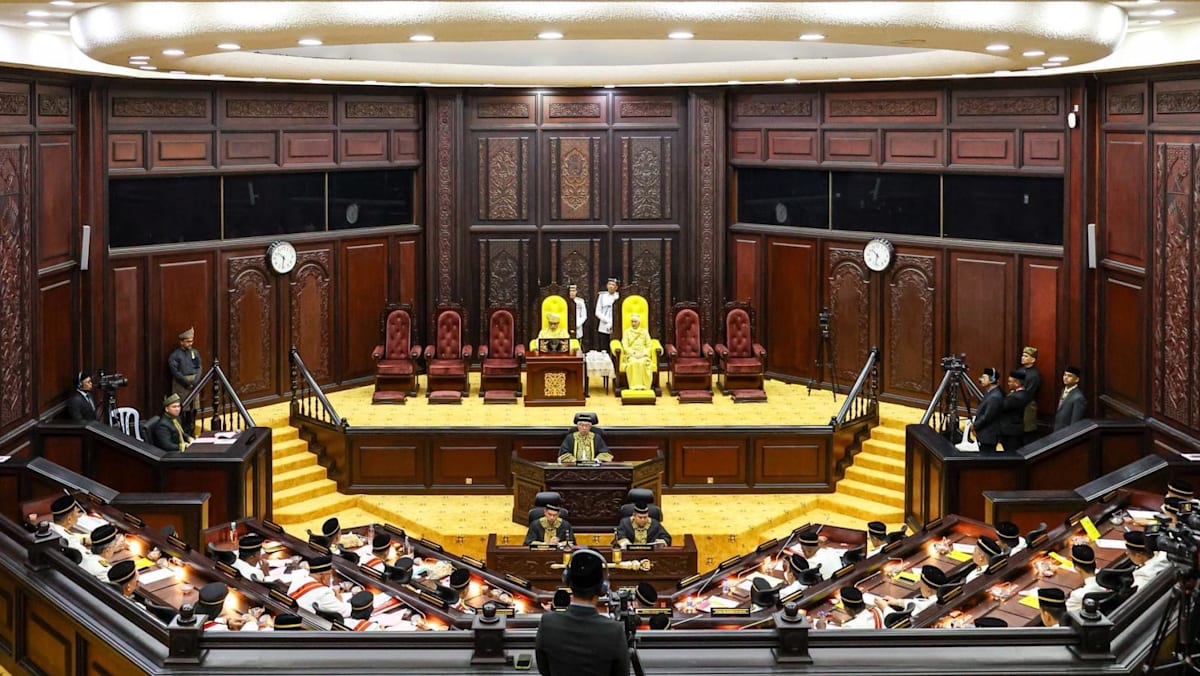
Malaysia’s Unity Government Under Pressure: Snap Polls and Anwar’s Future
On June 5, 2026, Malaysia’s Prime Minister Anwar Ibrahim announced plans to dissolve Negeri Sembilan’s state assembly, triggering snap elections—a direct response to UMNO’s recent snap polls in Johor. This “tit-for-tat” political maneuver threatens the fragile unity government coalition, escalating regional instability and testing Anwar’s leadership amid growing public skepticism over his administration’s ability to deliver stability.
Why this matters: The dissolution of Negeri Sembilan’s assembly isn’t just a political power play—it’s a seismic shift with cascading effects on Malaysia’s economic stability, ethnic relations, and constitutional framework. With the state contributing 12% of Peninsular Malaysia’s GDP through agriculture and manufacturing, the election timing risks disrupting supply chains just as global commodity prices remain volatile. Meanwhile, the opposition’s aggressive tactics—including legal challenges to electoral boundaries—could deepen societal fractures in a state where Malay, Chinese, and Indian communities live in close proximity.
The Domino Effect: How Negeri Sembilan’s Snap Poll Could Reshape Malaysia’s Political Landscape
Anwar Ibrahim’s decision to dissolve Negeri Sembilan’s state assembly follows UMNO’s surprise snap polls in Johor last month—a move critics call a deliberate attempt to outmaneuver the ruling Pakatan Harapan coalition. The timing isn’t accidental. Negeri Sembilan, a historically Malay-dominated state with a 68% Bumiputera population, serves as a litmus test for Anwar’s ability to maintain support among his core constituency amid economic stagnation and rising youth unemployment.
“This isn’t just about Negeri Sembilan. It’s about whether Anwar can hold the coalition together when the opposition is actively undermining his authority. The risk? A fragmented legislature that paralyzes decision-making at the national level.”
The Historical Context: Why This State Matters More Than Others
Negeri Sembilan’s political significance stretches back to Malaysia’s post-independence era. As one of the original states of the Federation of Malaya, it has long been a battleground for Malay nationalist movements. The state’s unique adat (customary) laws, which predate British colonial rule, give it a distinct legal framework that often clashes with federal policies. Today, the state’s economy—heavily reliant on palm oil and electronics manufacturing—makes it a microcosm of Malaysia’s broader economic vulnerabilities.
- Economic Contribution: Negeri Sembilan accounts for 18% of Peninsular Malaysia’s palm oil production, a sector facing global price fluctuations and sustainability pressures.
- Manufacturing Hub: The state hosts Intel’s largest semiconductor plant in Southeast Asia, employing over 12,000 workers—a critical node in the global tech supply chain.
- Demographic Tensions: With a 22% Chinese population and 8% Indian community, the state’s ethnic balance makes it a potential flashpoint for communal politics.
The Legal and Constitutional Minefield
The snap election announcement comes just weeks after the Election Commission (SPR) rejected UMNO’s request to dissolve Johor’s assembly, citing procedural irregularities. Anwar’s move to preemptively dissolve Negeri Sembilan’s assembly raises serious questions about the fairness of the electoral process. Legal experts warn that the opposition’s likely strategy—challenging electoral boundaries in court—could delay results by months, creating a constitutional crisis.
“The real danger here isn’t just the election outcome—it’s the erosion of public trust in the institutions that govern these elections. If the process is perceived as rigged, regardless of the result, we risk a legitimacy crisis that could spiral into unrest.”
Under Malaysia’s Federal Constitution, state assemblies can be dissolved at the prime minister’s discretion, but the timing and frequency of such moves are increasingly contentious. The last snap election in 2023 in Kelantan resulted in a hung parliament, forcing the state to form a coalition government—a scenario that could repeat in Negeri Sembilan.
Regional Impact: Who Wins and Who Loses?
The economic ripple effects of this political maneuver are already being felt. In Seremban, Negeri Sembilan’s capital, small business owners report a 15% drop in foot traffic as uncertainty grows. Meanwhile, the palm oil sector—critical to the state’s economy—faces potential disruptions if political instability leads to labor unrest or supply chain delays.
| Sector | Potential Impact | Mitigation Strategies |
|---|---|---|
| Palm Oil | Price volatility, labor strikes | Engaging specialized agricultural risk managers to stabilize supply chains |
| Manufacturing | Delayed investments, workforce uncertainty | Partnering with employment law firms to navigate labor disputes |
| Tourism | Decline in visitor numbers, canceled events | Promoting crisis PR firms to restore investor confidence |
The Opposition’s Gambit: UMNO’s Selective Confrontations
UMNO’s strategy in Johor and Negeri Sembilan is deliberate: force Anwar into a corner where he must either call for national snap elections—risking a potential defeat—or allow the opposition to consolidate power in key states. The party’s recent gains in local council elections suggest a broader trend of voter dissatisfaction with the Harapan coalition’s economic policies. With unemployment hovering around 4.2% and youth unemployment at 12.5%, the opposition is framing the elections as a referendum on Anwar’s leadership.
Yet the risks are high. A hung parliament in Negeri Sembilan could trigger a constitutional crisis, forcing the state to seek federal intervention—a move that would further destabilize Anwar’s already fragile coalition. Legal experts warn that the opposition’s tactics could set a dangerous precedent, where state-level political maneuvering becomes a tool to undermine national stability.
The Long-Term Stakes: Can Malaysia’s Unity Government Survive?
The bigger question isn’t just about Negeri Sembilan—it’s about whether Malaysia’s unity government can endure the coming months. The Harapan coalition, already fractured by internal divisions, faces a critical test. If Anwar’s “tit-for-tat” strategy fails to secure a clear victory, the opposition could gain momentum, potentially leading to a national election before the end of 2026.
For businesses and citizens alike, the uncertainty is palpable. With the Malaysian ringgit already under pressure from global economic headwinds, political instability could trigger capital flight, further weakening the currency. The Central Bank of Malaysia has signaled concerns about liquidity risks, urging businesses to prepare for potential volatility.
The Directory Bridge: Who Can Help Navigate This Crisis?
As the political landscape shifts, businesses and individuals in Negeri Sembilan—and across Malaysia—will need specialized support to mitigate the fallout. Here’s who can help:
- Constitutional law firms specializing in electoral disputes to challenge unfair boundaries or advise on legal recourse.
- Agricultural risk management firms to stabilize palm oil and rubber supply chains amid political uncertainty.
- Crisis communications agencies to restore investor confidence and manage public perception during election-related disruptions.
- Currency hedging specialists to protect against potential ringgit depreciation triggered by political instability.
The Kicker: A Warning from History
History offers a stark warning. In 1969, ethnic tensions following a disputed election in Malaysia led to violent riots and a state of emergency. Today, the parallels are unsettling: a politically divided nation, economic frustrations, and a fragile coalition government. The difference? Today, the stakes are higher. With global attention focused on Malaysia’s role in regional trade and its position as a bridge between East and West, the world is watching to see whether Anwar can navigate this crisis—or if Malaysia will once again be defined by political turbulence rather than stability.
For those affected, the time to act is now. Whether it’s securing legal counsel, diversifying supply chains, or preparing for potential currency fluctuations, the professionals in our Global Directory are equipped to help you weather this storm.