
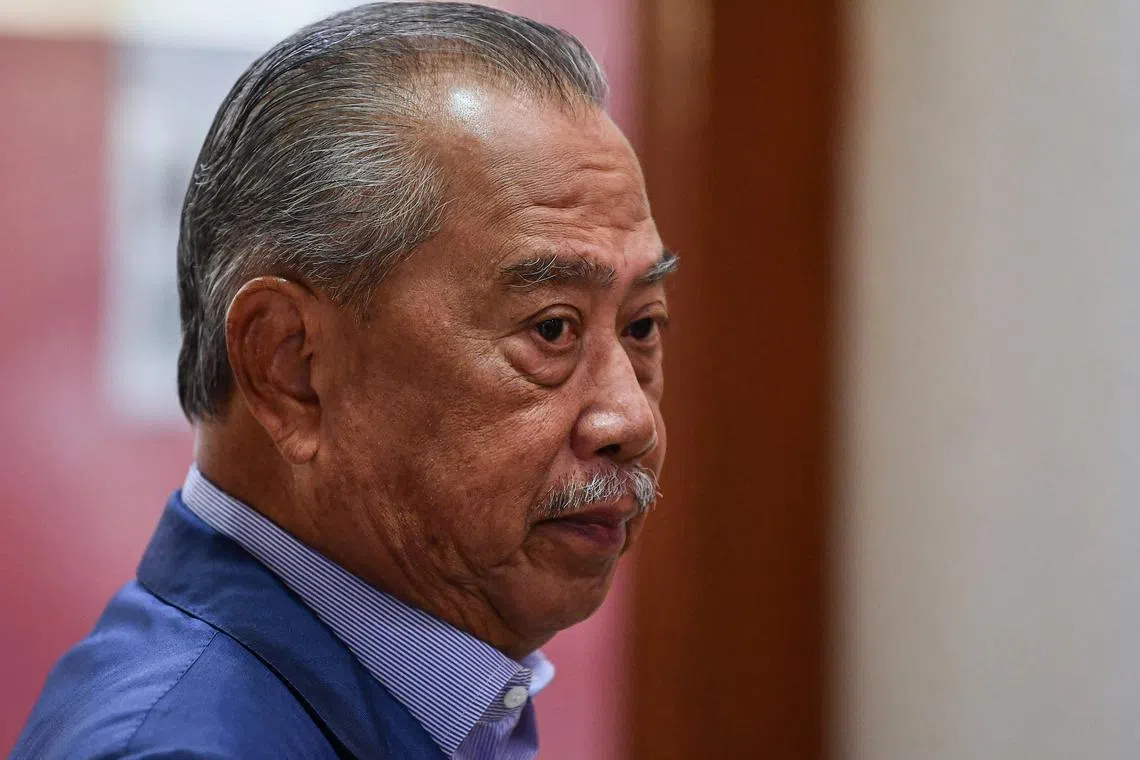
Kuala Lumpur – Malaysia’s opposition Perikatan Nasional (PN) coalition is fracturing as a power struggle between former Prime Minister Muhyiddin Yassin and his recently ousted deputy, Hamzah Zainudin, intensifies. The dispute threatens a split within the coalition and has placed Parti Islam SeMalaysia (PAS) in a pivotal position to determine which faction will maintain control.
The conflict escalated on February 13th with the expulsion of Hamzah Zainudin from Bersatu, the party led by Muhyiddin Yassin. A disciplinary hearing concluded that Hamzah had breached the party’s constitution, though the specific offense has not been publicly detailed. Hamzah swiftly declared himself Muhyiddin’s “No. 1 enemy” and immediately sought support from PAS leaders, including President Hadi Awang, in Terengganu.
Hamzah claims to have the backing of a significant portion of Bersatu’s parliamentarians and division chiefs – 19 of the party’s 25 MPs and 118 of its 168 active division chiefs, according to his statements. He and his allies are now planning to establish a modern political platform, signaling a potential departure from the existing PN structure.
PAS, Malaysia’s largest party, has not formally endorsed either side in the dispute, but has expressed sympathy towards Hamzah. PAS deputy president Tuan Ibrahim Tuan Man stated that the party sympathized with those urging for a change in leadership, referring to Hamzah and his supporters who had called for Muhyiddin to step down. PAS leaders have emphasized they do not interfere in the internal affairs of other parties, but have allowed meetings with Hamzah and his allies to proceed.
A crucial meeting is scheduled for February 22nd, where the PN leadership will attempt to decide on a replacement for Muhyiddin Yassin as coalition chairman. Muhyiddin resigned from the position on January 1st under pressure from PAS. Analysts suggest that Hadi Awang of PAS is likely to be nominated as the new chairman, potentially paving the way for Hamzah’s faction to be reintegrated into the coalition’s leadership.
The crisis stems from growing discontent within PAS regarding PN’s leadership. The Islamist party initiated calls for a change in leadership during its annual congress in September 2025, and subsequently pressured Muhyiddin to resign as PN chairman. Analysts believe PAS needs a moderate Malay partner to broaden its appeal beyond its traditional strongholds and improve its chances in upcoming elections, which are due by early 2028 but could be called as early as late 2026.
Prime Minister Anwar Ibrahim has declined to comment on the internal struggles within the opposition, stating, “Let them fight first.”
The situation remains fluid, with both Muhyiddin and Hamzah attempting to consolidate support within Bersatu and the broader PN coalition. A pre-council of opposition MPs is expected to capture place before Parliament resumes on February 23rd, which could further solidify Hamzah’s position if he remains the opposition leader and retains the support of the majority of PN’s parliamentarians.
