
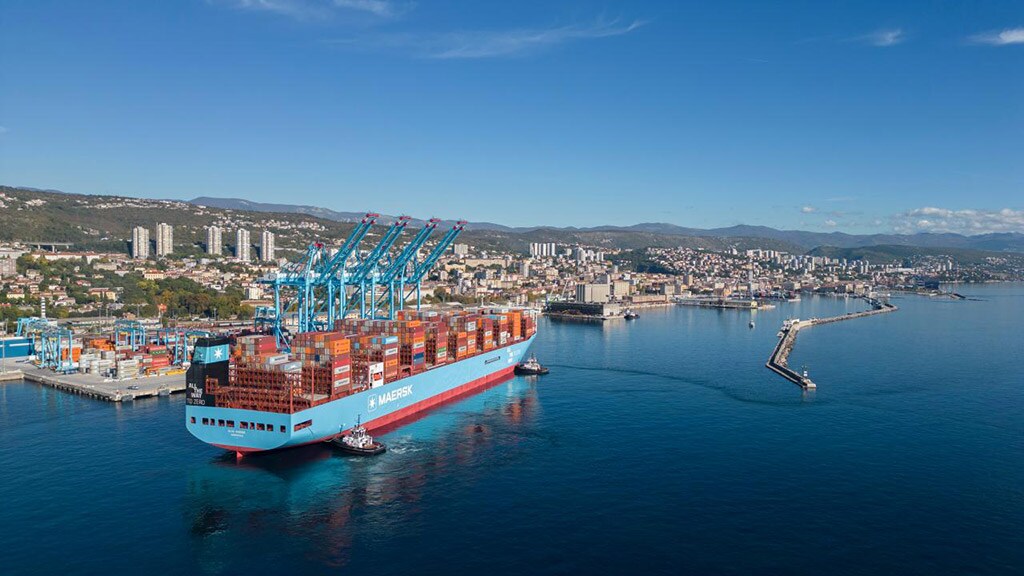
Maersk Europe Market Update April 2026
Maersk’s April 2026 Europe update signals acute supply chain friction driven by Middle East geopolitical tension, severe weather disruptions in Rotterdam and critical rail infrastructure failures in Barcelona. These operational bottlenecks are compressing logistics margins while new EU-Australia trade agreements offer a counterbalancing diversification opportunity for resilient enterprises.
Volatility is no longer an anomaly; it is the baseline operating condition for European logistics. A. P. Moller – Maersk’s latest market advisory confirms what institutional investors have feared since the start of the fiscal year: the confluence of geopolitical instability and infrastructure decay is creating a cost environment that demands immediate strategic recalibration. With approximately 20% of global fuel passing through the Strait of Hormuz, the ongoing security situation is not just a routing issue—it is a direct hit to EBITDA margins across the intermodal sector.
Energy prices are surging, and Maersk is passing these costs through via temporary fuel adjustments on Landside Transportation. This reflects a broader trend noted by the U.S. Department of the Treasury regarding financial market stability under stress. When fuel availability tightens, liquidity in the shipping market constricts. Companies relying on just-in-time delivery models are suddenly facing working capital traps as cargo sits idle in congested yards.
Rotterdam serves as the primary pressure point. Vessel delays compounded by storms have pushed yard density to critical levels. The directive for customers to pick up import units immediately is not merely operational advice; it is a financial imperative. Storage demurrage charges accumulate daily, eroding net income for importers who fail to adapt. This congestion creates a ripple effect, forcing businesses to seek specialized logistics and supply chain partners capable of managing overflow inventory and optimizing last-mile distribution under duress.
Further south, the infrastructure failure in Spain highlights the fragility of fixed assets. The closure of the Rubí tunnel for structural repairs suspends rail services between Barcelona and France for up to seven weeks. This disruption forces a modal shift to road freight, which carries higher carbon costs and fuel exposure. The financial market implications of such infrastructure gaps are severe, increasing the cost of capital for retailers who must hold safety stock to buffer against these unpredictable transit times.
Regulatory landscapes are shifting alongside physical bottlenecks. The new EU-Australia Free Trade Agreement removes nearly all tariffs, opening a vital hedge against Northern Hemisphere instability. Access to critical materials like lithium and manganese becomes cheaper, offering a strategic advantage for automotive and technology sectors. However, capturing this value requires rigorous compliance. EU customs authorities are intensifying scrutiny on small-parcel shipments ahead of summer, driven by digitalization reforms. Traders moving low-value consignments face higher risks of delays where product information is inconsistent.
Compliance is now a revenue protection strategy. Brands moving volume through Rijeka into Serbia are already feeling the pain of a new EUR 65 Destination Coordination Fee for incorrect documentation. This penalty structure is designed to internalize the cost of administrative friction. To navigate these complexities, enterprises are increasingly consulting with customs and trade compliance firms to automate data creation and ensure accurate classification before cargo hits the border.
The macro environment dictates three fundamental shifts for the industry this quarter:
- Cost Structures Will Reset: Fuel surcharges and coordination fees are transitioning from temporary fixes to permanent line items, requiring CFOs to adjust long-term forecasting models.
- Routing Diversification is Mandatory: Reliance on single corridors like the Middle East transit route is untenable; multi-modal strategies involving Sea-Air combinations via Oman or Colombo are becoming standard.
- Compliance Automation is Critical: Manual data entry for customs is a liability; automated solutions for duty and tax data creation are now essential for maintaining velocity.
The pressure on operational efficiency demands higher-level financial oversight. As Alberto Navarro notes in his analysis of market and financial analysts, “The role of market and financial analysts has become crucial as companies fail to fully understand their markets and finances.” This insight rings true for logistics leaders who must now interpret geopolitical risk as a financial variable.
“Companies are now mapping their most critical flows, exploring alternative routings and integrating geopolitical risk into strategic planning.”
This shift from reactive operations to predictive strategy is where value is preserved. The Maersk update highlights that customer experience roles are moving from reactive to predictive, driven by AI-powered service models. Chinese ecommerce platforms are already leveraging forward-deployed inventory to lower logistics costs, intensifying competitive pressure on local retailers. To compete, European businesses must localize operations and reduce customs friction.
Strategic resilience requires more than just alternative routing; it requires capital allocation toward robust infrastructure partners. The current environment favors organizations that can secure vendor capacity and safeguard cargo integrity through diversified networks. For those struggling to model these risks, engaging with financial consulting and risk management experts provides the necessary framework to stress-test supply chains against future shocks.
The window for passive management has closed. Whether leveraging the new EU-Australia trade ties or mitigating the impact of the Rubí tunnel closure, the market rewards agility. As Q2 volumes accelerate, the divergence between companies with resilient supply chains and those without will widen. The directory offers vetted partners to bridge this gap, ensuring your enterprise remains solvent amidst the volatility.