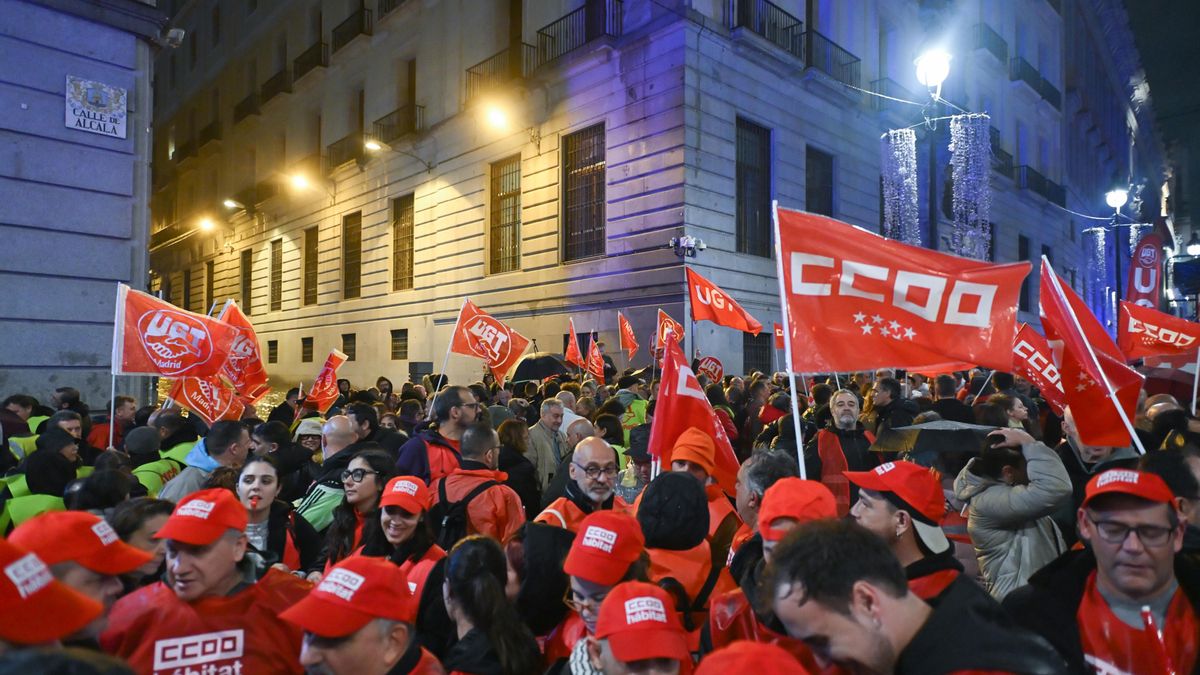
Madrid Court Reduces Minimum Services for General Strike in Education, Transport, and Justice
Staffing minimums for the general strike on Wednesday were corrected downward by the court after unions challenged the regional government’s decree.
The Sala de lo Contencioso-Administrativo del Tribunal Superior de Justicia de Madrid acted on a legal challenge filed by Comisiones Obreras Madrid. The court order applies to the administration of justice, education, and transport sectors, leaving only Metro de Madrid outside the ruling.
The judicial intervention arrived through precautionary measures before the strike began. The court sought to prevent irreparable damage to the right to strike, noting that a later ruling would otherwise be impossible to execute.
Education services faced steep proposed staffing requirements before the court intervened. The regional administration sought ratios of one teacher for every fifty primary students and one for every ninety secondary students, according to eldiario.es.
The court suspended those requirements and reinstated the staffing guidelines used during the November 14, 2012, general strike. Those baseline rules include specific personnel allocations for essential school operations and designated center supervisors.
Transport services saw similar reductions across multiple networks. Regional authorities planned for fifty percent staffing during peak hours and forty-five percent during off-peak hours for urban and interurban buses outside the capital. The court lowered those percentages to thirty and twenty-five.

For the Empresa Municipal de Transportes de Madrid, required staffing dropped from fifty percent on specific routes down to thirty percent. Concurrent routes dropped from forty percent to twenty percent. Light rail and Parla tram services fell from fifty percent to thirty percent during peak hours.
Judicial departments faced initial minimums of twenty-five percent across various offices and thirty percent for domestic violence actions and guard duties. The court replaced those levels with the framework from 2012, concentrating primarily on guard services and essential actions.
Metro de Madrid retained its 2026 staffing percentages on a temporary basis. The court said that safety-related technical justifications require an examination that exceeds the limits of an urgent procedure.
“Recuperar la referencia de los mínimos pactados en 2012 refuerza el valor de la negociación frente a la imposición unilateral del Gobierno regional,” CCOO Madrid said in its release.