Madrid Congress Urges Regulatory Updates for Digital Assets and AI in Finance
Financial regulations need to be reviewed to respond to new technologies, participants concluded at the V Congreso Internacional sobre Activos Digitales, Inteligencia Artificial y Sector Financiero in Madrid, according to ICAM – Ilustre Colegio de la Abogacía de Madrid.
Organized by the ICAM – Ilustre Colegio de la Abogacía de Madrid across Nov. 26 and 27, the fifth annual event drew 70 specialists across ten panel discussions, according to ICAM – Ilustre Colegio de la Abogacía de Madrid. Participants included representatives from supervisory bodies, financial institutions, public administrations, and technology companies.
The discussions focused on reforming European cryptoasset rules, adapting regulations for tokenized markets, developing digital currency, and assigning accountability when AI agents execute transactions for users, ICAM – Ilustre Colegio de la Abogacía de Madrid reported, according to Redisbe.
Digital infrastructures, custody services, and tokenized financial instruments are moving past the experimental phase into practical applications that reduce costs and improve operational efficiency, according to Alfredo Muñoz, a commercial law professor at Complutense University of Madrid and co-director of the congress.

Tokenized money will see significant growth in 2027 through both private initiatives and public projects such as wholesale digital euros and the Pontes and Appia European projects, Muñoz told ICAM – Ilustre Colegio de la Abogacía de Madrid. He added that the retail digital euro remains vital for bolstering European monetary sovereignty.
Carmen Martín, deputy minister of justice and victims for the Community of Madrid, told ICAM – Ilustre Colegio de la Abogacía de Madrid that public powers must guarantee effective judicial protection and build proper legal frameworks.
Martín shared digital metrics for Madrid courts during 2026, noting that automated systems distributed over 3.5 million procedural filings, while implanted AI tools processed more than 108 million documents. The region is also testing imperceptible digital watermarks on judicial recordings to confirm authenticity and trace data leaks, she said.
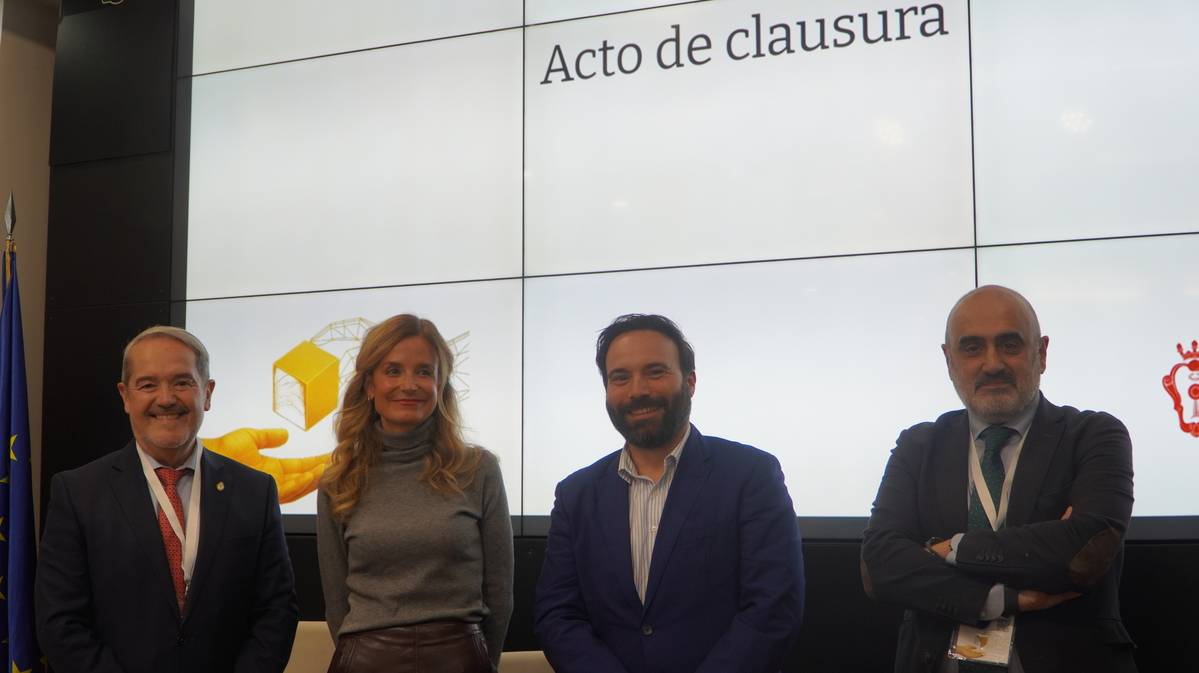
José Ramón Couso, second deputy of ICAM, head of its Banking Law Section, and co-director of the congress, emphasized the institution’s role during the closing sessions. “The College is not only the college of the legal profession, but it is the college of everyone,” Couso told ICAM – Ilustre Colegio de la Abogacía de Madrid.
Manuel Pérez Gómez, deputy minister of digitalization for the Community of Madrid, announced during the event that the regional government plans to roll out an artificial intelligence strategy at the start of 2027 focusing on system governance, data protection, and algorithmic transparency.