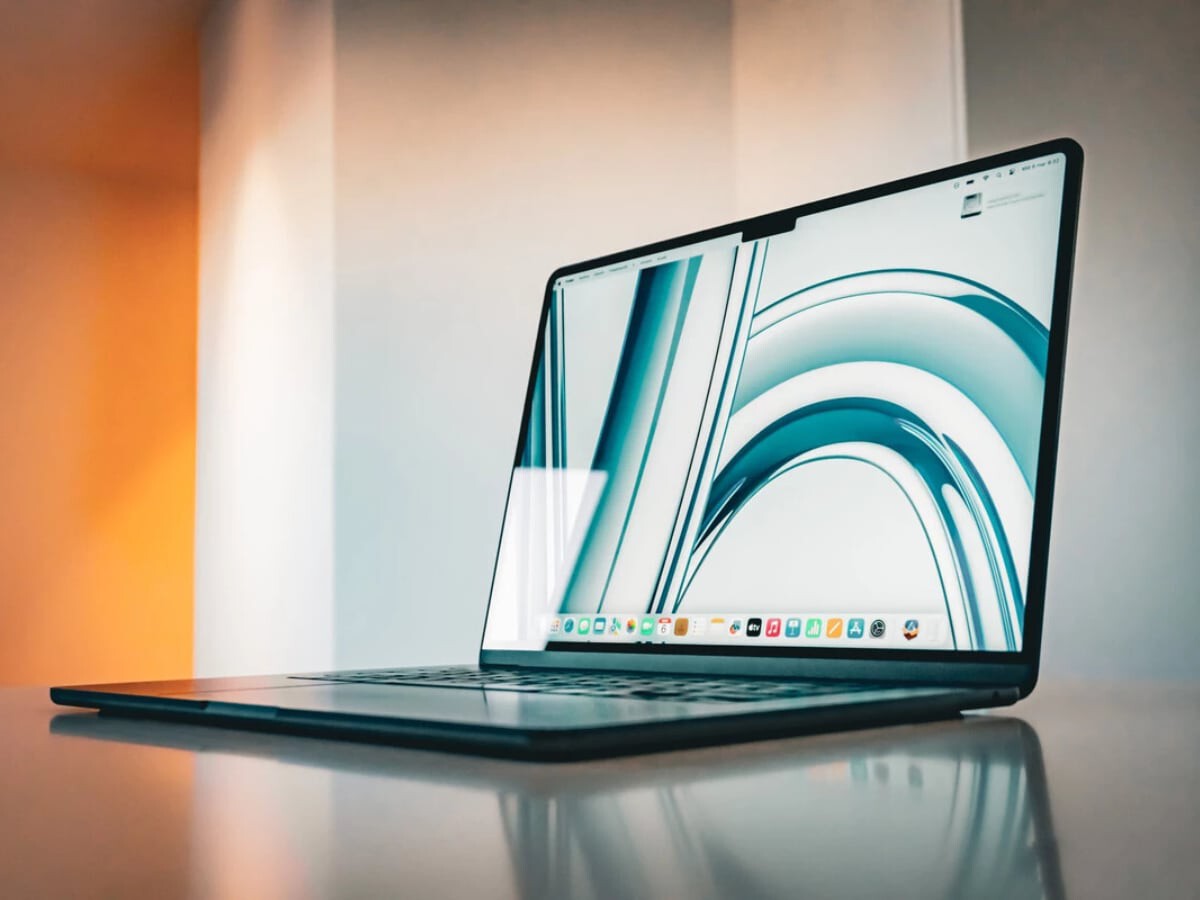
MacBook Air Redesign With OLED Expected Late 2027 Or 2028 Mark Gurman Reports
Apple is planning a significant redesign for its MacBook Air, with expectations that the update will incorporate an OLED display.
According to reports from Mark Gurman, this major product refresh is currently anticipated to occur either late in 2027 or sometime in 2028, as reported by Applesfera.
The transition to OLED technology is expected to facilitate several design changes for the laptop, potentially allowing for thinner bezels, a lighter chassis, and the removal of the camera notch. While the display will feature pure blacks and increased brightness, it is likely that Apple will utilize a version of the panel distinct from that found in the professional-grade MacBook Pro to maintain a product hierarchy.
Prior to the introduction of this new design, Apple intends to release an interim update to the MacBook Air line. This upcoming model, expected to arrive in early 2027, will feature the M6 chip but will retain the same design that has been in use since 2022.
This iteration is viewed as a transitional generation, as the company is expected to skip an M6 Pro version in favor of moving directly to the M7 chip family.
The subsequent redesign is aligned with the anticipated arrival of the M7 processor. While a launch late in 2027 remains a possibility, a release in the spring of 2028 is considered more consistent with Apple’s historical update cycles for the MacBook Air.
Since the current design was established in 2022—replacing the previous wedge shape with a uniform chassis—the upcoming 2027 or 2028 refresh will mark the first major aesthetic change to the company’s best-selling computer in several years.
OLED Design Benefits
The redesign is important. An OLED panel occupies less space inside the chassis. In the MacBook Pro, this technology has enabled bezels as thin as 4.6 millimeters and rounded screen corners. Applied to the MacBook Air, this could allow for even thinner bezels, a lighter body, and the removal of the camera notch. The display would also feature pure blacks and greater brightness.
The OLED screen is also expected to include a Dynamic Island feature. However, it may not be the same panel as in the MacBook Pro. Apple could use a version with fewer features, such as a lower refresh rate, to maintain a product hierarchy, similar to how it handled the OLED in the iPad mini.
Mark Gurman, a technology journalist specializing in Apple news, has built a reputation for accurate predictions since early in his career. As a high school student in 2009, he discovered a domain registration for “islate.com,” which was later linked to Apple’s iPad announcement in January 2010.
Since joining Bloomberg News in 2016, Gurman has continued to deliver scoops on upcoming Apple products, including his recent reporting on the MacBook Air’s OLED redesign timeline, which targets late 2027 or mid-2028. His role as Bloomberg’s managing editor for consumer technology since 2025 further underscores his significance in Apple journalism.
Product Roadmap
The timeline for OLED adoption in Apple’s lineup is also becoming clearer. The iPad mini is set to receive an OLED screen in October 2026, and the MacBook Pro is expected to follow in the same month.
The iPad Air is anticipated to get an OLED display sometime during 2027, while the MacBook Air redesign remains targeted for the end of 2027 or mid-2028, according to Applesfera. An iMac with OLED is reportedly still under feasibility study.