
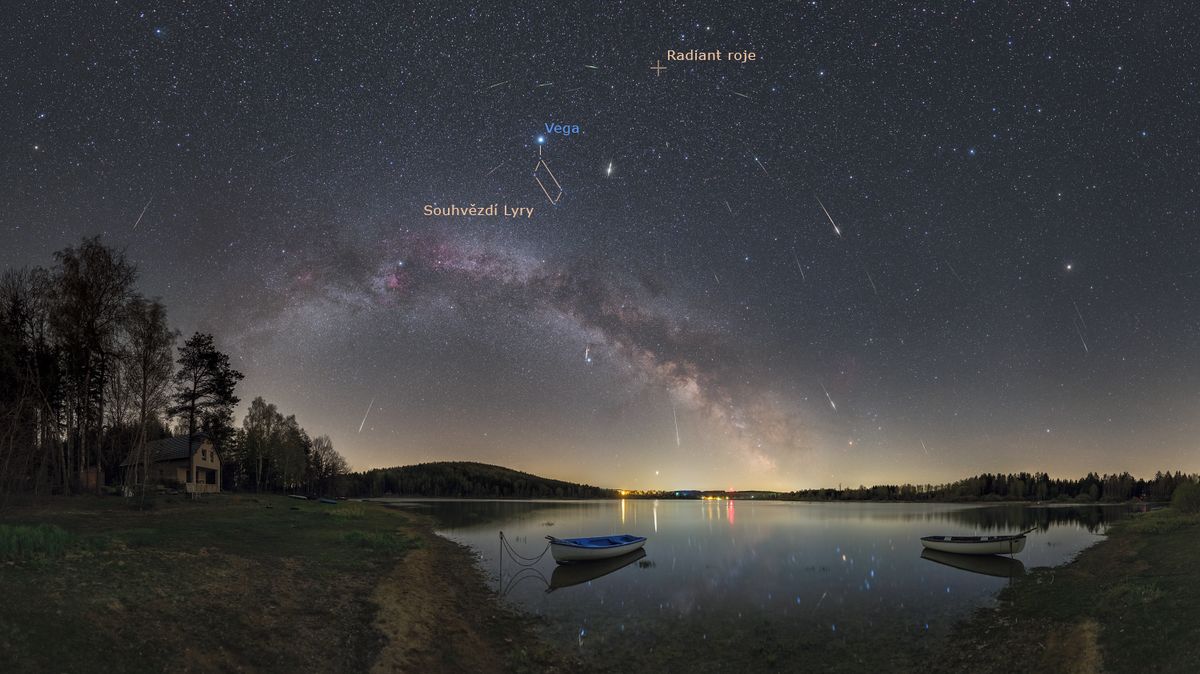
Lyrid Meteor Shower Peak: When and How to Watch
Czech astronomers are urging the public to prepare for the peak of the Lyrid meteor shower, expected overnight from April 21 to 22, when observers could witness up to 18 meteors per hour under optimal conditions.
The shower, active from April 16 to 25, originates from debris left by comet C/1861 G1 Thatcher and is best viewed after midnight when the radiant point in the constellation Lyra rises high in the sky. Experts recommend finding dark locations away from city lights and allowing eyes to adjust for at least 20 minutes to maximize visibility.
Historical records present the Lyrids have been observed for over 2,700 years, with the earliest known sighting documented by Chinese astronomers in 687 BCE. This year’s peak coincides with a waning crescent moon, minimizing interference and improving viewing prospects across Central Europe.
Observatories across the Czech Republic, including those in Prague and Brno, are planning public viewing events, though officials caution that weather conditions remain the decisive factor. Clear skies are essential, and viewers are advised to check local forecasts before heading out.
No special equipment is required to observe the Lyrids, though binoculars or telescopes may enhance the experience for those interested in tracking persistent trails or fainter fragments. Astronomers emphasize that patience and comfort — such as bringing blankets or reclining chairs — are key to a successful viewing session.
The next major meteor shower visible from the Czech Republic will be the Eta Aquarids in early May, though the Lyrids remain one of the most reliable annual displays for northern hemisphere observers.