Lunar Eclipse 2026 India: Visibility, Timing & ‘Blood Moon’ Explained
India will experience a partial lunar eclipse coinciding with the Holi festival on March 3, 2026, offering skywatchers a unique celestial event. While a total lunar eclipse will be fully visible across parts of the Americas and Western Europe, observers in India will only witness the concluding stages of the eclipse as the Moon rises.
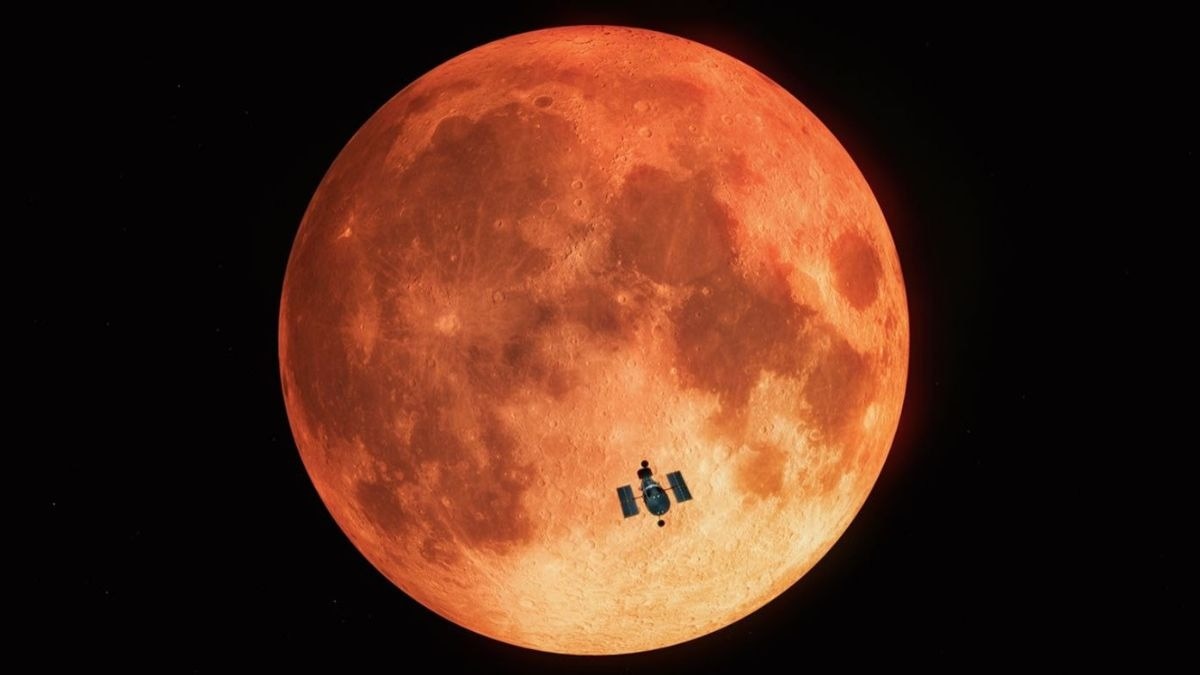
The lunar eclipse occurs when the Earth passes between the Sun and the Moon, casting a shadow on the lunar surface. During a total lunar eclipse, the Moon often takes on a reddish hue, a phenomenon popularly known as a “Blood Moon.” This occurs because the Earth’s atmosphere filters out shorter blue wavelengths of light, allowing longer red wavelengths to pass through and bend towards the Moon. As NASA explains, an observer on the Moon during totality would see every sunrise and sunset on Earth simultaneously, appearing as a glowing ring of red light around the planet.
For those in India, the eclipse will begin as a penumbral phase, where the Moon passes through the outer, lighter part of Earth’s shadow, causing a subtle dimming of the lunar surface. The Moon will rise over the Indian horizon already emerging from the deepest part of the Earth’s shadow. In New Delhi, moonrise is expected at 6:18 PM IST, while in Mumbai, the Moon will rise slightly later at 6:38 PM IST, according to timeanddate.com.
The most dramatic phase of the eclipse, the totality, will occur before moonrise for Indian observers. The eclipse will officially end at 9:23 PM IST, providing a window of opportunity to observe the subtle shading as the Moon regains its full brightness. The maximum eclipse in New Delhi will occur at 6:27 PM IST, with a magnitude of 0.290, but the Moon will be below the horizon at this time.
Unlike solar eclipses, lunar eclipses are entirely safe to view with the naked eye, requiring no special filters or protective eyewear. Experts recommend finding a location with a clear, unobstructed view of the eastern horizon for optimal viewing. The duration of the eclipse will be one hour and 31 minutes. The Sutak kaal, a period considered inauspicious, will begin nine hours before the eclipse and end once it is over, impacting festival celebrations, according to the Times of India.
The eclipse is scheduled to begin with the penumbral phase at 3:20 PM IST and conclude at 6:47 PM IST. Maximum eclipse will occur between 6:33 PM and 6:40 PM IST.