
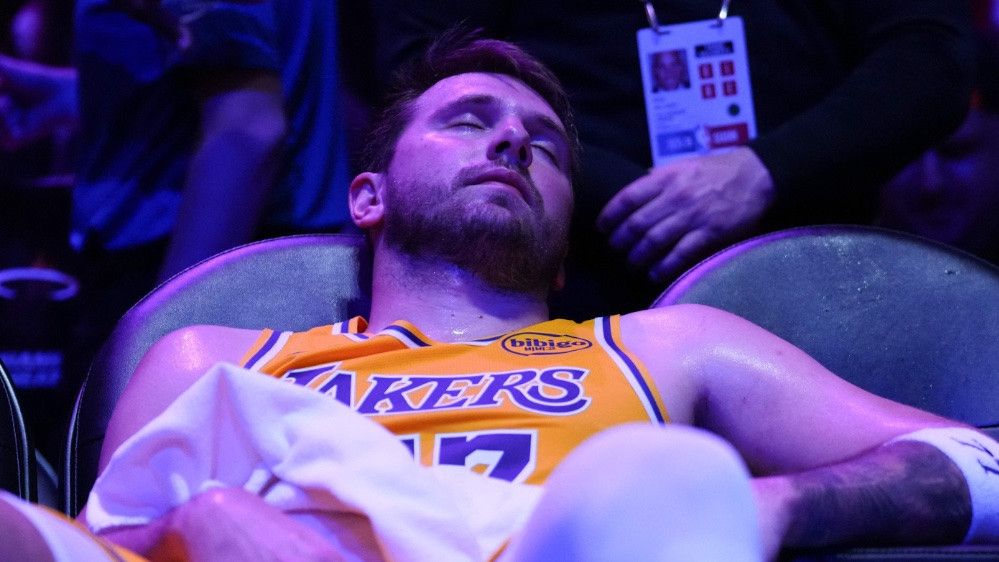
Luka Dončić Suffers Serious Injury: Major Blow for LA Lakers
Luka Dončić, the cornerstone of the Los Angeles Lakers, is seeking specialized medical treatment in Europe following a Grade 2 patellar tendon strain. After a significant loss to the Oklahoma City Thunder, the Slovenian star aims to return for the NBA playoffs starting April 18, alongside teammate Austin Reaves.
The timing of this injury creates a critical physical and strategic crisis for the Lakers as they navigate the final stretch of the regular season. A Grade 2 patellar tendon strain is a disruptive pathology that typically necessitates a month of recovery, placing Dončić’s playoff availability in serious jeopardy. The decision to move treatment to Europe was not made in haste; it followed comprehensive consultations between the Lakers’ medical staff and Dončić’s private medical team. For elite athletes, this shift in geography often represents a search for specific periodization protocols or regenerative therapies not readily available in the domestic circuit. While the pros utilize global networks, local athletes facing similar tendon ruptures or strains must prioritize local orthopedic specialists and rehab centers to ensure their recovery doesn’t lead to permanent mobility loss.
The tactical void left by Dončić is immense. To understand the gravity of his absence, one must look at the raw synergy established between Dončić and Austin Reaves. In a recent dominant 110-97 victory over the New York Knicks, the duo combined for 60 points, with Dončić leading the charge with 35 points, 8 rebounds, and 2 steals. This partnership has proven to be a viable alternative to the team’s primary dependence on LeBron James. In games where Dončić and Reaves played without James, the Lakers boasted a formidable 9-2 record. This suggests that the offensive load is successfully distributed when both are healthy, but the loss of Dončić effectively removes the team’s most potent playmaker from the board during the most volatile part of the season.
“They both will try to return to the lineup, and our task is to extend the season as far as possible so that they can return,” stated Lakers head coach J.J. Redick.
This injury forced the Lakers into a state of roster desperation, evidenced by their recent matchup against the Dallas Mavericks. In a move that highlighted the depth crisis, Redick deployed a starting five consisting of LeBron James, Luke Kennard, Deandre Ayton, Rui Hachimura, and Jake LaRavia. This specific combination of players had never played a single full minute together throughout the entire season. Such experimental rotations often lead to a breakdown in drop coverage and defensive synchronization, leaving the team vulnerable to high-efficiency offenses. The lack of cohesion was palpable, emphasizing how Dončić serves as the tactical glue that allows the Lakers’ supporting cast to operate within a structured system.
The strategic impact extends beyond the court to the franchise’s broader operational stability. The Lakers currently hold the third seed in the Western Conference, trailing only the Oklahoma City Thunder and the San Antonio Spurs. While a playoff berth is guaranteed, the lack of a healthy Dončić threatens their seeding and home-court advantage. From a business perspective, the absence of a global superstar during the playoff push impacts local economic drivers. The hospitality sector surrounding the arena and regional broadcast revenues often see a surge when a star of Dončić’s caliber is active; his absence potentially dampens the “halo effect” that drives premium ticket demand and luxury suite sales. For franchises managing such high-value assets, securing elite performance consultants is essential to mitigate the financial risk of long-term player unavailability.
Defensively, the Lakers have shown flashes of brilliance when the rotation is optimized. Against the Knicks, they limited one of the league’s most potent attacks to 42% shooting and held them under 100 points, forcing 19 turnovers. This defensive surge was characterized by a collective effort that didn’t require the “4-on-5” defensive compromises often seen when the team tries to over-protect a single star. However, maintaining this intensity without Dončić’s ability to control the tempo and limit the opponent’s transition opportunities will be a grueling task for J.J. Redick’s squad.
The road to April 18 is narrow. The apply of an MRI to evaluate the severity of the strain was the first critical step, but the actual recovery depends on the tendon’s response to the European treatment regimen. The Lakers are essentially gambling on an accelerated timeline. If Dončić and Reaves cannot return in tandem, the team’s ceiling drops significantly. The risk is not just a first-round exit, but a potential long-term degradation of the patellar tendon if the return is rushed. This high-stakes environment is why professional athletes rely on specialized sports contract lawyers to manage the insurance and contractual implications of catastrophic injuries.
As the Lakers prepare for the postseason, the narrative has shifted from a quest for dominance to a race against biological clocks. Whether the European intervention can shave weeks off a standard recovery timeline remains to be seen. The franchise’s trajectory now hinges on the medical reports emerging from overseas. For those following the intersection of elite athletics and professional recovery, the World Today News Directory remains the premier resource for finding the vetted medical and legal professionals who manage the careers of the world’s most valuable athletes.
Disclaimer: The insights provided in this article are for informational and entertainment purposes only and do not constitute medical advice or sports betting recommendations.