
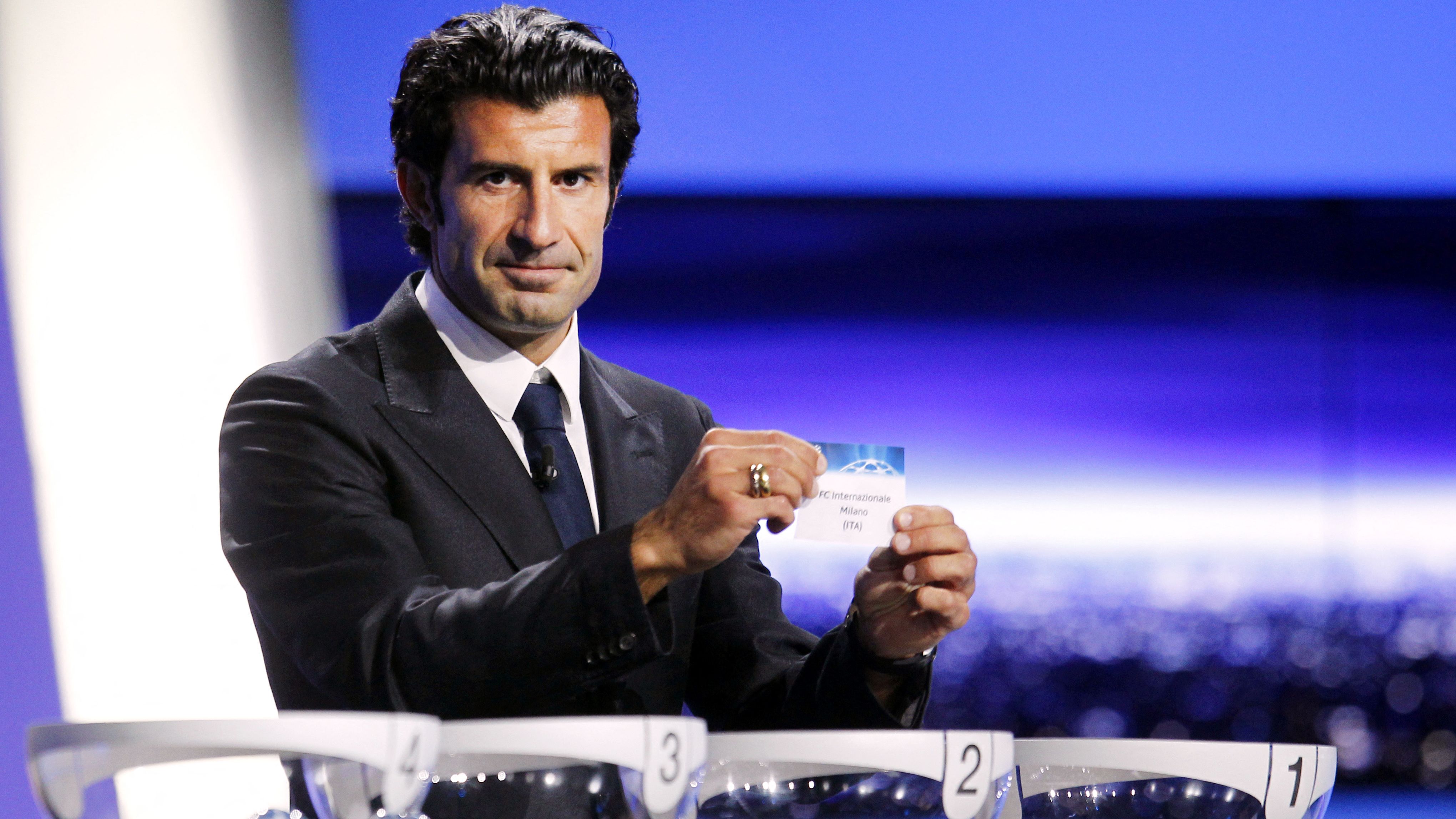
MADRID – A curious prescription for improvement has emerged from Real Madrid legend Luis Figo as the club navigates a period of instability. Figo’s advice, delivered during a recent event focused on the importance of hydration in sports, centers on a surprisingly simple solution: drink more water.
The suggestion comes at a fraught time for Los Blancos. The team recently saw manager Xabi Alonso depart, replaced by former player Álvaro Arbeloa, following a run of inconsistent results. The change in leadership hasn’t immediately stemmed the tide, with Real Madrid exiting both the Copa del Rey and the Champions League before the quarterfinal stage, forcing them into a qualifying playoff for the Champions League round of 16. , the club finds itself in a precarious position, seeking a path back to consistent form.
Figo, speaking at an event hosted by La Liga, reflected on his own approach to hydration during his playing days. “In my time, hydration was understood as a necessity, not something you knew was necessary for performance, health, and recovery,” he told Spanish newspaper Marca. “It was more linked to my feeling of my body and its need, not scientific knowledge.”
The Portuguese star emphasized a reliance on internal cues rather than rigid adherence to hydration schedules. “Would I drink enough water while playing? When my body told me to. I’m not the type to drink water just to hydrate if I’m not thirsty,” Figo stated. He similarly admitted to indulging in less-than-ideal beverages, acknowledging a personal enjoyment that sometimes outweighed purely health-conscious choices.
Figo acknowledged the evolution of sports science and the increased availability of information regarding optimal hydration. “Because of my personal needs, scientific information on this topic wasn’t as readily available during my playing days. Today, you know everything your body needs,” he said. He also noted his tendency to sweat easily, questioning whether this was due to insufficient water intake or simply a physiological trait.
Figo believes a simple increase in water consumption could benefit the current Real Madrid squad. “The team needs to drink more water to play better,” he asserted. “This improves mental health, performance, and recovery, because they have the talent.”
The advice, while unconventional, speaks to a broader theme of addressing fundamental elements of player well-being. The dismissal of Alonso, a highly-regarded manager, underscores the pressure at the Santiago Bernabéu to deliver results. , the club officially announced Alonso’s departure, citing a mutual agreement, and swiftly appointed Arbeloa as his replacement. The move followed a particularly stinging defeat in the Spanish Super Cup final against Barcelona (2-3).
The situation highlights the delicate balance between tactical innovation and basic physical conditioning. While Alonso was known for his sophisticated tactical approach, the team’s struggles suggest underlying issues may have contributed to the downturn in form. Figo’s suggestion, though seemingly simplistic, could be interpreted as a call to refocus on the foundational aspects of athletic preparation.
The team’s recent Champions League performance is particularly concerning. Falling outside the top eight in the group stage forced Real Madrid into a playoff round to secure a spot in the round of 16 – a significant departure from the club’s historical dominance in the competition. The early exit from the Copa del Rey further compounded the sense of crisis.
Arbeloa faces a considerable challenge in revitalizing the squad. He inherits a team capable of brilliance, but one that has recently demonstrated a worrying fragility. Whether Figo’s advice is heeded remains to be seen, but the underlying message – that attention to basic needs can unlock potential – resonates within the context of Real Madrid’s current predicament.
The appointment of Arbeloa, a former stalwart defender for the club, represents a shift towards a more familiar face at the helm. His intimate knowledge of the club’s culture and expectations could prove invaluable in navigating this turbulent period. However, the pressure to deliver immediate results will be immense, and the team’s performance in the coming weeks will be closely scrutinized.
Figo’s comments, delivered in a lighthearted manner, offer a unique perspective on the demands of professional football. His emphasis on listening to one’s body and prioritizing individual needs stands in contrast to the increasingly data-driven approach that dominates modern sports science. Yet, the underlying principle – that optimal performance requires a holistic focus on well-being – remains timeless.
