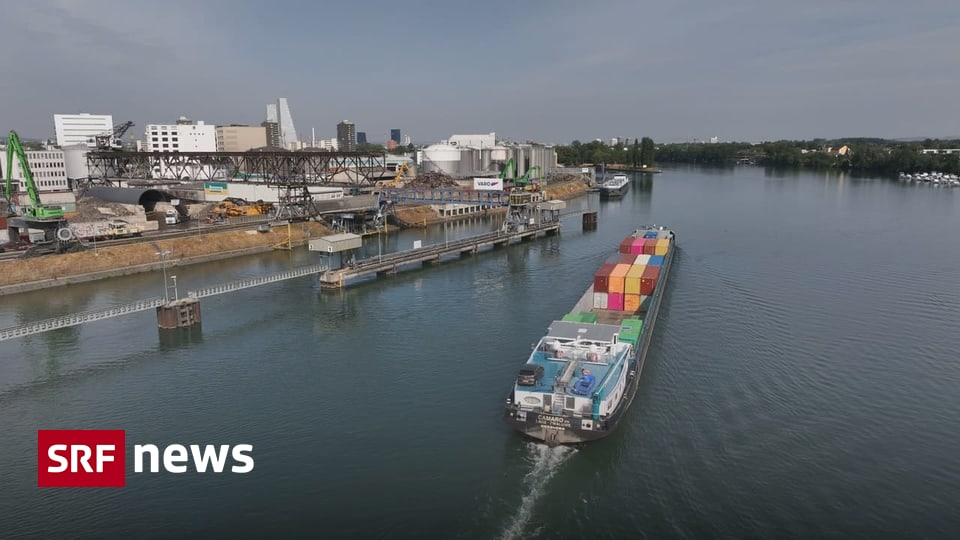
Low Rhine Water Levels Disrupt Shipping in Basel
Low water levels on the Rhine are currently disrupting commercial shipping operations at the Port of Basel, Switzerland’s primary maritime gateway. As of July 15, 2026, reduced river depths have forced freight vessels to operate with partial loads, straining supply chains for energy, industrial raw materials, and regional logistics infrastructure.
The Rhine’s Critical Role and Current Operational Constraints
The Rhine functions as a vital artery for the Swiss economy, facilitating the transport of essential goods including petroleum products, grain, and chemical raw materials. According to data from the Swiss Rhine Ports, the waterway is responsible for handling approximately 10 to 15 percent of Switzerland’s total foreign trade volume. When water levels drop below critical thresholds, vessels are forced to reduce their draft, meaning they must carry significantly less weight to avoid grounding.
This physical limitation creates an immediate economic ripple effect. When a barge is unable to carry its full capacity, the cost per ton of transported goods rises sharply. For companies reliant on just-in-time delivery models, this creates a logistical bottleneck that cannot be easily bypassed by alternative transport methods like rail or road, which lack the massive capacity of the inland shipping fleet.
Those managing these supply chain disruptions are increasingly turning to specialized logistics and supply chain management firms to re-route freight and optimize inventory buffers before the situation escalates further.
Hydrological Trends and Infrastructure Vulnerability
The current situation is not an isolated event but part of a recurring pattern of hydrological volatility. Experts note that changing precipitation patterns in the Alps and the Rhine basin are leading to more frequent periods of low flow during summer months. This environmental reality is forcing a re-evaluation of how regional infrastructure is maintained and operated.

According to the Swiss Federal Office for the Environment (FOEN), monitoring river gauges is now a constant necessity for stakeholders in the shipping industry. The predictability of the Rhine, once a staple of European trade, has been replaced by a need for high-frequency data monitoring and contingency planning.
“The dependency on the Rhine is absolute for certain industries, yet the river’s reliability is becoming a variable rather than a constant. We are seeing a shift where businesses must treat water levels as a primary risk factor in their annual fiscal planning,” says an analyst familiar with Alpine water management.
Mitigating Economic Exposure Through Professional Oversight
For businesses operating within the Basel region, the financial fallout of these delays can be substantial. Contractual obligations regarding delivery timelines, fuel surcharges, and storage costs for stalled cargo often lead to complex legal disputes. When force majeure clauses or delivery penalties come into play, companies often require the counsel of commercial and maritime law firms to navigate the shifting regulatory landscape.
Furthermore, the physical infrastructure of the ports themselves must adapt. Engineering firms are currently exploring ways to dredge key segments of the riverbed or modify loading docks to accommodate lower-draft vessels, though these projects are subject to strict environmental regulations and lengthy permitting processes. Organizations seeking to modernize their facilities or ensure compliance with new municipal water-usage mandates are now consulting with civil engineering and infrastructure development specialists to ensure long-term operational viability.
The Long-Term Outlook for Swiss Maritime Trade
As of mid-July 2026, the situation remains fluid. Meteorological forecasts for the remainder of the summer will dictate whether the Rhine levels continue to recede or stabilize. The broader impact, however, is clear: the Swiss economy is entering a period where maritime trade can no longer be assumed as a stable constant.

Reliability in this environment requires proactive management. Whether it is diversifying transportation routes, adjusting inventory procurement cycles, or seeking legal protection against supply chain failures, the businesses that survive this volatility are those that treat infrastructure risk as a core operational challenge. For organizations struggling to maintain service levels, connecting with verified risk management and logistics professionals is no longer an optional precaution; it is an essential component of modern Swiss business strategy.
The Rhine will continue to flow, but its capacity to serve as the backbone of Swiss industry is being tested in ways that demand a more sophisticated approach to resource management and legal foresight.