Loudoun County suspends data center builds amid tax revenue
As artificial intelligence infrastructure spending surges across the United States, a backlash is uniting disparate political groups against data center developments. In Loudoun County, Virginia, server farm tax assessments are projected to hit 1.3 billion dollars next year, driving local opposition over noise, environmental strain, and diminished quality of life.
Meta Builds Massive Server Clusters to Boost Municipal Budgets
The construction of data center infrastructure is on track to become the largest economic future bet in United States history, according to Meta CEO Mark Zuckerberg. Meta is building multiple multi-gigawatt clusters, with a single cluster spanning an area roughly the size of Manhattan.
These massive computer facilities provide substantial financial relief for municipal budgets. Loudoun County, located northwest of Washington, D.C., and widely known as Data Center Alley, hosts more than 250 data centers. AOL maintained its headquarters in the county for years before the first server farms arrived in the 2000s.
Taxes levied on computer equipment inside these facilities will generate approximately 1.3 billion US dollars next year, accounting for more than 40 percent of Loudoun County’s total tax revenues.

Property Tax Cuts and the Cost to Community Quality of Life
The influx of revenue enabled the district to cut property taxes for residents by about 30 percent over the past decade. The county also bolstered school budgets and recently constructed a 100-million-dollar community center featuring multiple pools and athletic facilities.
Despite these financial benefits, residents and local leaders are pushing back against further expansion. Juli Briskman, who is involved in the region’s board for economic policy and development, stated that the county simply went too far.
Initial zoning plans treated massive data centers like conventional office buildings without accounting for noise, environmental impact, and proximity to residential neighborhoods. Briskman noted that early questions about the rapid building pace were met with answers about soaring revenues and falling property taxes. Now, residents respond that while lower taxes are fine, the facilities degrade their daily quality of life.
In response to overwhelming resident pressure, the Loudoun County administration approved a 12-month suspension of building applications to draft more restrictive standards.
Unanimous Bans and Cross-Partisan Opposition in Maryland
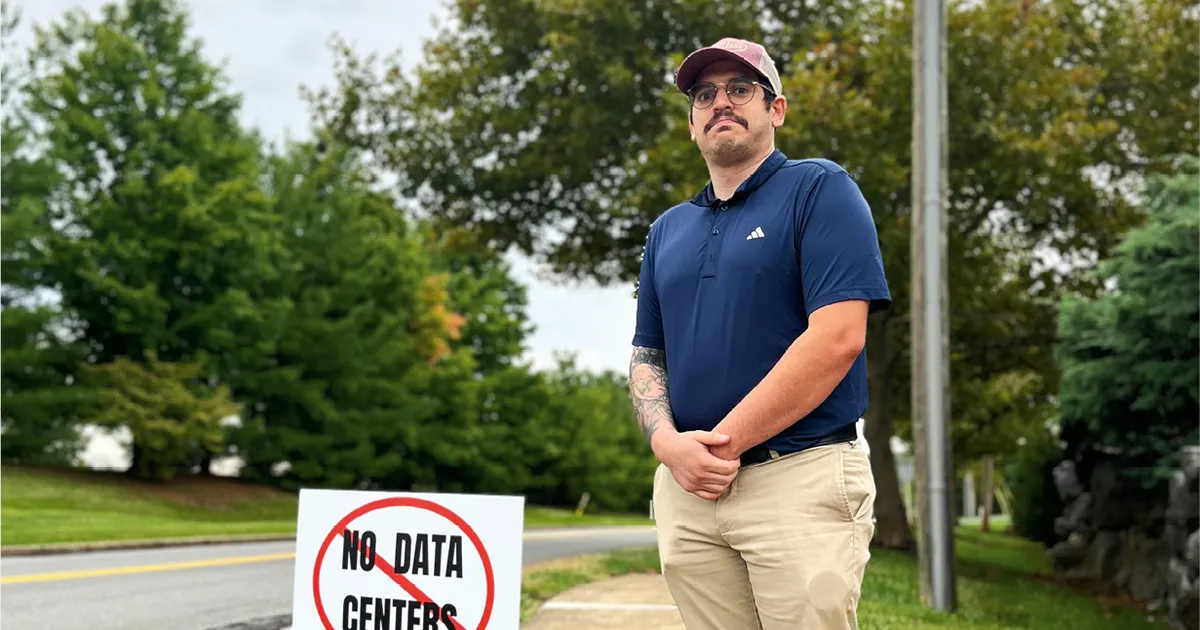
In Harford County, Maryland, residents Bryan Cornell and Krissy Flatau successfully mobilized their community against neighboring data centers. Their efforts culminated in a unanimous vote by the district council’s five Republicans and two Democrats to ban such facilities.
Neither Cornell nor Flatau had prior political involvement. Cornell voted for Barack Obama in the past before casting a ballot for Donald Trump, but his frustrations with the federal government left him convinced that ordinary citizens must take action themselves. Flatau emphasized that the citizen movement brought together people from diverse backgrounds to protect their local community.
This localized resistance is creating friction within the Republican Party. Recent polling indicates that 54 percent of the traditional wing opposes data center construction, while a majority of self-described MAGA supporters still favor server farm expansion. Even Texas Governor Greg Abbott, a proponent of deregulation, introduced significant restrictions on data centers weeks ago.
That economic bet on artificial intelligence infrastructure now faces its obstacle not from federal regulators, but from local communities demanding a voice in their own neighborhoods.