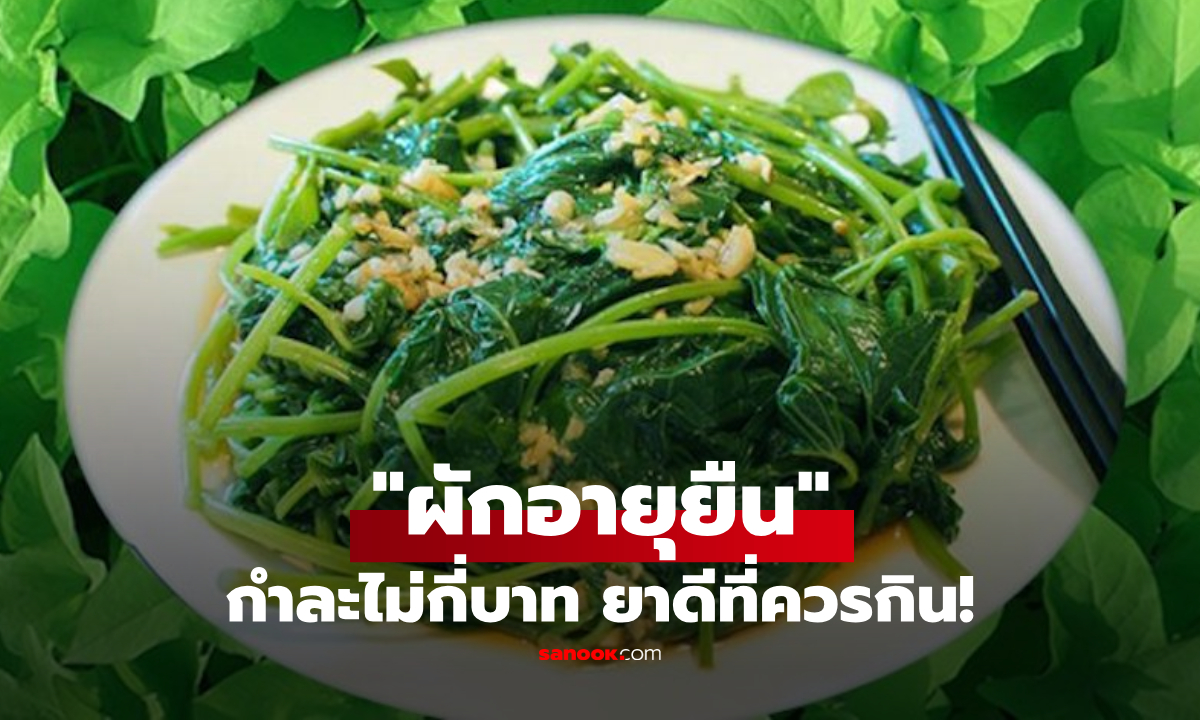
Long-Life Vegetables for Just a Few Baht: Cleanse Your Gut, Boost Immunity, and Nourish Your Stomach — The Overlooked Superfood You Need
In the bustling markets of Southeast Asia, a humble vegetable long cherished in traditional wellness practices is gaining renewed scientific attention for its potential role in supporting gastrointestinal and immune health. Known locally as “ผักอายุยืน” or longevity vegetable, this leafy green—often sold for just a few baht per bundle—has been anecdotally linked to improved digestion, stomach lining protection, and immune modulation. While such claims have circulated for generations in folk medicine, recent preclinical investigations are beginning to unpack the biological plausibility behind these traditional uses, prompting researchers to examine whether this accessible food could complement modern approaches to gut-immune axis support.
- Key Clinical Takeaways:
- Emerging preclinical data suggest bioactive compounds in certain longevity vegetables may support mucosal integrity and modulate gut-associated lymphoid tissue (GALT).
- No human clinical trials have yet confirmed efficacy for bowel cleansing, stomach nourishment, or immune stimulation as claimed in traditional use.
- Individuals considering dietary changes for digestive or immune health should consult qualified providers to ensure safety and appropriateness for their condition.
The nutritional profile of ผักอายุยืน—often identified in regional contexts as varieties of Sauropus androgynus (katuk), Moringa oleifera, or Centella asiatica—includes high levels of fiber, polyphenols, vitamin C, and carotenoids, all of which have documented roles in reducing oxidative stress and supporting epithelial barrier function. A 2023 in vitro study published in Journal of Ethnopharmacology found that aqueous extracts of Sauropus androgynus demonstrated significant free radical scavenging activity and inhibited pro-inflammatory cytokines like TNF-α and IL-6 in cultured intestinal epithelial cells. These findings provide a mechanistic basis for its traditional use in soothing digestive discomfort, though the study used concentrations far exceeding typical dietary intake.
Despite promising laboratory signals, translation to human health outcomes remains unproven. As of April 2026, no Phase I, II, or III clinical trials have been registered on ClinicalTrials.gov or the Thai Clinical Trials Registry evaluating ผักอายุยืน for gastrointestinal motility, mucosal healing, or immunomodulation in human subjects. This gap underscores the importance of distinguishing between biologically plausible mechanisms and clinically validated outcomes—a distinction emphasized by Dr. Arunee Srisawat, a gastroenterologist at Chulalongkorn University Hospital, who noted in a recent interview: “While traditional vegetables like katuk or moringa contribute valuable nutrients and fiber to the diet, we lack rigorous human data to support claims of ‘cleansing the intestines’ or ‘boosting immunity’ as standalone interventions. Such effects, if they occur, are likely modest and best understood as part of a broader dietary pattern.”
Funding for preliminary research has primarily come from public academic sources. The aforementioned Journal of Ethnopharmacology study was supported by a grant from Thailand’s National Science and Technology Development Agency (NSTDA), with no industry involvement reported. Similarly, an ongoing observational cohort study at Mahidol University examining dietary patterns and gut microbiome diversity in rural Northeastern Thailand—where ผักอายุยืn is commonly consumed—is funded by the Thailand Research Fund (TRF), aiming to correlate long-term intake of local greens with markers of intestinal inflammation and fecal calprotectin levels.
Experts caution against overinterpreting early findings. Dr. Vittaya Pengpid, an epidemiologist specializing in nutritional transition in Southeast Asia, warned: “We see a recurring pattern where traditional foods are rapidly rebranded as ‘superfoods’ or ‘natural detoxes’ based on limited lab data. This risks diverting attention from evidence-based strategies for managing conditions like irritable bowel syndrome or inflammatory bowel disease, where dietary modifications are guided by individualized assessment, not broad-spectrum vegetable consumption.” He emphasized that while increasing vegetable intake aligns with global dietary guidelines, specific health claims require validation through double-blind, placebo-controlled trials.
For individuals exploring dietary approaches to support digestive wellness, especially those with persistent bloating, irregular bowel movements, or suspected food sensitivities, professional evaluation is essential. Conditions such as small intestinal bacterial overgrowth (SIBO), celiac disease, or microscopic colitis require precise diagnosis and tailored management plans. Patients experiencing unexplained gastrointestinal symptoms despite dietary adjustments should consider consulting specialists who can integrate nutritional guidance with diagnostic testing. Resources like board-certified gastroenterologists or functional medicine providers with expertise in gut health may offer comprehensive assessments, including breath tests, stool analysis, or elimination diets, to identify underlying contributors.
Similarly, those interested in optimizing immune resilience through nutrition—particularly older adults, immunocompromised individuals, or those recovering from illness—may benefit from personalized guidance. Immune function is influenced by a complex interplay of genetics, microbiome health, micronutrient status, and chronic inflammation, none of which can be reliably addressed by a single food item. Consulting with clinical immunologists or registered dietitians specializing in immuno-nutrition can help distinguish between general wellness strategies and targeted interventions appropriate for specific health profiles.
While ผักอายุยืน remains a culturally significant and nutritionally valuable component of Southeast Asian diets, its role in clinical therapeutics is still exploratory. The absence of human trial data means that any claims about intestinal cleansing, stomach nourishment, or immune stimulation should be viewed as hypotheses rather than established facts. As research continues, the focus should remain on rigorous investigation—prioritizing safety, transparency, and patient-centered outcomes—rather than premature promotion. Until such evidence emerges, incorporating a variety of leafy greens into a balanced diet remains a sound, evidence-supported practice for overall health.
*Disclaimer: The information provided in this article is for educational and scientific communication purposes only and does not constitute medical advice. Always consult with a qualified healthcare provider regarding any medical condition, diagnosis, or treatment plan.*