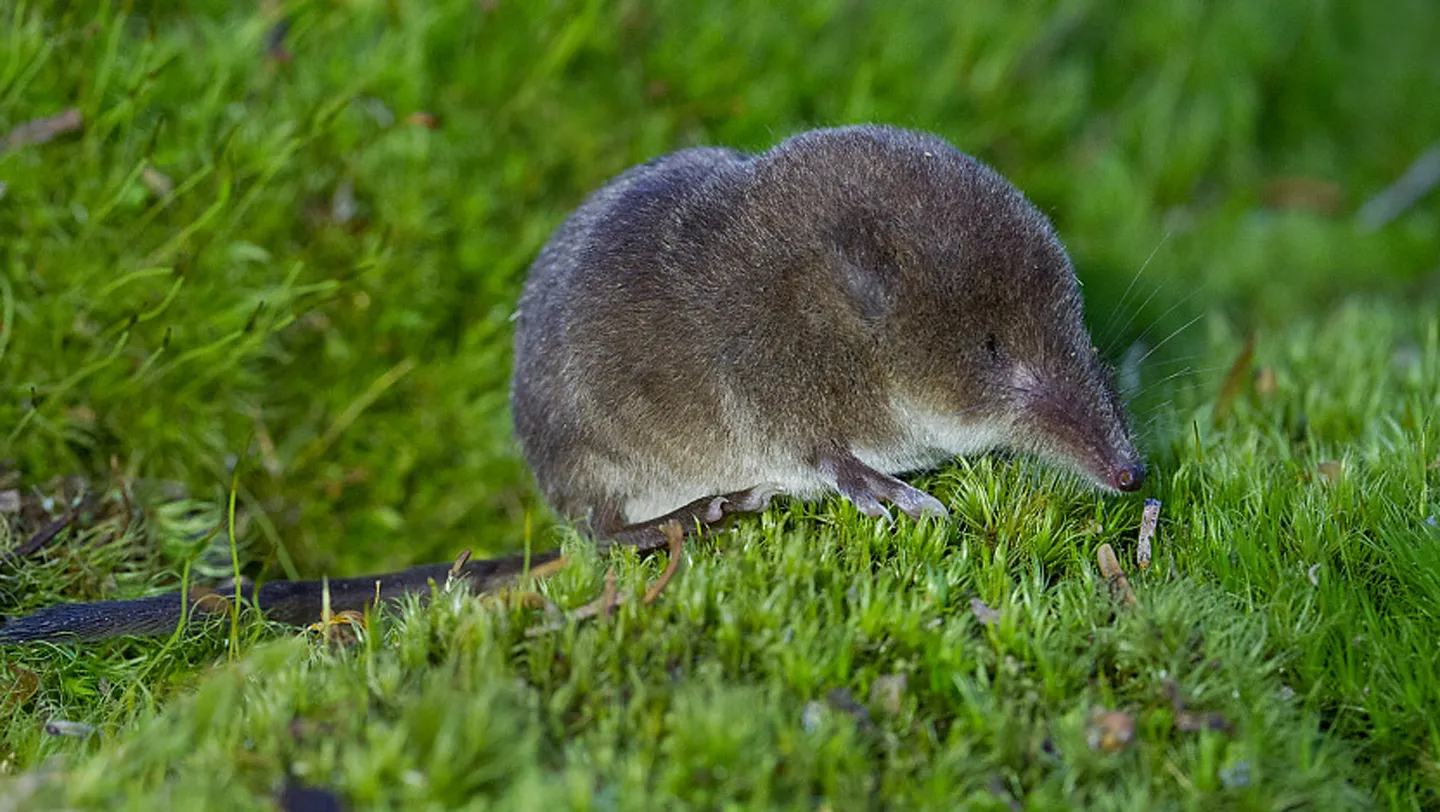
Long-Clawed Shrews Grow Larger Snouts in Winter to Survive Cold
Long-clawed shrews experience a physiological transformation during the winter months, temporarily increasing the size of their snouts while other skeletal structures shrink, according to a peer-reviewed study published in the journal Proceedings of the Royal Society B. Researchers documented this physical adaptation, termed the “reverse Dehnel’s phenomenon,” as a potential survival mechanism to help small mammals process freezing air and locate sparse resources in harsh conditions.
- Long-clawed shrews show a 7% increase in snout height and a 6% increase in width during winter, contrasting with the shrinkage seen in other skull dimensions.
- The seasonal morphological changes are reversible, with skull structures returning to larger sizes in surviving animals by late summer and autumn.
- Scientists theorize that the expanded nasal cavity houses an increased vascular network capable of warming freezing air prior to reaching the brain.
Unpacking the Reverse Dehnel’s Phenomenon in Small Mammals
While various small mammals—including the common shrew and the European mole—are known to reversibly reduce their body mass, skull size, and brain mass as winter approaches (a process historically designated as Dehnel’s phenomenon), recent anatomical investigations reveal a contradictory structural trajectory for the long-clawed shrew. Dr. Yugo Ikeda, first author of the research from Toyo University in Japan, and his colleagues examined 136 museum-preserved skulls collected in Hokkaido between 1948 and 1988 and housed at the Botanical Garden of Hokkaido University.
Because tracking skeletal dimensions in live, wild shrews repeatedly without harm remains practically impossible, researchers relied on this historical specimen archive covering both sexually immature and mature animals across every month of their typical lifespan. The specimens demonstrated that shrews collected between January and April possessed brain case heights 12% smaller than younger counterparts gathered from August to September during their first year of life. Conversely, the vertical measurement of the snout, or rostrum, expanded.
The research team emphasized that this bone structure alteration is a true physical enlargement rather than simple soft-tissue swelling. Measurements confirmed that these alterations reverse over time; specimens surviving into their second summer displayed larger brain case heights once again, illustrating dynamic skeletal plasticity.
Physiological Mechanisms and Thermal Regulation
The biological rationale behind snout expansion centers on respiratory efficiency and neuroprotection. When a shrew inhales freezing winter air, internal anatomy must prevent thermal shock to central nervous tissue. Shrews maintain frantic physiological baselines, with heart rates ranging from 800 to 1,000 beats per minute—and occasionally reaching 1,500 beats per minute in smaller species like the Etruscan shrew—necessitating a constant, uninterrupted supply of oxygen and heat regulation.

“Expanding the nasal cavity creates more room for a rich vascular network,” Dr. Yugo Ikeda noted regarding the mechanics of the adaptation. By maximizing internal surface area, the vascular network warms the incoming freezing air efficiently before it reaches the delicate, winter-shrunken brain, safeguarding core cognitive functions. Beyond thermoregulation, researchers suggest the nasal enlargement may enhance olfactory sensitivity for tracking prey such as earthworms, though mechanical reinforcement for processing tougher winter diets remains less supported by current data.
This physiological complexity highlights the precision required when evaluating mammalian metabolic and structural adaptations across changing environments.
Future Directions in Evolutionary Morphology
With Hokkaido serving as a natural habitat for three additional shrew species, research teams intend to investigate the prevalence and exact parameters of both standard and reverse Dehnel’s phenomena across related taxonomic groups. Establishing whether these cranial shifts occur within the Soricidae family will clarify the environmental triggers governing bone resorption and regeneration in high-stress, short-lived mammals.

Understanding the limits of biological plasticity ultimately informs broader investigations into metabolic regulation and tissue remodeling.
Disclaimer: The information provided in this article is for educational and scientific communication purposes only and does not constitute medical advice. Always consult with a qualified healthcare provider regarding any medical condition, diagnosis, or treatment plan.