
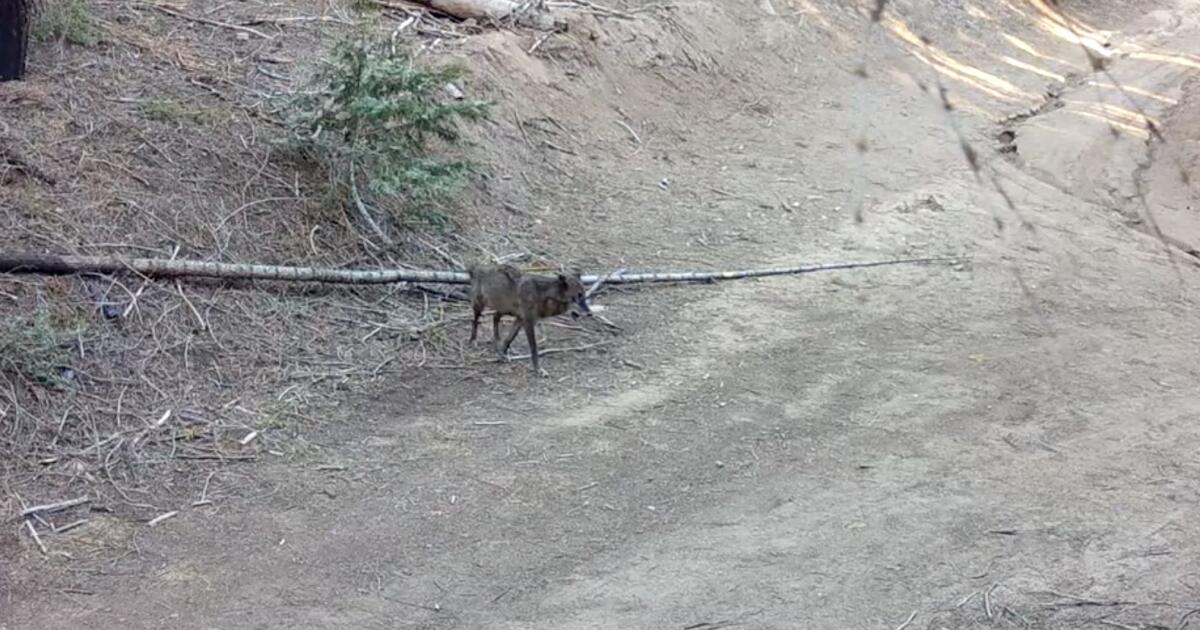
A gray wolf’s brief foray into Los Angeles County last weekend marked the first confirmed sighting of the species in the region in over a century, reigniting debate over the challenges and possibilities of wildlife recovery in California’s urban-wildland interface. The female wolf, identified as BEY03F, was tracked north of Santa Clarita in the San Gabriel Mountains on Saturday, February 7, before continuing north into Kern County by Monday, February 9, according to the California Department of Fish and Wildlife (CDFW).
The 3-year-old wolf’s journey, documented via a GPS collar fitted in May 2025, underscores the species’ slow but persistent return to the state. Gray wolves were eradicated from California by hunters and trappers by 1924, with their return beginning in 2011 when a wolf crossed the state line from Oregon as reported by KTLA. Today, an estimated 60 wolves roam California, primarily in the northern part of the state.
BEY03F’s travels suggest she was searching for a mate, a critical endeavor given the limited breeding window for wolves. “Unlike dogs who can mate a couple times a year, come into heat a couple times a year, wolves aren’t that way,” explained Amaroq Weiss, senior wolf advocate with the Center for Biological Diversity. “So it’s really important for them to find a mate before this window of time. She’s really kind of on the border here. It’s possible she could find a mate still within the next, like, two weeks or so and still be fertile. But time is slipping away and the clock is ticking.”
The wolf originated from the Beyem Seyo pack in Plumas County, born in 2023, and later joined the Yowlumni pack in Tulare County, where she was collared. She traveled over 370 miles from her birthplace to reach the mountains north of Santa Clarita, traversing the length of the Sierra Nevada. Axel Hunnicutt, gray wolf coordinator for the CDFW, believes she continued north after finding no signs of other wolves in Los Angeles County. The Orange County Register reported Hunnicutt’s speculation that the Grapevine, a major transportation corridor, may have deterred her from traveling further west.
The presence of a wolf in Los Angeles County, even briefly, highlights the challenges facing the species. Vehicle collisions are the leading cause of wolf deaths in California, as demonstrated by the death of OR-93, who was struck and killed on Interstate 5 in Kern County in 2021. Beth Pratt, California regional executive director for the National Wildlife Federation, noted that wolves require large, open spaces, a rarity in the densely populated Los Angeles area. “You’re never going to see a wolf pack running in Griffith Park,” she said.
Yet, conservationists point to the Wallis Annenberg Wildlife Crossing, currently under construction over the 101 Freeway, as a potential future pathway for wildlife movement. BEY03F’s arrival has been hailed as a conservation success. “This signifies a historic moment in the return of wolves for California,” said John Marchwick of California Wolf Watch.
Despite the symbolic importance of BEY03F’s visit, the long-term prospects for wolf recovery in Southern California remain uncertain. The CDFW continues to track her movements, and Hunnicutt indicated she is likely to continue heading north, leaving her ultimate destination – and reproductive success – unresolved.
