
Lizard-Inspired Rover: Is Sand Swimming the Future of Mars Exploration?
Engineers at the Georgia Institute of Technology have developed a robotic prototype designed to navigate granular media by mimicking the locomotion mechanics of the sandfish skink (Scincus scincus). The project, which explores the physics of “sand-swimming,” seeks to address the significant challenges traditional wheeled rovers face when traversing loose, unconsolidated surfaces on extraterrestrial bodies like Mars.
The robot utilizes a specialized undulatory movement pattern, shifting its body in a sinusoidal wave that generates thrust against the surrounding grains. By oscillating its limbs in a manner that balances drag and lift within granular materials, the device can effectively propel itself through deep sand—a medium that typically causes wheel slippage and immobilization for conventional planetary exploration vehicles.
Mechanical Adaptation to Granular Environments
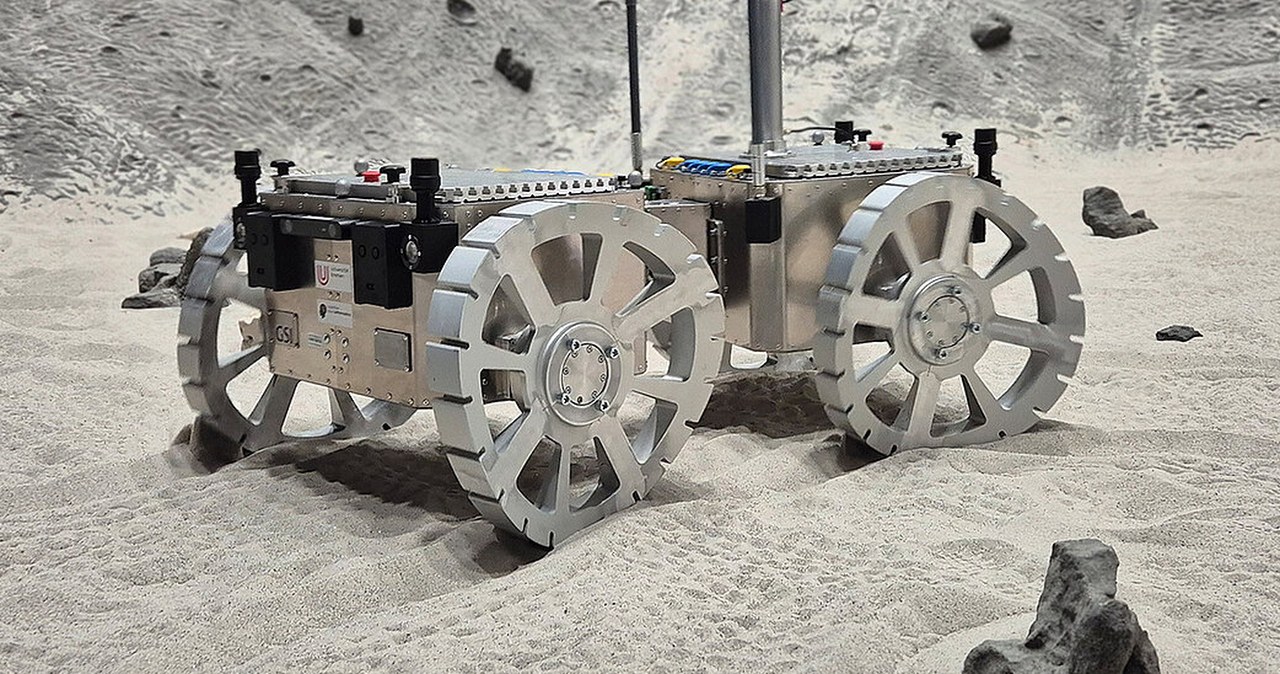
Standard rover designs, such as those utilized by NASA’s Curiosity and Perseverance missions, rely on rigid wheels that are susceptible to sinking or becoming trapped in loose Martian regolith. The Georgia Tech research team focused on the principles of “granular fluidization,” where the movement of the robot’s limbs momentarily reduces the resistance of the sand, allowing for more efficient displacement.

The prototype’s design emphasizes a low-profile, flexible structure that minimizes the energy required to displace mass during motion. Laboratory tests involved varying the density and moisture content of the sand to observe how the robot’s undulations maintain stability and speed. Data collected during these trials indicate that the robot’s ability to “swim” through granular media is highly dependent on the frequency of its oscillations and the specific shape of its appendages, which must interact with the sand particles to create sufficient resistance for forward movement.
Institutional Goals for Planetary Mobility
The research is currently positioned as a proof-of-concept study investigating alternative mobility paradigms for future missions. While current planetary exploration remains heavily reliant on wheeled platforms, the limitations of these systems in high-incline, sandy terrain have prompted interest in bio-inspired robotics. The primary objective of the current phase of development is to determine the scalability of the locomotion model and its viability for integration into more complex, autonomous exploration hardware.
The research team has noted that moving these systems from controlled laboratory environments to unpredictable field conditions requires addressing the durability of soft-robotics components and the power requirements of continuous, active propulsion. Future iterations are expected to focus on the integration of sensing technologies that allow the robot to adjust its gait based on the density and particle size of the terrain it encounters in real-time.
The Georgia Tech project remains in the experimental verification stage, with no immediate timeline for integration into active space agency flight manifests.