
Liquids Fracture Like Solids: New Fluid Dynamics Discovery
Liquid Fracture Discovery: A Hidden Risk for AI Cooling Infrastructure
Most engineers treat fluids as continuous media, assuming they flow until they evaporate. That assumption just broke. Researchers at Drexel University have demonstrated that simple liquids, under specific extensional stress, fracture like brittle solids. For the datacenter architects managing the thermal loads of 2026’s AI clusters, this isn’t just physics trivia—it’s a potential failure mode for liquid cooling loops that we haven’t modeled for.

The Tech TL;DR:
- Infrastructure Risk: Liquid cooling systems in high-performance computing may face unexpected brittle fracture at 2 MPa critical stress.
- Manufacturing Impact: 3D printing and hydraulic robotics require updated stress models to prevent sudden material failure.
- Security Implication: Physical infrastructure audits must now account for fluid dynamics in threat modeling.
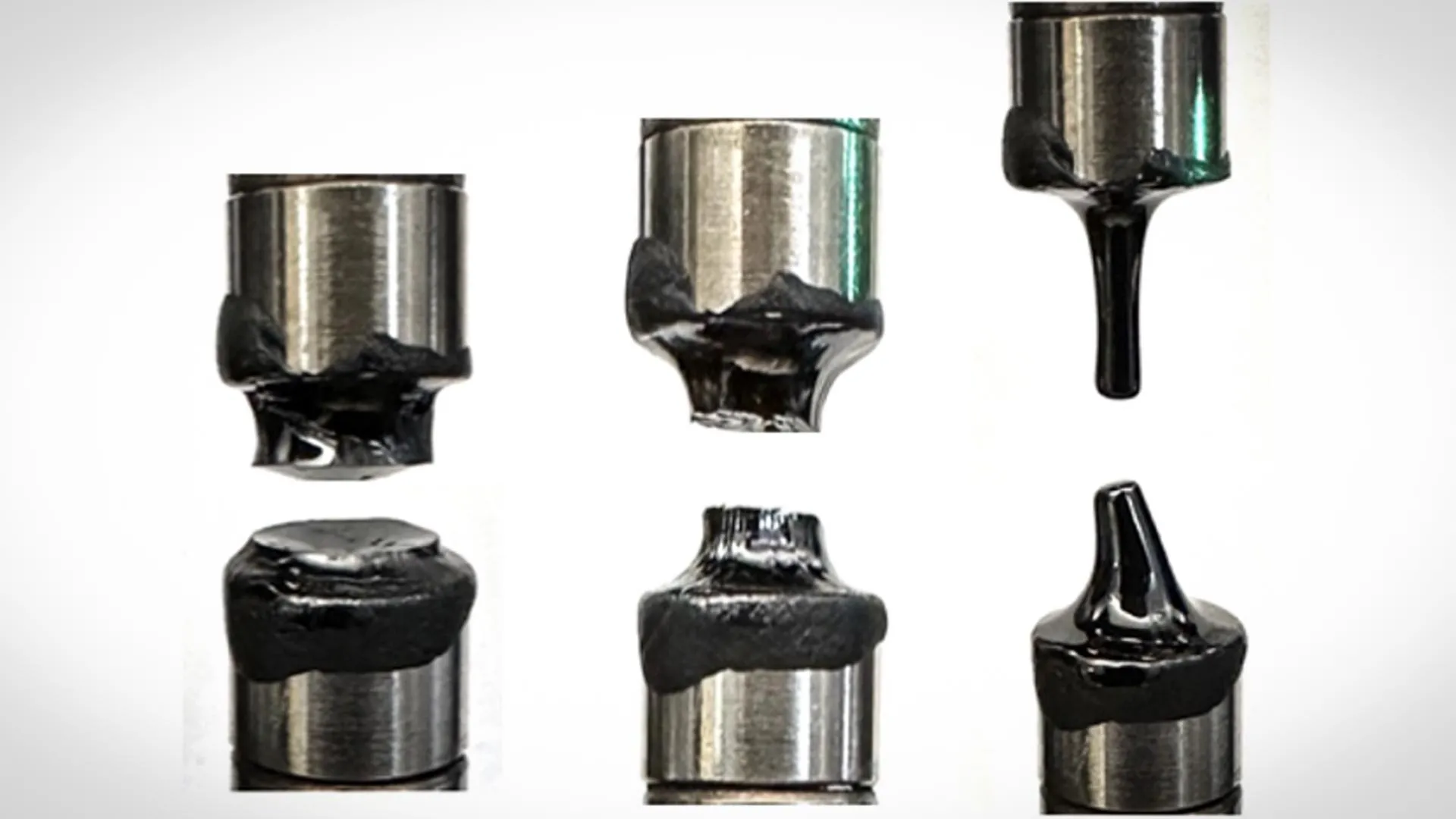
The study, published in Physical Review Letters, details how viscous liquids snap when stretched beyond a critical stress point. Thamires Lima, an assistant research professor at Drexel, noted that this behavior occurs in simple liquids like water and oil, not just complex polymers. The team observed the phenomenon during extensional rheology tests in collaboration with ExxonMobil Technology & Engineering Company. When the liquid reached a critical stress of 2 megaPascals, it didn’t thin; it broke. A high-speed camera captured the event, accompanied by an audible snap.
The Physics of Failure in AI Infrastructure
In the context of modern datacenter design, liquid cooling is no longer optional. With GPU power densities exceeding 1000 watts per module, immersion cooling and direct-to-chip liquid loops are standard. If the coolant—often a dielectric fluid or engineered oil—behaves like a solid under pump-induced stress cavitation, we face micro-fractures in the flow dynamics. This isn’t about the pipes breaking; it’s about the fluid column itself failing, potentially causing vapor lock or pressure spikes that trigger sensor false positives.
Viscosity plays a larger role in mechanical behavior than previously believed. The Drexel team tested tar-like hydrocarbon blends and styrene oligomer. Both fractured at the same critical stress point, suggesting the phenomenon is chemistry-independent. This generalizability is concerning for supply chain consistency. If a coolant vendor changes a formulation slightly, altering viscosity, the critical stress threshold might shift, leading to unpredictable system behavior under load.
Industry leaders are already flagging physical layer anomalies as a security vector. As noted by security leadership in research institutions, physical infrastructure integrity is often the weakest link in the security chain.
“We typically audit network perimeter defenses, but physical system failures driven by material science anomalies represent a blind spot in operational security,”
says a Senior Infrastructure Architect at a major cloud provider. This aligns with the growing focus on research security management, where physical risks are integrated into broader compliance frameworks.
Material Science Meets Security Audits
Traditional cybersecurity audits focus on code and network traffic. However, the convergence of OT (Operational Technology) and IT means physical processes are now digital assets. A fluid fracture event could mimic a cyber-induced pressure drop, triggering automated shutdowns or failover sequences that attackers could exploit for denial-of-service. Organizations need to expand their risk assessment scope.
Specialized firms are emerging to handle this intersection of physical and digital risk. Companies offering cybersecurity risk assessment and management services are beginning to include physical infrastructure stress testing in their portfolios. This is crucial for industries relying on hydraulic robotics or precision fluid dispensing in semiconductor fabrication. A sudden fracture in a lithography coolant line could ruin a wafer batch, constituting a significant financial loss event that requires forensic analysis.
the validation of these systems requires rigorous auditing. Cybersecurity audit services now increasingly cover the integrity of industrial control systems (ICS) that manage these fluid dynamics. Ensuring that sensors accurately report pressure without being spoofed is part of the new baseline for SOC 2 compliance in hardware-heavy environments.
Monitoring Critical Stress in Real-Time
To mitigate this risk, engineering teams should implement real-time monitoring for pressure spikes that approach the 2 MPa threshold. Below is a Python snippet designed for an IoT edge device monitoring coolant pressure sensors. It logs anomalies that suggest brittle fracture conditions.
import time import logging # Configure logging for security audit trail logging.basicConfig(filename='/var/log/coolant_monitor.log', level=logging.WARNING) CRITICAL_STRESS_MPA = 2.0 SAFETY_MARGIN = 0.8 # 80% of critical stress def monitor_coolant_pressure(sensor_data): """ Monitors coolant pressure to detect potential brittle fracture conditions. Sensor_data: dict containing 'pressure_mpa' and 'timestamp' """ pressure = sensor_data.receive('pressure_mpa', 0) if pressure >= (CRITICAL_STRESS_MPA * SAFETY_MARGIN): logging.warning(f"CRITICAL STRESS APPROACHING: {pressure} MPa") # Trigger automated throttling or alert trigger_incident_response(pressure) def trigger_incident_response(pressure): # Integration with SIEM or facilities management print(f"ALERT: Potential fluid fracture risk detected at {pressure} MPa") # Simulation loop while True: # In production, replace with actual sensor read current_reading = {'pressure_mpa': 1.65, 'timestamp': time.time()} monitor_coolant_pressure(current_reading) time.sleep(5) This script ensures that if viscosity changes or pump speeds increase stress beyond safe limits, the system logs the event for later forensic review. This data is vital for cybersecurity consulting firms that analyze incident logs to distinguish between hardware failures and malicious tampering.
The Supply Chain Risk
The discovery challenges long-held assumptions about elasticity and fluid dynamics. Until now, fracture was considered a property of elasticity, reserved for solids or liquids below their glass transition point. Observing this in simple liquids above their glass transition means existing simulation software (CFD tools) may need patches to model this behavior accurately.
For enterprise IT, this translates to vendor risk management. When procuring cooling solutions or hydraulic components, CTOs must demand data on critical stress thresholds, not just flow rates. The collaboration between Drexel and ExxonMobil highlights that even major industrial players are only now uncovering these basics. It underscores the need for continuous validation of physical supplies.
As we move toward more autonomous maintenance systems, the ability to predict these fractures becomes a security requirement. A robot arm manipulating fluids that suddenly snap could cause physical damage to surrounding hardware. Security managers, like those defining roles at Microsoft AI, are increasingly tasked with overseeing the safety of AI-driven physical interactions. The boundary between software bugs and physical laws is blurring.
The trajectory here is clear: material science is becoming an IT problem. We cannot simply patch this with code; we must update our physical models. Organizations that fail to integrate these findings into their risk registers may find themselves vulnerable to outages that look like cyberattacks but are rooted in fluid mechanics. The directory of trusted service providers must evolve to include firms capable of auditing these hybrid physical-digital risks.
Disclaimer: The technical analyses and security protocols detailed in this article are for informational purposes only. Always consult with certified IT and cybersecurity professionals before altering enterprise networks or handling sensitive data.