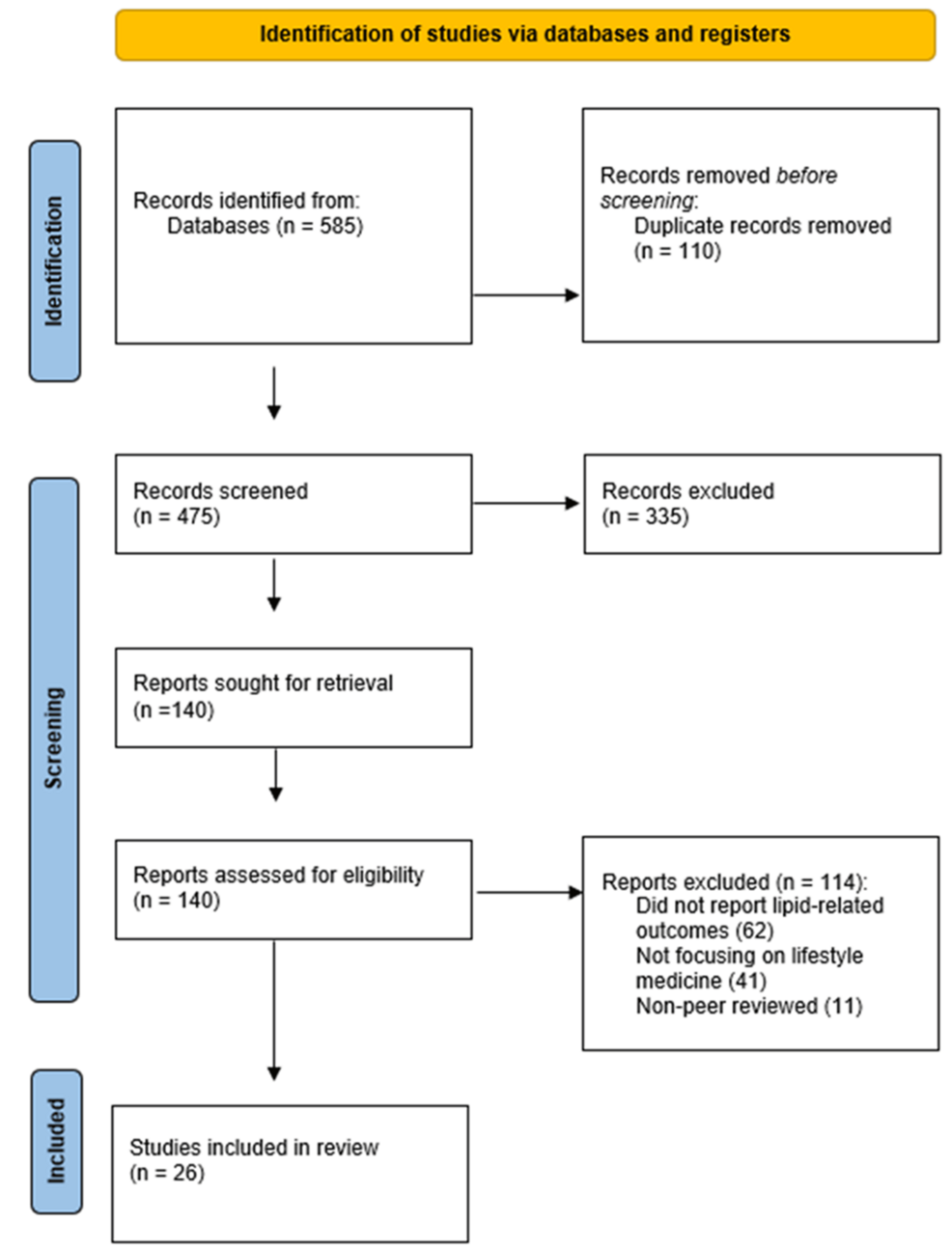
Lifestyle Medicine and Cholesterol Reduction: A Systematic Review of Non-Medication Approaches
Non-medication lifestyle modification programs significantly reduce systolic and diastolic blood pressure alongside total cholesterol in patients with cardiovascular disease, according to a systematic review and meta-analysis published July 28, 2025, in Cureus (DOI: 10.1186/s13643-025-02857-5). Led by researchers Semagn Mekonnen Abate, Shivshankar Thanigaimani, Mallika Sinha, David Sun, and Jonathan Golledge, the study evaluates the clinical efficacy of lifestyle interventions and drug optimization programs for secondary prevention.
- Pooled data from 16 randomized controlled trials involving 4,450 participants demonstrated statistically significant decreases in systolic blood pressure, diastolic blood pressure, and total cholesterol levels.
- The analysis evaluated both standalone lifestyle modification programs and combined interventions pairing lifestyle changes with medication optimization.
- Authors rated the overall quality of evidence as low using GRADE and trial sequential analyses, indicating that firm clinical conclusions remain limited.
Evaluating Lifestyle Modification in Established Cardiovascular Disease
Cardiovascular diseases remain the leading cause of global morbidity and mortality. While lifestyle modification programs are widely implemented as primary prevention tools, their effectiveness in secondary prevention—specifically in monitoring and controlling modifiable risk factors among patients with established disease—has remained a subject of clinical debate. To address this gap, investigators conducted a comprehensive literature search across PubMed, Cochrane, Science Direct, and LILACS without date or language restrictions.
The review included 16 randomized controlled trials comparing lifestyle modifications or drug therapy optimizations against standard care. Seven of these trials tested combined programs focusing on both lifestyle changes and drug optimization, while nine evaluated lifestyle modification alone. Primary outcomes tracked changes in systolic blood pressure and low-density lipoprotein cholesterol, alongside secondary measures including total cholesterol, diastolic blood pressure, and medication adherence.
Meta-Analysis Results and Statistical Findings
Quantitative synthesis of the trial data revealed measurable improvements across multiple physiological parameters. Programs that integrated lifestyle modification and medication optimization yielded significant reductions in systolic blood pressure, with a standardized mean difference of -0.30 (95% confidence interval, -0.43 to -0.17, P < 0.001). Diastolic blood pressure decreased comparably, showing a standardized mean difference of -0.18 (95% confidence interval, -0.28 to -0.08, P < 0.001).
Total cholesterol levels also declined significantly among participants in the evaluated programs, registering a standardized mean difference of -0.28 (95% confidence interval, -0.49 to -0.07, P = 0.009). Despite these favorable effect sizes, the authors emphasized that trial sequential analysis and GRADE evaluations rated the overall quality of evidence as low. This classification reflects methodological limitations across the underlying trials, suggesting that clinicians should interpret these pooled outcomes with appropriate caution when designing secondary prevention protocols.
Clinical Translation and Patient Triage
Future research registered under PROSPERO protocol CRD42024523078 will continue to clarify the precise mechanisms by which behavioral interventions impact long-term cardiovascular outcomes. As clinical guidelines evolve, maintaining rigorous adherence to evidence-based frameworks remains essential for mitigating cardiovascular risk.