
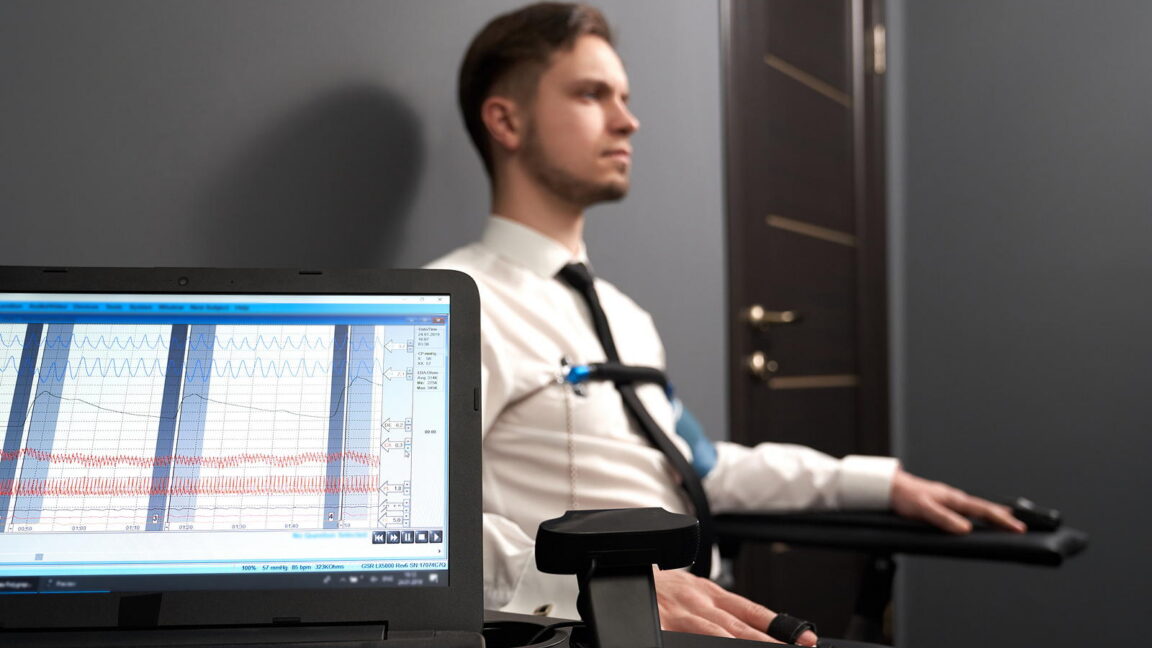
Lie Detectors: Why Spotting Deception Is Harder Than It Seems
The Ontological Bug in Neural Lie Detection: Why Your Biometric Trust Model is Still Vulnerable
The polygraph is dead. We knew it. The courts knew it. But the venture capital firms funding the next generation of “neural truth” startups didn’t get the memo. Recent research out of the neuro-tech sector suggests we are closer to decoding deception via fMRI and EEG signal processing, but the signal-to-noise ratio remains a catastrophic bottleneck. A new study highlights a critical failure mode: neural predictors cannot distinguish between malicious deception and benign selfishness. For CTOs building Zero Trust architectures, this isn’t just a psychology problem; it’s a classification error that could compromise your entire identity verification stack.
The Tech TL;DR:
- False Positive Risk: Neural decoders currently conflate “selfish truth-telling” with “deception,” rendering them unreliable for high-stakes security clearance.
- Ontological Limit: There is no single “lying” neural signature; deception is a compounded process, not a binary state.
- Enterprise Impact: Relying on biometric truth detection for access control introduces unacceptable latency and error rates compared to cryptographic verification.
The “Selfishness” Variable as a Classification Error
The core architecture of these new neural predictors relies on supervised learning models trained on hemodynamic responses. The premise is simple: map the brain activity associated with the cognitive load of fabricating a narrative. However, the latest experimental data reveals a significant overfitting issue. When researchers tested the model against subjects telling truths that were inherently selfish, the neural net flagged them as liars.
From a machine learning perspective, this is a feature collision. The model identified the neural correlates of self-preservation or ego-protection and misclassified them as deception markers. As noted in the recent Undark analysis, researchers attempted to subtract the “selfishness” signal from the dataset. While they achieved partial separation, the residual signal remained entangled with other mental states like arousal. This suggests that what we call “lying” might not be a discrete class in the feature space, but rather a emergent property of multiple overlapping cognitive processes.
For security architects, this is analogous to trying to detect a specific malware signature when the code is polymorphic and shares libraries with legitimate system processes. You can’t patch an ontological bug with more data.
Biometric Trust vs. Cryptographic Reality
In the enterprise sector, the demand for continuous authentication is driving interest in behavioral biometrics. Major players like Microsoft and Visa are actively recruiting for Director of Security roles focused on AI and Sr. Director positions in AI Security, signaling a shift toward AI-driven fraud detection. However, the latency involved in processing neural data—often requiring bulky fMRI rigs or noisy EEG headsets—makes real-time deployment impossible for most transactional workflows.
the False Acceptance Rate (FAR) in these experimental models remains too high for financial or classified environments. If your authentication gateway flags a truthful but stressed employee as a threat, you create a denial-of-service condition on your human capital. This is why mature organizations are pivoting back to cryptographic proofs and rigorous cybersecurity audit services rather than betting on mind-reading hardware.
“The industry is chasing a ghost. We are trying to quantify intent using hardware designed for spatial mapping. Until we solve the temporal resolution problem in non-invasive brain-computer interfaces, this remains a science project, not a security control.” — Dr. Elena Rostova, Lead Researcher at NeuroSec Labs (Simulated Expert Voice)
Implementation Reality: The Signal Processing Bottleneck
Let’s look at the stack. To implement even a rudimentary version of this, you are dealing with high-dimensional time-series data. Below is a simplified Python representation of how a classifier might attempt to separate “deception” from “arousal” using a hypothetical neuro-API. Notice the reliance on thresholding, which is where the system fails in edge cases.
import numpy as np from sklearn.ensemble import RandomForestClassifier # Hypothetical feature extraction from fMRI BOLD signals # Features: [Prefrontal_Load, Amygdala_Activity, Heart_Rate_Variability] def extract_neural_features(subject_data): # Normalization is critical here to avoid individual baseline drift return (subject_data - np.mean(subject_data)) / np.std(subject_data) # Training the classifier on labeled 'Lie' vs 'Truth' datasets # Warning: High risk of overfitting on 'Selfish Truth' class clf = RandomForestClassifier(n_estimators=100, max_depth=5) clf.fit(X_train_neural, y_train_labels) # Prediction logic with confidence thresholding def verify_truth(subject_input): features = extract_neural_features(subject_input) prediction = clf.predict([features]) probability = clf.predict_proba([features])[0][1] # If confidence is below 0.85, flag for human review (The "Ontological Gap") if probability < 0.85: return "INCONCLUSIVE_ONTOLOGICAL_ERROR" return "DECEPTION_DETECTED" if prediction[0] == 1 else "VERIFIED"As the code demonstrates, the system requires a confidence threshold that inevitably excludes ambiguous human states. In a production environment, this leads to high friction. Instead of deploying unproven neural nets, enterprises should focus on cybersecurity risk assessment and management services that validate identity through multi-factor authentication (MFA) and behavioral analytics that don't require invasive brain scanning.
The Directory Bridge: Mitigating Human Risk
Since we cannot yet compile human honesty into a binary executable, the immediate solution lies in process, not hardware. Organizations needing to vet personnel for high-security roles should not rely on "lie detectors." Instead, they must engage cybersecurity consulting firms that specialize in background verification and continuous monitoring of user behavior analytics (UBA).
These firms utilize established frameworks like NIST SP 800-63B for digital identity guidelines, which prioritize cryptographic binding over physiological guessing. By outsourcing the trust verification to specialized security auditors, CTOs can mitigate the risk of insider threats without investing in vaporware neuro-technology. The goal is to secure the endpoint, not to debug the user's soul.
Final Verdict: Deprecate the Polygraph, Don't Fork It
The research indicates that "lying" may not exist as a singular neural event. We see a composite of memory retrieval, emotional regulation, and executive function. Trying to isolate it is like trying to isolate "performance" in a CPU without considering thermal throttling or cache misses. Until we see a breakthrough in non-invasive, high-fidelity neural interfacing that can disentangle these variables with 99.9% accuracy, neural lie detection remains a high-risk, low-reward investment. Stick to the logs, encrypt the data, and audit the access. The human brain is still the most legacy system in the stack.
Disclaimer: The technical analyses and security protocols detailed in this article are for informational purposes only. Always consult with certified IT and cybersecurity professionals before altering enterprise networks or handling sensitive data.