Lewis Pugh Swims Strait of Hormuz to Highlight Environmental Impact of Iran-US Conflict
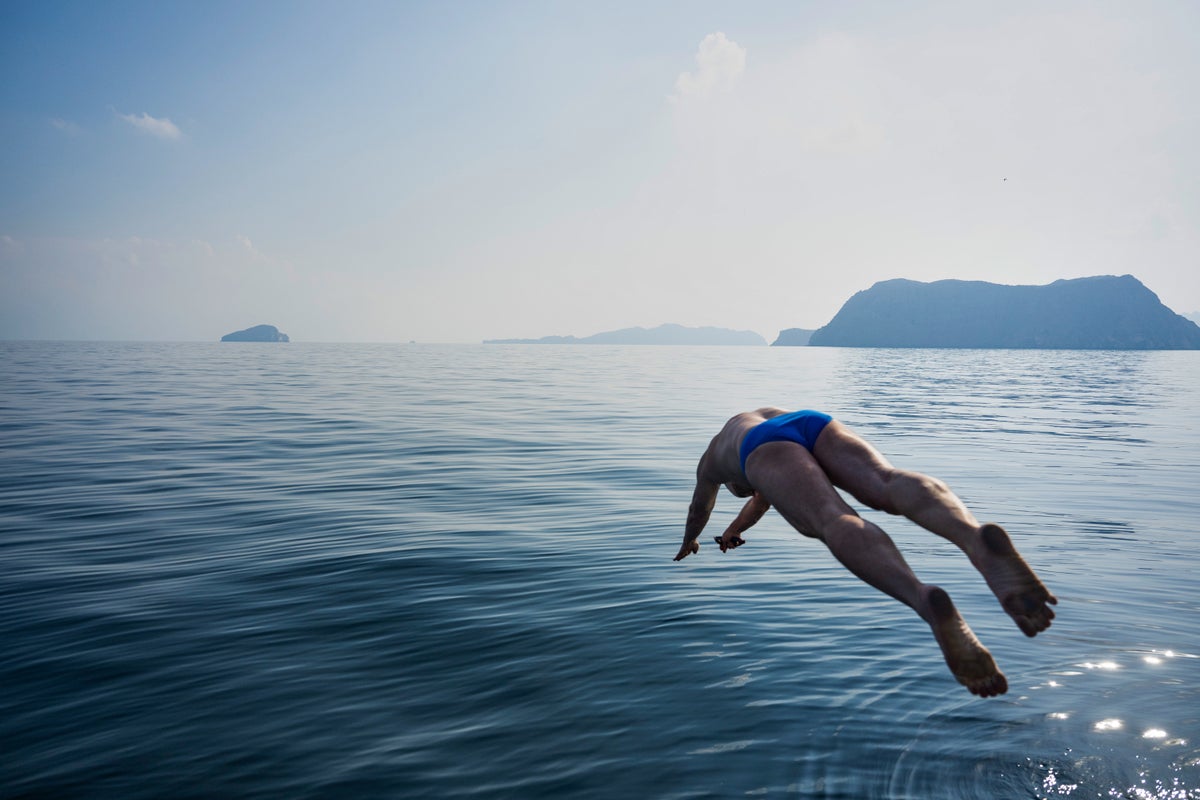
British endurance swimmer Lewis Pugh has navigated the Strait of Hormuz, completing a 15-kilometer swim to draw global attention to the environmental toll of the ongoing conflict between Iran and the United States.
The swim, conducted in segments over three days, occurred as military strikes against oil tankers continued in the area.
Military Conflict Stalls Marine Conservation
Pugh, 56, a United Nations Patron of the Oceans, entered the water from the Musandam peninsula and finished near the Cape of Hormuz. His effort serves as a protest against the war, which began on February 28, 2026, and has since turned the waterway into a site of frequent maritime combat, The Independent reported.
The athlete described witnessing the immediate realities of the conflict, noting that explosions rocked the water shortly after he began his swim on Monday.
“Most people, when they think about the Strait of Hormuz, they think of a shipping lane,” Lewis Pugh, a United Nations Patron of the Oceans, said.
“I looked up and I could see that an oil tanker about four kilometers away had been hit. The explosion was so loud, two booms, and then fighter jets coming in. And at that moment I realized we have to get out of here right now.”
Pugh told The Independent of the encounter. He later observed a gas carrier burning, noting that the water around the vessel appeared to be on fire. He described the smell of chemicals and the sight of fireballs rising into the sky as the vessel was struck.

Environmental Degradation in the Strait
The Strait of Hormuz, a critical maritime passage between the Gulf and the Arabian Sea, remains home to coral reefs, seagrass meadows, and mangrove forests. However, satellite monitoring conducted by Greenpeace MENA has identified approximately 609 potential oil slicks across the Gulf and the strait since February.
These slicks cover a cumulative daily footprint of roughly 21,000 square kilometers, an area nearly the size of Wales, according to data cited by Yahoo and The Guardian.
| Metric | Reported Data |
|---|---|
| Confirmed maritime incidents | 134 (as of Nov 11) |
| Reported oil spill events | 540 (as of Nov 12) |
| Total area of oil spills | ~20,000 sq. km |
The potential for long-term ecological damage is severe. Bernhard Riegl, a marine biologist at Nova Southeastern University, told The Guardian that the shallow nature of the Gulf prevents the mixing of cooler, deeper water, which exacerbates the impact of heat and pollutants on marine life.
Studies of previous conflicts, such as the 1980s Iran-Iraq war and the first Gulf war, indicate that oil residue can remain detectable in coastal sediments for decades, affecting burrowing organisms like ghost crabs, The Guardian reported.

The Diplomatic Role of Extreme Sports
Pugh has previously completed long-distance swims in Antarctica, the North Pole, and the Hudson River to advocate for environmental protections. His foundation reports that these efforts have contributed to agreements protecting over 3.5 million square kilometers of ocean. He refers to his current approach as “Speedo diplomacy,” aiming to open dialogue on the necessity of ending hostilities to prevent further environmental collapse.
The situation remains volatile for those attempting to monitor the damage. Some researchers in Iran and Gulf states have reported receiving instructions from domestic authorities to remain silent regarding the environmental impact of the war, The Guardian reported. As the conflict continues, the reliance on satellite imagery from organizations like Greenpeace has become essential for tracking the scale of the pollution.
Born in 1969, Lewis Pugh is a British-South African endurance swimmer recognized as the first person to complete a long-distance swim in every ocean of the world.
Often dubbed the “Sir Edmund Hillary of swimming,” he previously worked as a maritime lawyer and served as a Reservist in the British Special Air Service before focusing on his environmental advocacy. His career is marked by pioneering swims in extreme environments, including the first swim across the North Pole in 2007 to highlight melting sea ice.
The International Maritime Organization has confirmed that at least 25 people have died in 134 incidents within the strait as of November 11. “My message is very simple,” Pugh said. “We’ve got to stop the war. We’ve got to open the strait, and we’ve got to clean up the pollution.”