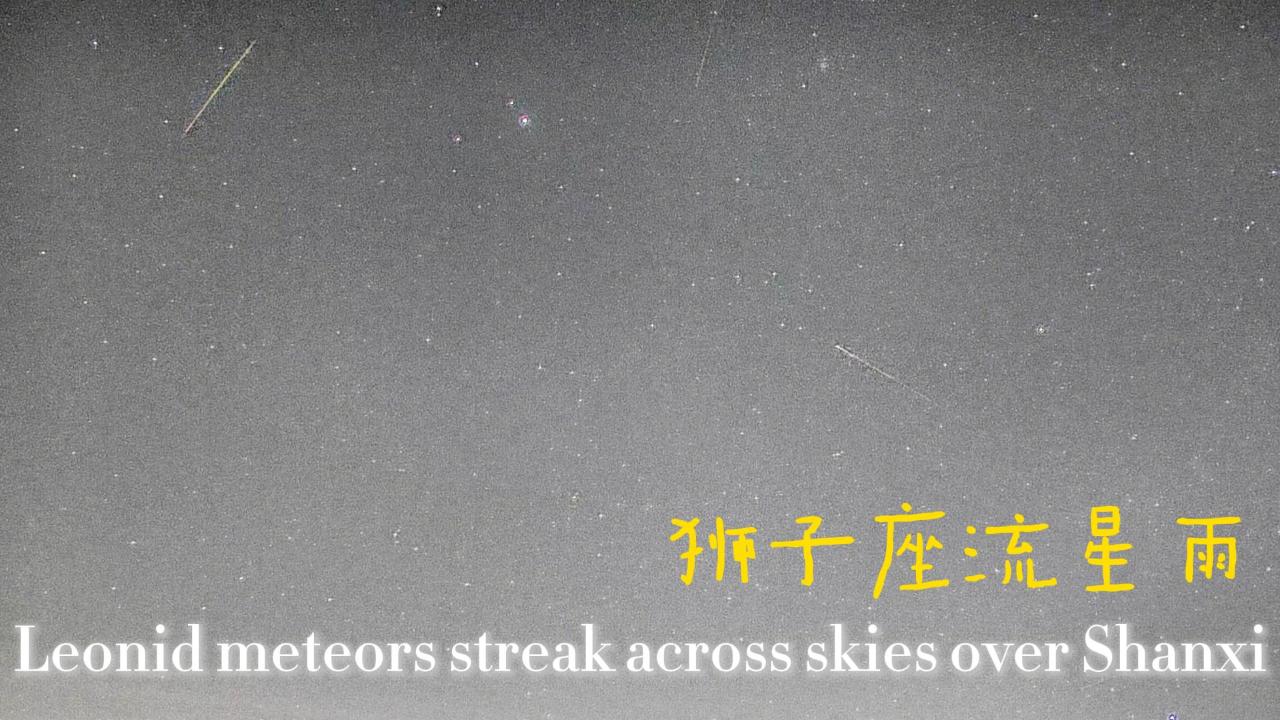
Leonid Meteor Shower Peaks With Clear Skies Over Shanxi and Heilongjiang
Clear skies after midnight allowed stargazers in Shanxi and Heilongjiang provinces to view the annual Leonid meteor shower as it peaked between November 17 and 18, according to reporting by CGTN.
-
The Tech TL;DR:
- The Leonid meteor shower peaked between November 17 and 18.
- Observers in Yangquan used specialized meteor-monitoring cameras to capture the display.
- Clear skies after midnight provided optimal viewing conditions across Shanxi and Heilongjiang provinces.
The astronomical event occurs annually as Earth traverses the debris path left by comet 55P/Tempel-Tuttle, producing luminous trails across the night sky. In Yangquan, Shanxi province, observers deployed specialized meteor-monitoring hardware to record the celestial activity. Additional photos of the shower were captured between November 16 and 17 over Daqing, Tongjiang, and Qiqihar in Heilongjiang Province.
The annual display draws attention from both amateur astronomers and professional researchers studying orbital debris streams. Unlike sporadic meteors, showers originate from well-mapped particulate clouds deposited by periodic comets. The dense particle streams require precise optical sensors to track entry vectors and luminosity decay rates.
# Sample CLI query for orbital debris tracking logs
curl -s https://api.example-astronomy.org/v1/streaks/55p-tempel-tuttle
  --header "Authorization: Bearer token_placeholder"
  --data "region=yangquan&sensor=specialized-camera"
Data gathered by specialized monitoring equipment helps researchers calculate particle distribution density within the comet’s tail. Historical outbursts have produced significantly higher hourly rates, though this year’s activity provided clear visibility for regional observers.

Optimal viewing conditions depend heavily on local atmospheric transparency and light pollution levels. Stargazers utilizing automated monitoring gear captured long, luminous trails as particles intersected the upper atmosphere at high velocities.
| Location | Province | Monitoring Method |
|---|---|---|
| Yangquan | Shanxi | Specialized meteor-monitoring camera |
| Tongjiang | Heilongjiang | Optical photography |
| Qiqihar | Heilongjiang | Optical photography |
The annual event concludes as Earth moves past the primary debris cluster of comet 55P/Tempel-Tuttle.