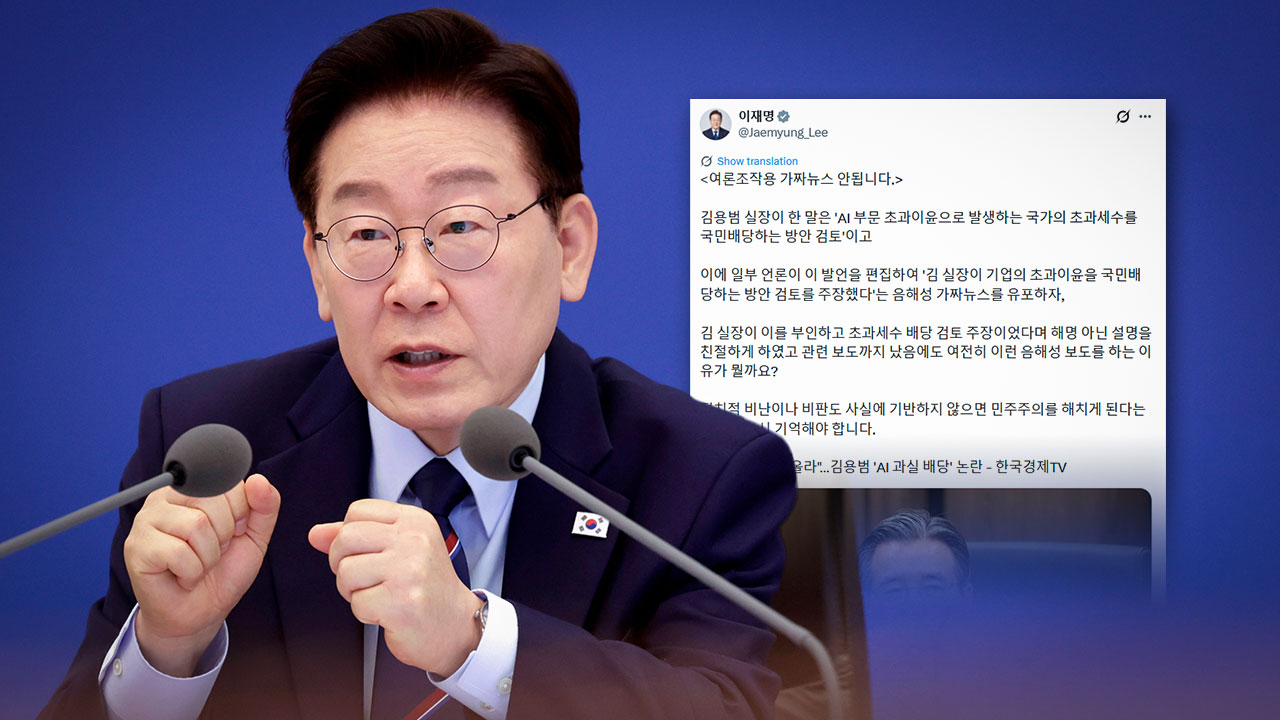
Lee Jae-myung Slams “Defamatory Fake News” After Presidential Office Criticizes His National Dividend Comments
South Korean President Lee Jae-myung has directly refuted accusations that his administration is promoting a “dividend of corporate excess profits to the people,” calling the claim a “malicious fake news” campaign. In a sharp rebuttal posted on his X account this morning, the president targeted a specific policy advisor, Kim Yong-beom, whose remarks had fueled speculation about wealth redistribution policies. The exchange underscores deepening political divisions over economic equity as Seoul grapples with rising debt burdens among low-income households. Meanwhile, the president’s pledge to crack down on predatory lending practices—announced just 24 hours earlier—takes on new urgency as critics question whether his administration’s economic reforms are being distorted by opposition narratives.
The Policy Dispute: What’s Really at Stake
The controversy stems from a May 12 statement by President Lee, where he condemned “primitive, predatory financing” strangling debtors through high-interest loans. His remarks followed reports of defaulters excluded from a government debt cancellation program due to opaque transfers to private “bad banks”—entities that profit from distressed debt while leaving borrowers ineligible for relief.
Kim Yong-beom, a senior policy advisor in the Blue House, had previously referenced the concept of redistributing “excess profits” in public discussions about economic policies. The president’s response suggests this framing was deliberately mischaracterized to imply a radical wealth transfer agenda, which his administration denies. “The claim that we are pushing a ‘dividend of corporate excess profits’ is a deliberate distortion,” Lee’s statement effectively argues. “Our focus remains on targeted debt relief for vulnerable households, not ideological redistribution.”
“This isn’t about ideology—it’s about basic fairness. When private entities exploit people’s financial desperation, the state must intervene.”
Who Benefits—and Who Loses—in the Debate
The information gap here is critical: while President Lee frames this as a matter of correcting “malicious fake news,” the underlying issue is a systemic failure in South Korea’s debt relief architecture. Private bad banks—often affiliated with major financial conglomerates—have historically operated with minimal regulatory oversight, acquiring distressed loans at steep discounts and then charging exorbitant interest rates to struggling borrowers. A 2025 report by the Financial Supervisory Service (FSS) highlighted that over 42% of debtors in these secondary markets faced annual interest rates exceeding 20%, compared to the national average of 12.5% for prime borrowers.
This predatory cycle disproportionately affects Seoul’s outer boroughs—regions like Gwangjin-gu and Dobong-gu, where 38% of households earn below the poverty line. Residents here often turn to high-interest loans to cover basic expenses, only to be trapped in a cycle of debt that local nonprofits describe as “financial bondage.”
Geolocal Impact: Seoul’s Debt Crisis Hotspots
| District | Poverty Rate (2025) | Avg. Household Debt (% of Income) | Bad Bank Penetration Rate |
|---|---|---|---|
| Gwangjin-gu | 38.2% | 187% | 45% |
| Dobong-gu | 35.7% | 172% | 39% |
| Seocho-gu | 22.1% | 145% | 28% |
Source: Seoul Metropolitan Government Housing Policy Report (2025)
The Legal and Economic Fallout
President Lee’s rebuttal comes as his administration faces mounting pressure to clarify its economic priorities. Legal experts warn that the opposition’s framing—tying debt relief to “corporate excess profits”—could complicate future legislative efforts. “If the public perceives this as a wealth redistribution scheme, even well-intentioned reforms risk being derailed by political polarization,” notes Professor Kim Min-jae of Yonsei University’s Law School.

“The real issue isn’t whether to redistribute wealth—it’s whether to hold financial predators accountable. The current system allows bad banks to profit from human suffering with impunity.”
Economists caution that the debate may also delay much-needed reforms to South Korea’s Consumer Credit Protection Act, which has been criticized for failing to cap interest rates on distressed loans. Without intervention, the problem will worsen: the FSS projects that non-performing loans in the bad bank sector will rise by 18% in 2026, further straining municipal budgets.
Solutions in the Directory: Who Can Help?
The president’s vow to address predatory lending creates immediate demand for three types of professionals:

- Consumer Rights Lawyers: Families trapped in bad bank loans need legal representation to challenge unfair debt collection practices. Firms specializing in financial predation litigation are already seeing a surge in inquiries from Seoul’s outer boroughs.
- Debt Counseling Nonprofits: Organizations like the Korea Credit Counseling Association provide free mediation services to negotiate with bad banks. Their caseloads have doubled since January 2026, according to internal reports.
- Municipal Policy Advocates: Local governments in districts like Gwangjin-gu are scrambling to draft ordinances that would require bad banks to disclose their debt acquisition practices. Civic engagement firms with experience in financial transparency campaigns are being consulted to draft these measures.
The Long Game: What’s Next for Seoul’s Economy?
President Lee’s rebuttal may quiet short-term speculation about radical economic policies, but the core issue—predatory lending—remains unresolved. The administration’s next moves will likely focus on:
- Regulatory Crackdowns: Expanding oversight of bad banks, potentially through the Financial Supervisory Service.
- Legislative Reforms: Amending the Consumer Credit Protection Act to include interest rate caps for distressed borrowers.
- Public Awareness Campaigns: Partnering with nonprofits to educate low-income households about their rights under debt relief programs.
The opposition’s framing, however, risks framing the debate in ideological terms—pitting “corporate excess” against “citizen rights”—when the reality is far more mundane: a broken system exploiting vulnerable people. As Seoul’s debt crisis deepens, the question isn’t whether to redistribute wealth, but whether to stop the bleeding first.
For families already drowning in debt, the answer lies in verified professionals who can navigate this labyrinth. Whether it’s legal recourse, counseling services, or policy advocacy, the World Today News Directory connects you to the experts equipped to turn the tide.