
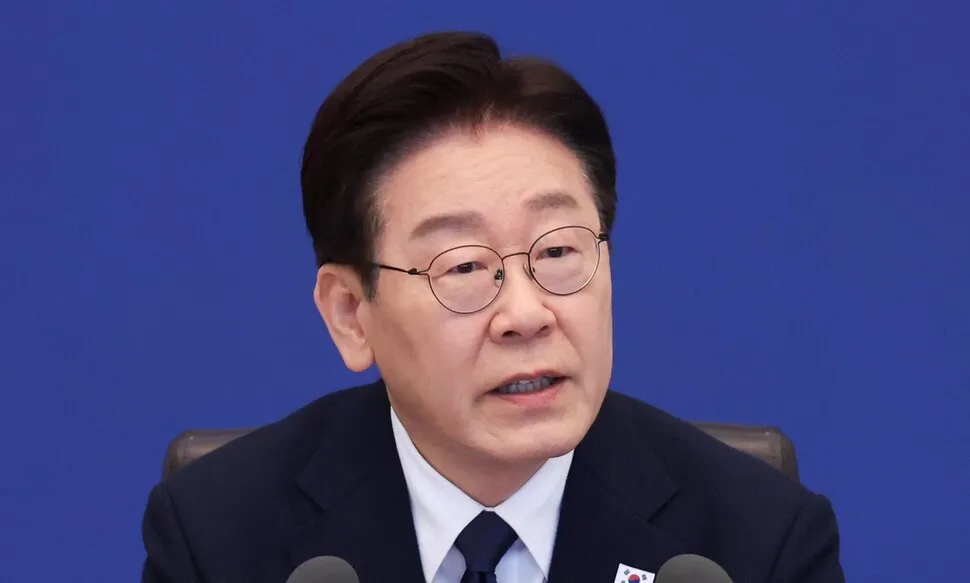
Lee Jae-myung Signals Emergency Measures Amidst Middle East Conflict & Economic Uncertainty
South Korean President Lee Jae-myung signaled a willingness to invoke emergency fiscal powers amid escalating geopolitical tensions in the Middle East, specifically the prolonged conflict involving the US, Israel, and Iran. This move, announced during a cabinet meeting, comes as the OECD downgrades global growth forecasts and anticipates oil prices potentially surging to $135 per barrel this quarter, threatening South Korea’s import-dependent economy. The administration is preparing for potential supply chain disruptions and inflationary pressures.
The immediate problem isn’t simply rising oil prices; it’s the cascading effect on South Korea’s manufacturing base and consumer spending. A sustained oil shock will exacerbate existing inflationary trends, eroding corporate profitability and potentially triggering a recession. This situation demands proactive risk mitigation, and businesses are already seeking expert guidance. Companies reliant on stable supply chains are urgently evaluating their exposure, turning to specialized supply chain risk management consultants to model potential disruptions and develop contingency plans.
The Constitutional Lever: Emergency Fiscal Measures
President Lee’s reference to Article 76 of the South Korean constitution – granting the president the authority to enact emergency fiscal measures without parliamentary approval during economic crises – is a significant escalation. While intended as a last resort, the mere suggestion signals the severity of the perceived threat. This isn’t a theoretical exercise. The administration has already initiated emergency supply adjustments for naphtha, a crucial petrochemical feedstock, and is considering similar measures for essential raw materials like urea and urea solution, classifying them as strategic reserves akin to wartime provisions.

The potential invocation of these powers raises questions about the balance between executive authority and legislative oversight. According to the Bank of Korea’s latest financial stability report (released March 28, 2026), South Korean household debt stands at 107.6% of GDP, making the economy particularly vulnerable to interest rate hikes and inflationary pressures. A poorly calibrated emergency response could further destabilize the financial system.
Oil Price Volatility and the Korean Won
The projected surge in oil prices to $135 per barrel, as warned by the OECD, is a critical pressure point. South Korea imports nearly 80% of its oil, making it highly susceptible to external price shocks. This directly impacts transportation costs, manufacturing inputs, and consumer prices. The Korean Won has already experienced moderate depreciation against the US dollar in the first quarter of 2026, and further weakening is anticipated if oil prices continue to climb.
“The Korean economy is uniquely exposed to geopolitical instability in the Middle East. The combination of high import dependence and significant household debt creates a precarious situation. We’re advising our clients to stress-test their portfolios against a range of oil price scenarios and to actively hedge currency risk.” – Dr. Hana Kim, Chief Economist, Global Investment Partners (Seoul)
The government’s focus on securing essential supplies, including everyday necessities and medical supplies, is a pragmatic response to potential panic buying and hoarding. The recent controversy surrounding the rationing of garbage bags, while seemingly minor, highlighted vulnerabilities in local supply chains and the need for improved coordination between central and local governments. This underscores the importance of robust logistics and inventory management systems, areas where logistics consulting firms are seeing a surge in demand.
Beyond Oil: A Broader Economic Assessment
The crisis extends beyond oil. The Middle East conflict is disrupting global trade routes, increasing shipping costs, and creating uncertainty across multiple sectors. South Korea’s export-oriented economy is particularly vulnerable to a slowdown in global demand. The semiconductor industry, a cornerstone of the Korean economy, is facing headwinds from geopolitical tensions and increased competition.
The government’s directive to monitor commodity trends daily and proactively address supply concerns is a step in the right direction. However, effective crisis management requires more than just reactive measures. It demands a comprehensive understanding of the interconnectedness of global markets and a willingness to embrace innovative solutions.
The Impact on Key Sectors
- Automotive: Increased raw material costs (steel, aluminum, plastics) will squeeze profit margins.
- Electronics: Supply chain disruptions for key components (semiconductors, displays) could lead to production delays.
- Petrochemicals: Higher naphtha prices will increase production costs and potentially lead to price increases for downstream products.
- Shipping & Logistics: Increased shipping costs and port congestion will disrupt trade flows.
The situation also highlights the need for South Korean companies to diversify their supply chains and reduce their reliance on single sources. This requires significant investment in research and development, as well as strategic partnerships with suppliers in different regions. Companies are increasingly turning to international trade law firms to navigate the complex regulatory landscape and mitigate risks associated with supply chain diversification.
The Role of Corporate Korea
President Lee’s call for businesses to “maximize the apply of available authority” is a veiled request for corporate Korea to step up and grab responsibility for mitigating the economic fallout. This includes investing in alternative energy sources, improving energy efficiency, and developing innovative technologies to reduce reliance on fossil fuels.
“Korean conglomerates have a significant role to play in stabilizing the economy. They possess the financial resources and technological expertise to invest in long-term solutions, such as renewable energy and supply chain resilience. However, they need clear policy signals from the government to incentivize these investments.” – Park Soo-jin, Managing Director, Korea Corporate Governance Institute.
The government’s focus on managing essential goods and addressing localized shortages is commendable, but it’s a short-term fix. The long-term solution lies in building a more resilient and diversified economy. This requires a fundamental shift in mindset, from a reliance on export-led growth to a more balanced and sustainable model.
The unfolding economic challenges in South Korea, triggered by escalating geopolitical tensions, demand proactive and strategic responses from both the public and private sectors. Navigating this complex landscape requires access to specialized expertise and innovative solutions. The World Today News Directory connects you with vetted B2B partners – from supply chain risk management consultants to international trade law firms – to help your organization mitigate risks, optimize operations, and capitalize on emerging opportunities. Don’t wait for the crisis to deepen; explore our directory today and secure the resources you need to thrive in an uncertain world.