
Lebanese Families Use DNA to Identify Victims of Israeli Strikes
On April 9, 2026, Israeli airstrikes during what Lebanon now calls “Black Wednesday” killed at least 357 people and left over 1,000 injured, reducing entire neighborhoods in Beirut’s southern suburbs to rubble and leaving hundreds of families in a agonizing limbo—unable to bury their dead because the force of the explosions fragmented bodies beyond recognition, turning morgues into ad hoc DNA labs where relatives queue for hours to submit blood samples in hopes of identifying remains.
Jaafar Annan has camped outside Rafik Hariri University Hospital’s emergency room for days, his blood already drawn, waiting for a match that might finally confirm whether the unidentified fragment labeled “Body #87” is his mother Fatima. “I walk through hospitals. I stare at injured faces. I go to the morgues. I look for a mole, a mark,” he said, voice raw. “Then I come back here. Waiting for the sample results.” His vigil mirrors that of dozens of others who now treat the hospital’s cold-storage units—not as a morgue, but as a last checkpoint between disappearance and closure.
The Human Cost Behind the Headlines
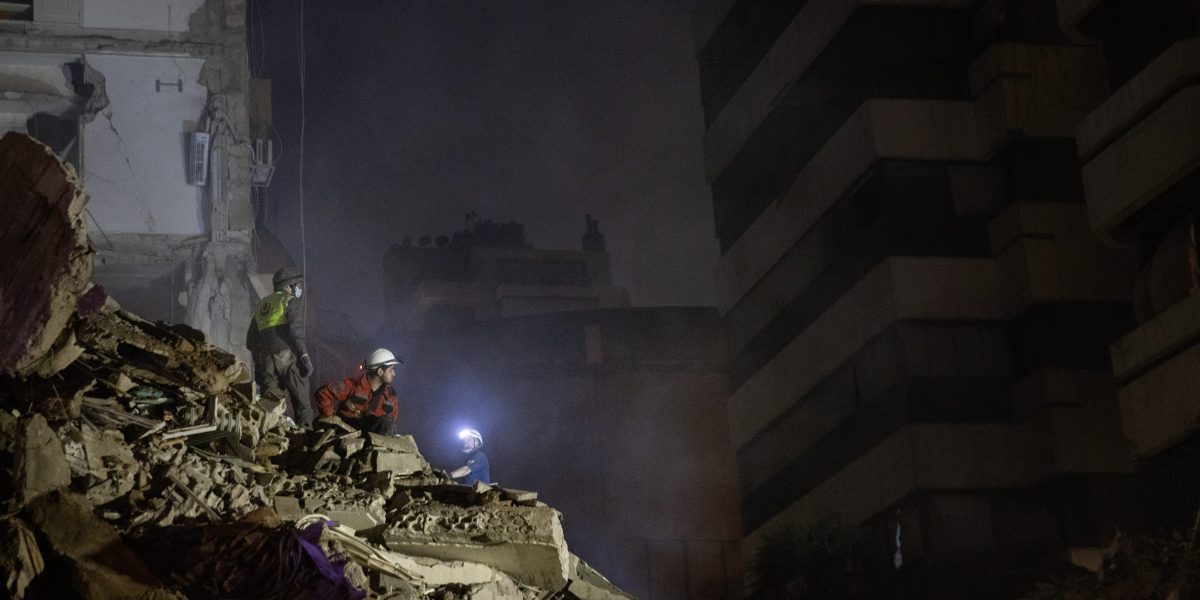
The scale of destruction exceeded even the most pessimistic forecasts. In just ten minutes after the Iran-U.S. Ceasefire announcement, Israeli forces launched over 100 precision-guided strikes on Lebanese territory, according to Lebanese Health Ministry data later corroborated by satellite imagery analysis from the UN Office for the Coordination of Humanitarian Affairs (OCHA). The bombardment concentrated on densely populated residential zones in Baabda and Aley districts, where multi-story apartment buildings collapsed into pancake-like piles of concrete and rebar, trapping occupants in voids too narrow for standard rescue equipment.

What made Black Wednesday uniquely devastating was not just the volume of ordnance dropped—estimated at over 80 tons of explosives by independent arms monitors—but the tactical choice to target mid-rise residential structures during daytime hours when families were home. Unlike previous exchanges that focused on Hezbollah military sites, this barrage appeared designed to maximize civilian displacement and infrastructure damage in Lebanon’s Mount Lebanon governorate, a region housing nearly half the country’s population and contributing approximately 40% of its GDP through commerce, tourism and services.
When Law Becomes a Barrier to Burial
Lebanon’s legal framework, designed to protect property rights and preserve crime scenes, has inadvertently become an obstacle to humanitarian recovery. Under Articles 52 and 55 of the Lebanese Code of Civil Procedure, destroyed buildings are classified as private property requiring judicial authorization before any demolition or debris removal—even when owners are deceased or missing. This means civil defense teams cannot clear rubble to search for survivors or remains without court orders, a process that typically takes weeks under normal circumstances.
“We submitted the requests. We begged the relevant authorities to expedite the judicial procedures,” said a relative of a missing woman who requested anonymity. “But the Lebanese judiciary has not moved. Every minute that passes is a nail in the coffin of our loved ones, while the judiciary is still reviewing paperwork.” This bottleneck has forced families to rely on informal networks—neighbors with sledgehammers, volunteers with shovels—while official teams wait idly outside cordoned-off zones.

Legal experts confirm this creates a dangerous Catch-22. “The goal is not accounting. It is to return to each victim their name, and to give their families the right to a farewell that ends the spiral of doubt,” said Hisham Fawwaz, director of hospitals and dispensaries at the Lebanese Ministry of Health. Yet without judicial green light, even basic identification work is hampered. “When families sought exceptional permissions to allow rescue teams to remove the rubble, judicial authorities did not respond to their requests,” added a Beirut-based human rights lawyer who asked not to be named. “In emergencies, the law must serve the living—not delay justice for the dead.”
“In emergencies, the law must serve the living—not delay justice for the dead.”
DNA Labs in Hospital Hallways
With traditional identification methods impossible, Hariri Hospital has transformed its basement into a 24/7 DNA processing unit. Technicians extract genetic material from bone fragments and tissue samples, comparing them against blood donations from relatives. The hospital now holds over 90 unidentified bodies, each assigned a temporary number and stored in refrigerated units originally meant for vaccine preservation.
The process is painstaking. First, workers document any visible identifiers—tattoos, surgical implants, distinctive clothing remnants—cross-referencing them with family descriptions. When that fails, which it does in nearly 70% of cases according to internal hospital logs, they turn to DNA matching. Each test takes approximately 48 hours to process, creating agonizing delays for families like the Abouds, who fear their daughter Zahraa may be buried under concrete in a neighboring building they cannot legally enter to search.
“We are dealing with human fragments that the force of the explosions has turned into medical puzzles,” Fawwaz repeated, his eyes tired but resolute. “The goal is not accounting. It is to return to each victim their name, and to give their families the right to a farewell.”
The Ripple Effect on Beirut’s Fractured Economy
Black Wednesday’s impact extends far beyond the immediate human tragedy. The destruction of residential and commercial infrastructure in Beirut’s southern suburbs has disrupted local economies that depend on small-scale trade and services. According to preliminary assessments by the Lebanese Central Bank, the affected districts contribute roughly $1.2 billion annually to national GDP—primarily through retail, hospitality, and artisanal manufacturing. With over 30% of storefronts in areas like Bir Hassan and Chiyah either destroyed or inaccessible due to rubble, daily revenue losses are estimated at $850,000.
This economic hemorrhage compounds Lebanon’s existing crisis, where the pound has lost over 98% of its value since 2019 and unemployment exceeds 35%. Small business owners in the affected zones now face a triple burden: property loss, inability to access insurance claims without death certificates, and the psychological toll of searching for missing employees or family members.
Where to Find Help: The Directory Bridge
For families navigating this nightmare, practical solutions exist—but they require knowing where to look. Securing vetted emergency restoration contractors equipped with ground-penetrating radar and structural stabilization tools is the critical first step to safely accessing rubble sites once judicial permissions are granted. Simultaneously, those struggling with inheritance disputes, insurance denials, or property rights confusion over destroyed homes should consult experienced property rights attorneys familiar with Lebanese civil procedure and international humanitarian law. Finally, the overwhelming psychological toll demands professional support; connecting with licensed trauma counselors who specialize in conflict-related grief can provide essential coping mechanisms during this prolonged period of suspended loss.

These services aren’t just conveniences—they are lifelines. In a country where official systems are overwhelmed or gridlocked, directory-vetted professionals offer the agility and expertise needed to cut through bureaucracy, accelerate identification efforts, and begin the painful but necessary work of rebuilding.
A Nation Waiting for Names
As of this writing, over 120 individuals remain officially missing in the aftermath of Black Wednesday, their fates unknown, their families trapped in a cruel paradox: clinging to hope for survival while dreading the confirmation of death. The DNA samples keep arriving at Hariri Hospital. The blood vials keep filling. And outside, fathers like Jaafar Annan and Qassem Aboud keep walking the halls, staring at faces behind oxygen masks, searching for a mole, a mark, a flicker of recognition that might finally let them say goodbye.
Until then, the hospital’s cold-storage units will remain full—not just with unidentified remains, but with the unspoken question that haunts every corridor: How many more names must we lose before the living are allowed to bury their dead?