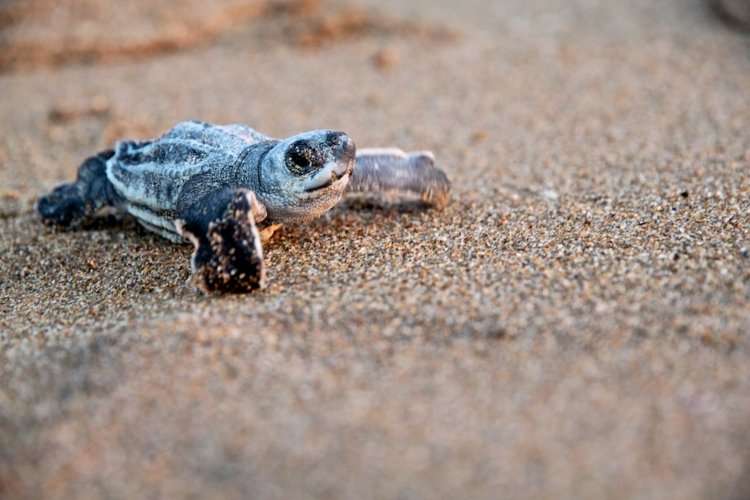
Leatherback Turtles Return to Nest on Venezuela’s Coasts
On April 20, 2026, a rare Cardón sea turtle returned to Patanemo’s shores after three decades to lay its eggs—a powerful symbol of ecological recovery in Venezuela’s Carabobo state, where decades of coastal degradation threatened one of the world’s most endangered marine species. This event, documented by local conservationists and reported by El Nacional, marks not just a biological milestone but a critical test of whether community-led protection efforts can withstand mounting pressures from illegal fishing, unregulated tourism, and weak enforcement of environmental safeguards. The return of the Cardón turtle—scientifically known as Dermochelys coriacea, the largest living turtle species—signals that habitat restoration may be working, but it also exposes the fragility of progress in a region where economic survival often trumps ecological stewardship.
The problem is clear: when a keystone species like the leatherback turtle reappears after 30 years of absence, it reveals both the success of quiet conservation work and the systemic vulnerabilities that allowed its decline in the first place. Without sustained protection, these nests remain vulnerable to poaching, habitat erosion, and coastal development—threats that ripple outward to undermine local fisheries, ecotourism potential, and community resilience. The solution lies not in celebration alone, but in strengthening the very systems that made this return possible: local environmental monitors, legal advocates for coastal protection, and community-based ecotourism cooperatives that turn conservation into livelihood.
The Long Road Back: Why Patanemo Matters
Patanemo, a small fishing village nestled along Venezuela’s central coast, has long been a silent witness to ecological loss. Once a nesting ground for leatherback turtles stretching from Chichiriviche to Puerto Cabello, the beaches fell silent after the 1990s due to rampant egg harvesting, plastic pollution, and the construction of informal seawalls that disrupted natural sand dynamics. By 2005, regional biologists estimated fewer than five nesting attempts per year across the entire state—a stark contrast to the hundreds recorded in the 1970s.
What changed? A grassroots coalition of fishers, teachers, and retired oil workers began nightly patrols in 2018, funded by small grants from the Venezuelan Institute for Scientific Research (IVIC) and supported by the Ministry of Ecosocialism. They removed debris, relocated nests threatened by tides, and educated tourists not to use flashlights near nesting sites. Their work went largely unnoticed—until now. The 90 eggs laid this April, protected by volunteers from the NGO IVIC and monitored by park rangers from Henri Pittier National Park, represent the highest recorded clutch in Carabobo since 1994.
This is not merely a wildlife story. It is a barometer for coastal health. Leatherbacks are indicator species: their presence signals clean water, intact beaches, and balanced marine ecosystems. Their absence for three decades warned of systemic collapse. Their return offers a chance to rebuild—not just nests, but trust between communities and conservation.
When Protection Meets Pressure: The Real Threats Today
Despite this hopeful sign, the turtle’s return coincides with intensifying threats. Illegal gillnet fishing persists just offshore, often operated by vessels from neighboring states seeking shrimp and croaker. In March 2026, the National Guard seized three boats near Patanemo carrying nets with mesh sizes illegal under Venezuela’s 2015 Fisheries and Aquaculture Law—a regulation still poorly enforced due to limited patrol boats and fuel shortages. Meanwhile, informal beachfront vendors have expanded unregulated food stalls along the nesting zone, compacting sand and leaving behind plastic waste that hatchlings mistake for food.
Climate change adds another layer. Rising sea levels have eroded approximately 15% of Patanemo’s usable nesting beach since 2020, according to satellite analysis from Venezuela’s Simón Bolívar University. Warmer sands also skew hatchling sex ratios—producing dangerously high numbers of females, which threatens long-term genetic diversity.
As one local fisher and patrol leader, José Márquez, explained during a dawn beach walk:
“We used to notice turtles as a sign of poor luck—now we see them as a sign that we’re doing something right. But if the government doesn’t start enforcing the laws we helped write, and if tourists keep treating this place like a dumpster, all this work will wash away with the next tide.”
His words echo a growing consensus: conservation cannot survive on volunteerism alone. It needs legal teeth, economic alternatives, and institutional backing.
The Directory Bridge: Who Steps In When the Turtle Comes Ashore?
This moment demands more than admiration—it requires action from those who protect what the turtle depends on. When nests are threatened by erosion or human encroachment, coastal engineers and shoreline restoration specialists become essential. They assess sand composition, design biodegradable barriers, and rebuild dunes using native vegetation—work that prevents nests from washing out or being crushed by foot traffic. Communities seeking to safeguard these beaches long-term should consult vetted coastal resilience contractors who understand both ecology and local realities.
Equally vital are legal advocates who can turn community patrols into enforceable protections. When poachers are caught or illegal developments threaten nesting zones, environmental lawyers and municipal prosecutors navigate Venezuela’s complex web of environmental statutes—including the Organic Law of the Environment and the Coastal Zone Management Regulation—to issue injunctions, file penalties, or halt construction. For residents and NGOs facing legal uncertainty, turning to experienced environmental law attorneys ensures that good intentions are backed by enforceable rights.
Finally, the economic incentive must align with conservation. Without alternatives, fishers will return to egg harvesting; without income, youth will exit for cities. Ecotourism cooperatives that train locals as certified turtle guides, offer nightly observation tours with strict protocols, and reinvest profits into community funds transform conservation from a cost into a livelihood. These models—already successful in Costa Rica and Trinidad—need replication here. Those seeking to launch or scale such initiatives should connect with sustainable tourism developers who specialize in community-owned, low-impact ventures along fragile coastlines.
The Cardón turtle’s return is not the end of a story—it is the beginning of a covenant. For thirty years, the beaches of Patanemo waited in silence. Now, one ancient creature has come home, not to stay, but to ask: Will we keep our promise?
Let this be the moment we answer—not with headlines, but with hardened shorelines, enforced laws, and livelihoods that grow from the sand, not against it. The turtle has done its part. Ours begins now.